Rajasthan CMO urges DNT families to educate children, join nation-building

Synopsis
The Chief Minister's Office of Rajasthan, tagging CM Bhajan Lal Sharma, appealed to de-notified, nomadic and semi-nomadic communities to educate their children and youth and encourage participation in nation-building, under the #AapnoAgraniRajasthan campaign.
Key Takeaways
The Chief Minister's Office of Rajasthan posted a direct appeal on 13 August 2026 urging de-notified, nomadic, and semi-nomadic families to educate their children.
CM Bhajan Lal Sharma was tagged in the message, signalling top-level political ownership of the outreach.
The post was hashtagged #आपणो_अग्रणी_राजस्थान ('Our Leading Rajasthan'), the BJP administration's signature welfare-outreach banner.
De-notified tribes were branded 'habitual criminals' under the British-era Criminal Tribes Act of 1871 ; India repealed those laws in 1952 , but social exclusion persisted.
Rajasthan governments across parties have periodically run similar mainstreaming campaigns; the current administration frames them within the national 'Viksit Bharat' development narrative.
Advocacy groups stress that awareness appeals must be paired with documentation camps and concrete budget allocations for DNT hostels and scholarships to produce real change.
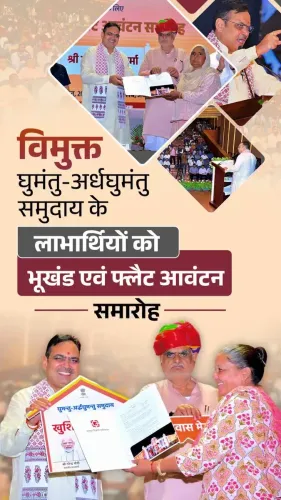
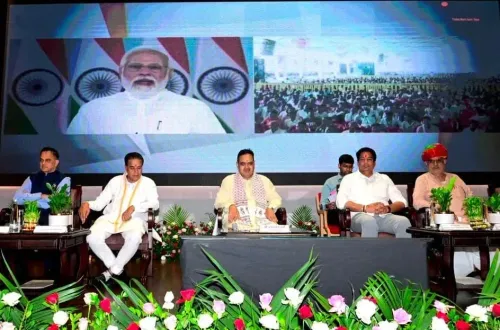
A direct appeal to some of Rajasthan's most historically marginalised communities landed on social media on Thursday, 13 August 2026 — the Chief Minister's Office calling on de-notified, nomadic, and semi-nomadic families to educate their children, build their capabilities, and step into the mainstream of national life.
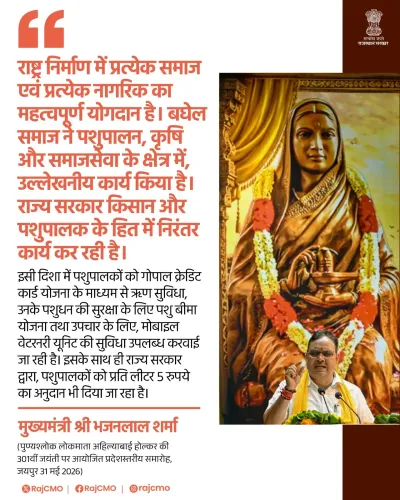
The post, shared by the Chief Minister's Office of Rajasthan and tagging Chief Minister Bhajan Lal Sharma, carried the hashtag #आपणो_अग्रणी_राजस्थान — 'Our Leading Rajasthan' — the BJP administration's signature outreach banner. The message was unambiguous: 'विमुक्त, घुमन्तू एवं अर्द्धघुमन्तू परिवार, अपने बच्चों और युवाओं को पढ़ाएँ, योग्य बनाएँ और राष्ट्र निर्माण में भाग लेने के लिए प्रोत्साहित करें' — 'De-notified, nomadic and semi-nomadic families: educate your children and youth, make them capable, and encourage them to participate in nation-building.'
Who are the DNT, NT and SNT communities?
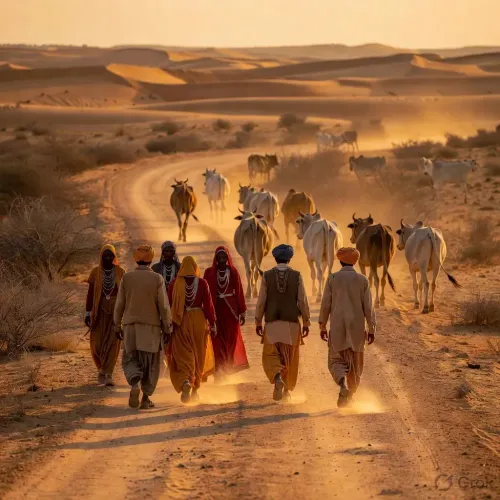
De-notified tribes (DNTs) are communities that were branded as 'habitual criminals' under the British-era Criminal Tribes Act of 1871 and its successors. India repealed those laws in 1952, 'de-notifying' the communities — but the social stigma and administrative exclusion persisted across generations. Nomadic and semi-nomadic tribes (NTs and SNTs) share overlapping vulnerabilities: high mobility, limited access to fixed-address documentation, and consequently low enrolment in government schools and welfare schemes.
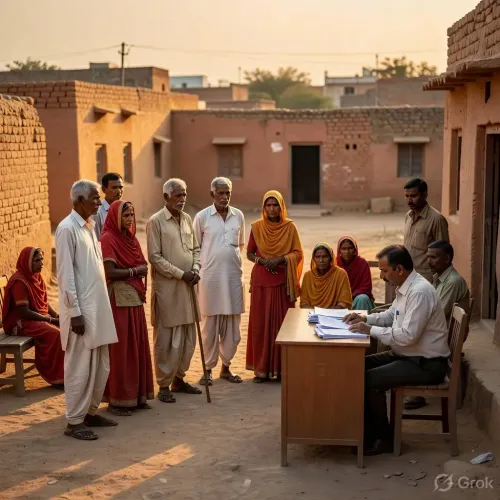
Rajasthan has a significant DNT and nomadic population spread across its vast, often remote, districts. For these families, routine access to ration cards, Aadhaar, school admissions, and caste certificates has historically been an obstacle course — making the state's periodic outreach campaigns both symbolically and practically significant.
Sharma administration's welfare outreach pattern
Bhajan Lal Sharma, who took office as Rajasthan's Chief Minister in December 2023, has positioned social inclusion messaging as a running thread of his administration's public communication. The #आपणो_अग्रणी_राजस्थान campaign frames welfare outreach within a broader aspiration of Rajasthan as a 'leading state' — education and youth empowerment being central planks. Campaigns urging DNT and nomadic communities toward education and mainstreaming have appeared across successive Rajasthan governments, but the current BJP administration has tied them explicitly to the national 'Viksit Bharat' development narrative.
What district-level action could follow
The real test of such messaging lies downstream: whether it translates into enrolment drives at district level, additional hostel seats for nomadic students, or fresh scholarship allocations in the state budget. Advocacy groups working with DNT communities have long argued that awareness appeals must be paired with documentation camps — helping families obtain the identity proof that unlocks every other entitlement. Eyes will be on whether Rajasthan's Social Justice and Empowerment Department follows this signal with on-ground mobilisation.
For communities still carrying the colonial-era shadow of the Criminal Tribes Act, an official call to 'participate in nation-building' is more than a social-media post — it is, at minimum, a public acknowledgement that the state sees them as full citizens. Whether the ground shifts to match is the question that matters.
Point of View
A common feature of social-media outreach that substitutes visibility for accountability. For the Sharma government, which has positioned Rajasthan as a 'leading state,' consistent messaging on DNT inclusion is a low-cost, high-visibility move that aligns with central government priorities on social justice. The real political signal will come when — or if — budget lines and district-level enrolment data follow the rhetoric.
NationPress
14 Aug 2026
Frequently Asked Questions
Who are de-notified tribes in Rajasthan?
De-notified tribes (DNTs) are communities that were classified as 'habitual criminals' under the British-era Criminal Tribes Act of 1871. India repealed those laws in 1952, formally 'de-notifying' these groups, but they continue to face social stigma, documentation barriers, and limited access to government welfare schemes.
What did the Rajasthan CMO post on 13 August 2026?
The Chief Minister's Office of Rajasthan posted an appeal urging de-notified, nomadic, and semi-nomadic families to educate their children and youth, make them capable, and encourage them to participate in nation-building, tagging Chief Minister Bhajan Lal Sharma.
What is the #AapnoAgraniRajasthan campaign?
The hashtag #आपणो_अग्रणी_राजस्थान, meaning 'Our Leading Rajasthan,' is the BJP state government's recurring social-media banner for welfare and development outreach under Chief Minister Bhajan Lal Sharma's administration.
What schemes exist for nomadic and de-notified tribes in Rajasthan?
Rajasthan's Social Justice and Empowerment Department runs welfare programmes for DNT, nomadic, and semi-nomadic communities, including scholarship and hostel support. However, specific new schemes or budget allocations were not announced in this post.
Who is Bhajan Lal Sharma?
Bhajan Lal Sharma is a BJP politician who has served as Chief Minister of Rajasthan since December 2023. He was tagged in this welfare outreach post by the official Chief Minister's Office account.