Rajasthan CM flags 51,000 MW renewable energy milestone
Synopsis
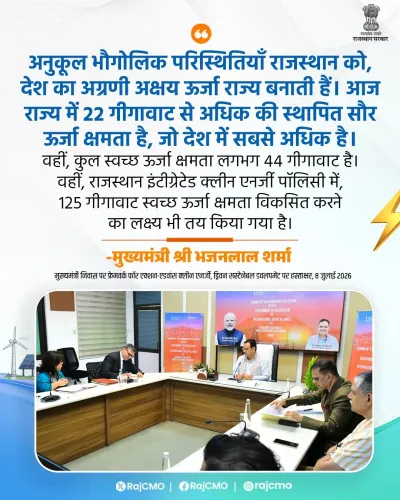
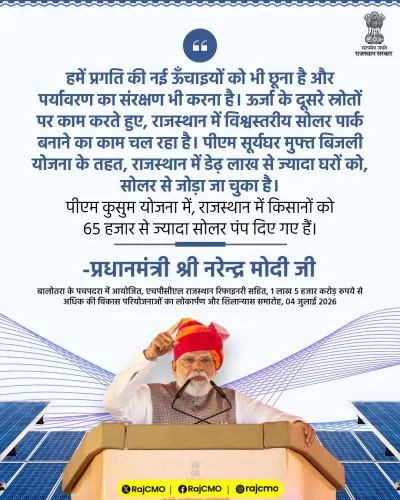
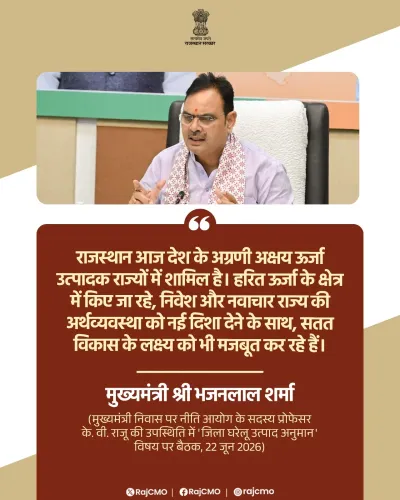
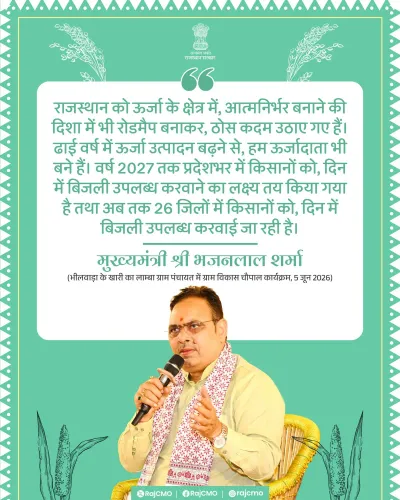
Rajasthan has crossed 51,000 MW of installed renewable energy capacity — over 45,000 MW from solar — the Chief Minister's Office announced on November 3, 2026, reinforcing the state's role as a cornerstone of India's clean-energy push toward 500 GW by 2030.
Key Takeaways
Rajasthan has installed over 51,000 MW of total renewable energy capacity, per the Chief Minister's Office announcement on November 3, 2026 .
Solar power accounts for more than 45,000 MW of that installed base, reflecting the state's heavy photovoltaic focus.
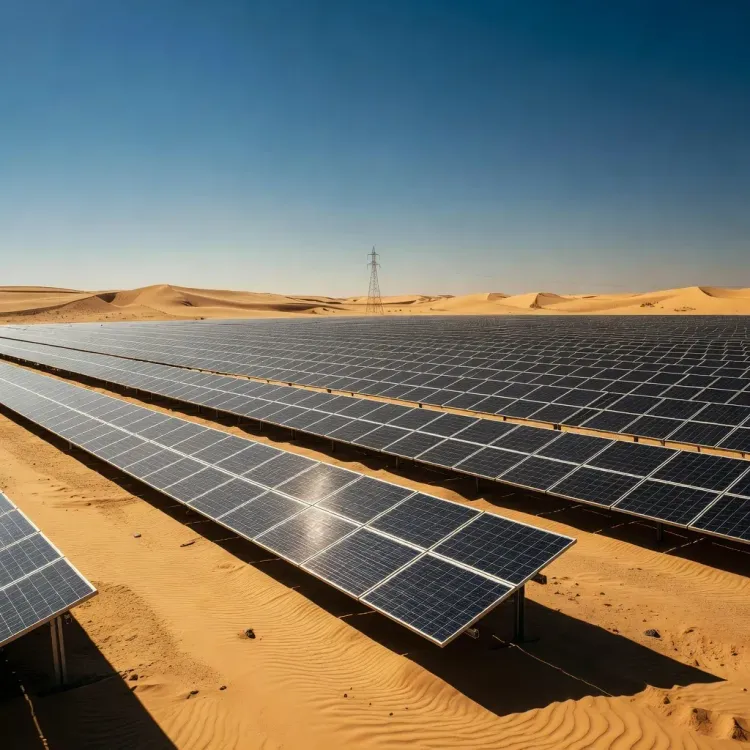
Bhadla Solar Park in Jodhpur district, one of the world's largest solar installations, has been a flagship project in this build-out.
The Rajasthan Solar Energy Policy 2019 and the National Solar Mission (2010) provided the policy scaffolding for this growth.
India's Panchamrit COP26 pledges target 500 GW of non-fossil capacity by 2030 ; Rajasthan's 51 GW makes it a critical contributor.
Grid integration and power evacuation infrastructure remain the key challenges for translating installed capacity into delivered electricity.
Rajasthan has crossed a landmark it was practically built for. The Chief Minister's Office of Rajasthan announced on Tuesday, November 3, 2026, that the state has installed over 51,000 megawatts of renewable energy capacity — with solar power alone accounting for more than 45,000 MW of that total, tagging Chief Minister Bhajanlal Sharma in the post under the hashtag #आपणो_अग्रणी_राजस्थान ('Our Leading Rajasthan').
From Thar Desert to grid: how Rajasthan built this lead
The geography is the story. Rajasthan's vast arid zones — particularly the Thar Desert belt — receive among the highest solar irradiance levels in the country, making it the obvious launchpad for India's solar ambitions. That potential was formalised early: the Rajasthan Solar Energy Policy 2019 set aggressive targets for capacity addition through land allocation and developer incentives, building on momentum from the National Solar Mission first launched in 2010.
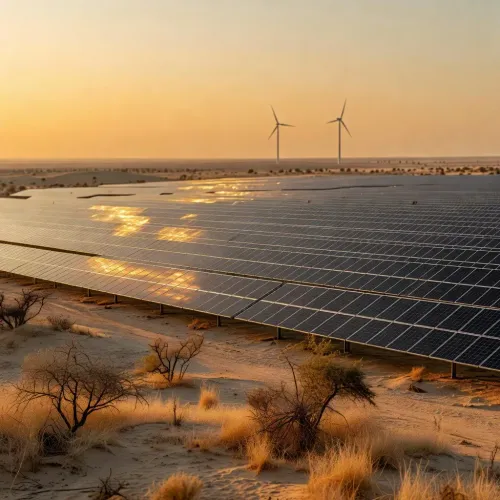
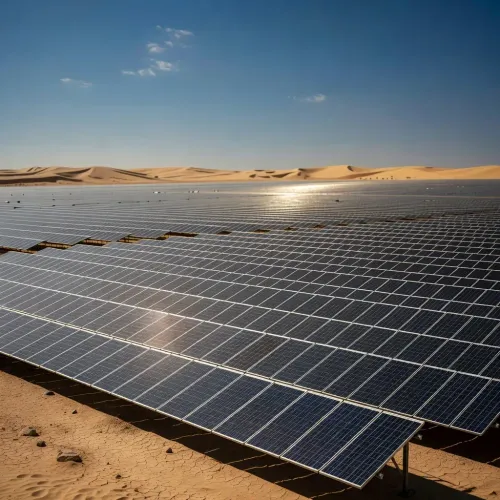
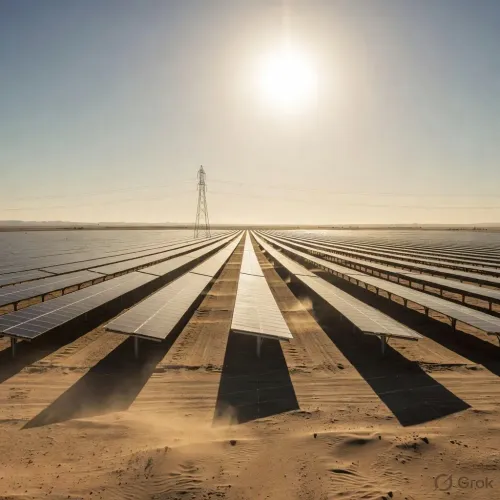
The most visible symbol of that build-out sits in Jodhpur district — the Bhadla Solar Park, one of the largest solar installations anywhere on earth. Projects like Bhadla have made Rajasthan not just a state contributor but a load-bearing pillar of India's national renewable push.
Why 51,000 MW matters for India's 500 GW target
India made a high-profile pledge at COP26 in 2021 — the 'Panchamrit' commitments — to reach 500 GW of non-fossil energy capacity by 2030 and achieve net-zero emissions by 2070. That goal needs every large state to carry weight. A single state crossing 51 GW of renewable capacity places Rajasthan among the most consequential contributors to that national arithmetic. The solar slice alone — over 45 GW — underscores how decisively the state has concentrated on photovoltaic over other renewable sources.
India's broader 175 GW renewable target, first set in 2015, was already partially built on Rajasthan's back. The new figures suggest the state has moved well beyond those earlier benchmarks.
What Rajasthan still has to solve
Installed capacity and delivered electricity are different numbers — and that gap is the next frontier. Grid integration remains the critical challenge: transmitting power generated in remote desert parks to urban and agricultural load centres requires sustained infrastructure investment. Watchers of Rajasthan's energy policy will be tracking how the state addresses evacuation infrastructure and whether upcoming assembly sessions bring updated solar policy targets to match the new capacity reality.
For now, the milestone is real and the momentum is unmistakable. A desert state built for sun has made itself indispensable to a country racing toward a clean-energy deadline.
Point of View
But the political framing through the hashtag 'Our Leading Rajasthan' signals intent to make energy leadership a defining electoral narrative. The harder test ahead — grid integration and equitable distribution of renewable revenue to desert-belt landowners — will determine whether this capacity milestone translates into a livelihood story. At the national level, Rajasthan's numbers give New Delhi a concrete data point to cite as it defends its 2030 net-fossil target on the international stage.
NationPress
3 Nov 2026
Frequently Asked Questions
How much renewable energy capacity has Rajasthan installed?
Rajasthan has installed over 51,000 megawatts of renewable energy capacity, with solar power accounting for more than 45,000 MW of that total, according to the Chief Minister's Office announcement on November 3, 2026.
What is Bhadla Solar Park and where is it located?
Bhadla Solar Park is one of the world's largest solar installations, located in Jodhpur district, Rajasthan . It was developed under state and central government initiatives and is a key contributor to Rajasthan's solar capacity.
How does Rajasthan's solar capacity help India's 500 GW target?
India has committed under its COP26 Panchamrit pledges to achieve 500 GW of non-fossil energy capacity by 2030 . Rajasthan's over 51 GW of renewable capacity makes it one of the largest single-state contributors toward that national goal.
What is India's National Solar Mission?
The National Solar Mission was launched in 2010 as part of India's National Action Plan on Climate Change. It aimed to scale up solar power deployment across the country and provided an early policy foundation for states like Rajasthan to expand solar infrastructure.
Who is the Chief Minister of Rajasthan in 2026?
Bhajanlal Sharma is the Chief Minister of Rajasthan, heading the BJP government in the state since December 2023 . The renewable energy milestone was announced by his office on November 3, 2026.