Rajnath Singh: North East is India's beautiful beginning
Synopsis
Defence Minister Rajnath Singh reframed the North East as India's 'beautiful beginning' — not its last frontier — citing natural beauty, cultural diversity, and strategic value in a post on 7 November 2026, echoing the country's Act East Policy pivot.
Key Takeaways
Rajnath Singh declared on 7 November 2026 that the North East is 'India's beautiful beginning,' not its last frontier.
The post highlights the region's natural beauty, cultural diversity, and strategic importance as giving India a 'distinctive dimension.' The Act East Policy (2014) formally positioned the North East as India's gateway to ASEAN , underpinning Singh's framing.
The region borders four countries — China, Myanmar, Bangladesh, and Bhutan — making it one of India's most critical security zones.
India has accelerated border road, airstrip, and tunnel construction across the North East in recent years, serving both civilian and defence needs.
Singh's framing shifts the public narrative from anxiety about a remote periphery to pride in a strategically vital, culturally rich frontier.
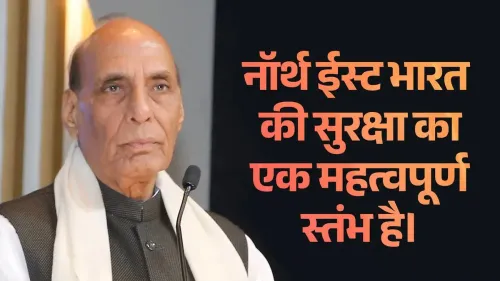
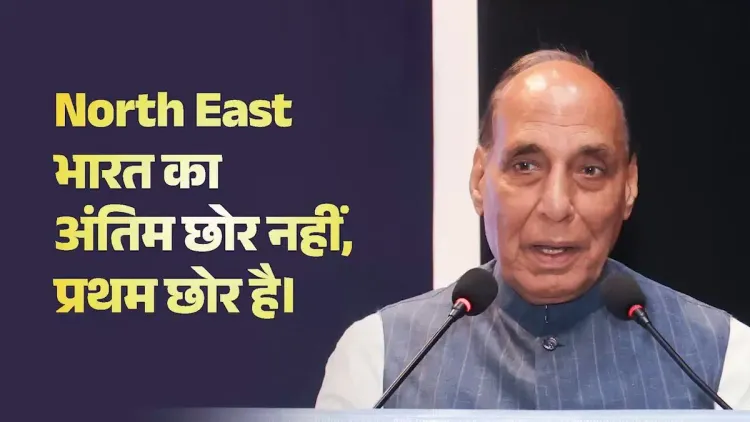
India's northeastern frontier is not a distant edge — it is, as Union Defence Minister Rajnath Singh put it on Saturday, 7 November 2026, the country's 'beautiful beginning.' In a pointed reframing of how the region is perceived, Singh used his X handle to elevate the North East from a geographic afterthought to a defining pillar of India's identity and strategic strength.
Singh posted in Hindi: 'North East भारत का अंतिम छोर नहीं, बल्कि उसकी खूबसूरत शुरुआत है.' — 'The North East is not India's last frontier, but its beautiful beginning.' He went on to describe the region as giving India a 'distinctive dimension' through its natural beauty, cultural diversity, and strategic importance.
From 'periphery' to gateway: the idea Singh is pushing
The Defence Minister's choice of words is deliberate and loaded. For decades, official and popular discourse treated the eight northeastern states — Assam, Arunachal Pradesh, Manipur, Meghalaya, Mizoram, Nagaland, Sikkim and Tripura — as remote, insular, and difficult to integrate. Singh's framing inverts that entirely: the region is the opening note, not the footnote.
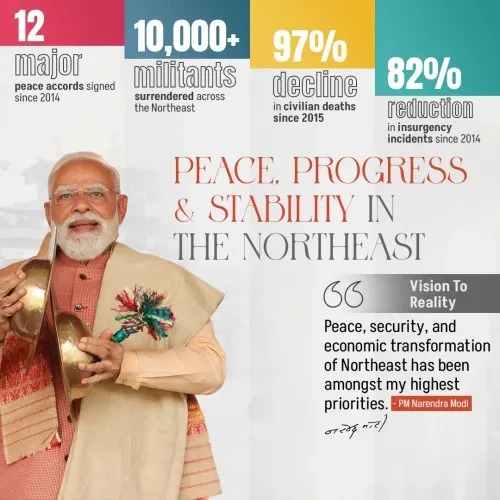
That reframing has institutional backing. India's Act East Policy, launched in 2014, formally designated the North East as the country's strategic gateway to ASEAN — a bridge rather than a buffer. Connectivity corridors, border infrastructure upgrades, and cross-border trade routes with Myanmar, Bangladesh, and Bhutan have all been advanced under this framework. A Defence Minister amplifying this message carries particular weight given the region's proximity to both the China border and the volatile Indo-Myanmar frontier.
Strategic weight behind the cultural pride
The North East shares sensitive borders with four countries — China, Myanmar, Bangladesh, and Bhutan — making it one of India's most consequential security zones. Singh's post pairs cultural celebration with an explicit nod to 'strategic importance,' a pairing defence planners and diplomats have long insisted on but rarely communicated this warmly to the public.
India has sharply accelerated border road construction, airstrip upgrades, and tunnel projects across the region in recent years — infrastructure that serves both civilian connectivity and rapid military deployment. For the Defence Minister to frame all of this within a rhetoric of beauty and pride rather than threat and vulnerability marks a conscious shift in how New Delhi wants the North East story told.
A region that earns the description
The North East is home to some of India's richest biodiversity — from the rhinos of Kaziranga to the cloud forests of Meghalaya — and to dozens of distinct ethnic communities whose traditions and languages represent an irreplaceable slice of the subcontinent's heritage. Singh's invocation of 'cultural diversity' alongside strategic value reflects an understanding that the region's soft power is itself a national asset, particularly in India's relationships with Southeast Asian neighbours.
The Defence Minister's message, compressed into two sentences, asks Indians to look east — not with anxiety, but with recognition. That the country's most distinctive, most biodiverse, and most strategically vital corner has long been called its 'last edge' says more about old maps than current reality.
Point of View
He is signalling that India's northeastern policy is now a unified whole, not a tension between development and defence. The timing matters: with border infrastructure projects advancing and India-ASEAN connectivity deepening, framing the region as a 'beginning' rather than an edge reshapes the public mandate for further investment there. For the BJP, it also reinforces an electoral and ideological claim — that integrating the North East emotionally into the national mainstream is a governance deliverable, not just a slogan.
NationPress
7 Nov 2026
Frequently Asked Questions
What did Rajnath Singh say about North East India?
On 7 November 2026, Defence Minister Rajnath Singh said the North East is 'not India's last frontier but its beautiful beginning,' calling it a region that gives India a distinctive dimension through its natural beauty, cultural diversity, and strategic importance.
What is India's Act East Policy and how does it relate to the North East?
India's Act East Policy, launched in 2014, designates the North East as the country's strategic gateway to ASEAN, promoting connectivity, trade, and security cooperation with neighbouring Southeast and South Asian countries through the region.
Why is the North East strategically important for India?
The North East shares borders with four countries — China, Myanmar, Bangladesh, and Bhutan — making it a critical defence and diplomatic zone. India has significantly expanded border roads, airstrips, and tunnels there to strengthen both military readiness and civilian connectivity.
Which states are part of North East India?
North East India comprises eight states: Assam, Arunachal Pradesh, Manipur, Meghalaya, Mizoram, Nagaland, Sikkim, and Tripura.
Why does Rajnath Singh call North East India a 'beautiful beginning'?
Singh's phrase reframes a long-standing perception of the North East as a distant, difficult periphery, instead presenting it as the vibrant starting point of India's engagement with Southeast Asia and as a region whose biodiversity, ethnic heritage, and frontier location are national strengths rather than challenges.