Rajnath Singh: Every terror attack from Pakistan is an Act of War
Synopsis
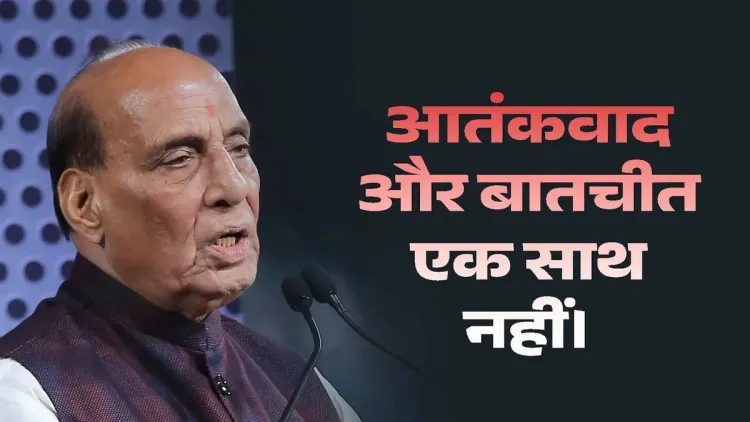
Defence Minister Rajnath Singh declared on September 24 that every terrorist attack from Pakistan will be treated as an 'Act of War,' invoking Operation Sindoor as proof that India's dual-track posture — diplomacy plus military readiness — is now a fixed, non-negotiable doctrine.
Key Takeaways
Rajnath Singh declared on September 24, 2026 that every terror attack from Pakistan will be treated as an 'Act of War.' Singh cited Operation Sindoor as evidence that India has made clear terrorism and dialogue cannot run simultaneously.
India's policy lineage includes surgical strikes after the 2016 Uri attack and airstrikes at Balakot following the 2019 Pulwama attack .
The 'Act of War' framing is a doctrinal escalation beyond previous 'no talks with terror' language, with implications under international law.
The Ministry of Defence has yet to issue a formal elaboration of Operation Sindoor's scope; parliamentary and diplomatic reactions are anticipated.
Singh, a former Union Home Minister and former Chief Minister of Uttar Pradesh , is among the BJP's most senior figures, giving the statement significant policy weight.
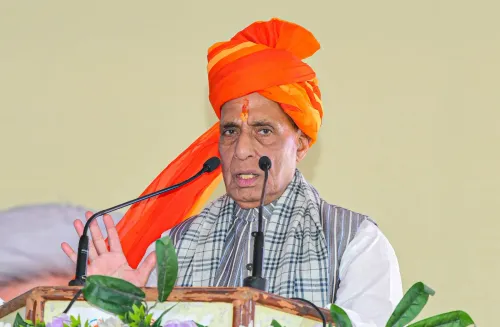
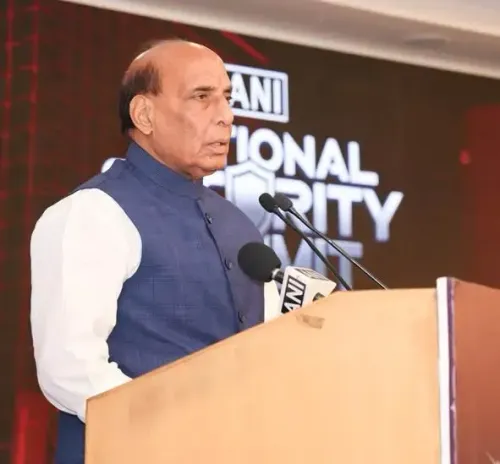
The line India will no longer allow anyone to blur — between diplomacy and war — was redrawn in stark terms on Thursday, September 24, 2026, when Union Defence Minister Rajnath Singh declared that every terrorist attack originating from Pakistan will henceforth be treated as an 'Act of War.' The statement, posted on X, follows what Singh described as the lesson of 'Operation Sindoor' — that terrorism and dialogue cannot coexist.
Posting in Hindi, Singh wrote: 'डिप्लोमेसी और सैन्य सामर्थ्य का सही संतुलन ही राष्ट्रीय सुरक्षा की गारंटी है' — 'The right balance of diplomacy and military capability is the guarantee of national security.' He added that while India has expanded engagement with the world, 'Operation Sindoor' has made one thing unambiguous: terrorism and talks will not run in parallel. 'India will make no compromise on its national security,' he said.
The doctrine shift: from 'no talks with terror' to 'Act of War'
India's position that terrorism and dialogue cannot proceed simultaneously is not new — senior ministers have stated it consistently since 2016. What is significant here is the specific escalation in language. Labelling a cross-border terrorist attack an 'Act of War' carries a distinct legal and strategic weight: it frames the response not as a counter-terrorism operation but as an exercise of the sovereign right to self-defence under international law.
The policy lineage is clear. After the Uri attack in 2016, India conducted surgical strikes across the Line of Control. After the Pulwama attack in 2019, Indian Air Force jets struck targets at Balakot. Each escalation was accompanied by a hardening of public doctrine. Singh's statement on September 24 represents the next formal articulation of that trajectory — an explicit, named threshold.
Operation Sindoor and the two-track India
Singh frames 'Operation Sindoor' as the proof-of-concept for India's dual-track posture: diplomatic outreach on one hand, kinetic readiness on the other. The research notes that Operation Sindoor's precise context and timing remain subject to official clarification — the Ministry of Defence has yet to release a formal statement elaborating the operation's scope. Parliament and diplomatic channels are expected to be the next arenas where the specifics get tested.
What is not ambiguous is the political and strategic signal. By invoking the phrase 'Act of War' publicly, the Defence Minister is communicating both to domestic audiences and to Islamabad: the calculus has changed. Any future attack will not merely invite a calibrated response — it will be treated as warfare, with all that implies for the scale and nature of India's reply.
Why the phrasing matters now
Words chosen by a Cabinet minister — particularly a former Home Minister and former Chief Minister of Uttar Pradesh who sits among the BJP's most senior figures — carry policy weight. This is not back-bench rhetoric. Singh's framing is a deliberate doctrinal statement, designed to set expectations, deter future attacks, and signal resolve to allies and adversaries alike. It arrives at a moment when India has expanded its diplomatic footprint globally, giving the hardline security message a broader international audience than at any previous point in the bilateral relationship with Pakistan.
India's armed forces and security establishment now operate under a publicly stated framework: dialogue is available, but the moment terrorism enters the equation, the rules of engagement shift entirely — and the government intends that shift to be credible, visible, and irreversible.
Point of View
Not merely counter-terrorism. This language, coming from a Cabinet minister of his seniority, is designed to be credible and internationally legible. It also reinforces the BJP government's pattern since 2016 of publicly hardening India's stated response threshold after each major incident. The reference to Operation Sindoor as the anchor for this doctrine means the credibility of the entire posture now hinges on official clarification of that operation's scope and outcome.
NationPress
24 Sept 2026
Frequently Asked Questions
What did Rajnath Singh say about Pakistan and terrorism on September 24?
Singh declared that every terrorist attack originating from Pakistan will now be treated as an 'Act of War,' and that terrorism and dialogue cannot proceed simultaneously — a position he anchored in the example of Operation Sindoor.
What is Operation Sindoor?
Rajnath Singh referenced Operation Sindoor as an action that demonstrated India's resolve against cross-border terrorism. The Ministry of Defence has not yet released a comprehensive formal statement on the operation's precise scope and timing.
What does 'Act of War' mean in the context of India-Pakistan relations?
Labelling a cross-border terrorist attack an 'Act of War' elevates the legal and strategic framing of India's response — it invokes the sovereign right to self-defence under international law, implying a potentially broader and more forceful response than a standard counter-terrorism action.
How does this statement fit India's history of responding to Pakistan-based attacks?
India has escalated its stated doctrine over successive incidents: surgical strikes followed the 2016 Uri attack, airstrikes at Balakot followed the 2019 Pulwama attack, and Singh's September 2026 statement now adds an explicit 'Act of War' threshold to that trajectory.
Will India stop dialogue with Pakistan entirely?
Singh's statement says terrorism and talks 'will not run in parallel' — consistent with the Indian government's position since 2016 that any dialogue is contingent on Pakistan ending support for cross-border terrorism.