Rajnath Singh calls Delhi protests politically motivated
Synopsis
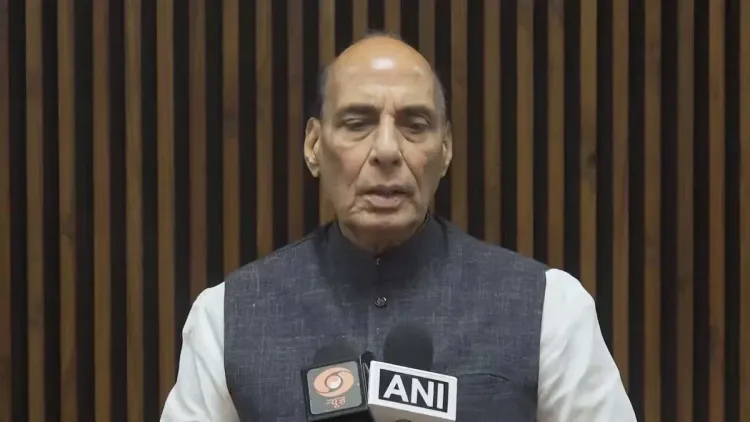
Union Defence Minister Rajnath Singh on 22 July 2026 accused opposition leaders of exploiting Delhi's student protests for political gain, reaffirmed the Modi government's commitment to youth welfare, and called on the opposition to engage through Parliament rather than street agitation during the ongoing Monsoon Session.
Key Takeaways
Rajnath Singh on 22 July 2026 called ongoing Delhi protests 'a matter of serious concern' while blaming opposition leaders for instigating them.
He accused some opposition leaders of creating a 'Manufactured Sense of Anger' to confuse and mislead students and youth.
Singh reaffirmed that the Modi government is 'fully committed' to the aspirations and welfare of students and youth.
He stated that the government has offered 'meaningful debate' on every issue during the ongoing Monsoon Session of Parliament.
Singh called on the opposition to stop disrupting the Monsoon Session and instead raise issues on the floor of Parliament .
He expressed confidence that India's youth would choose 'progress, development, and nation-building' over politically motivated agitation.
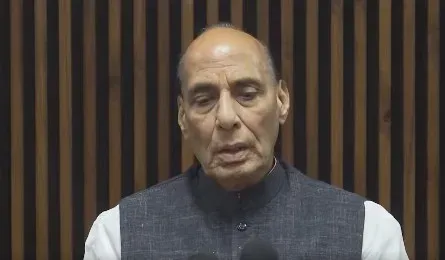
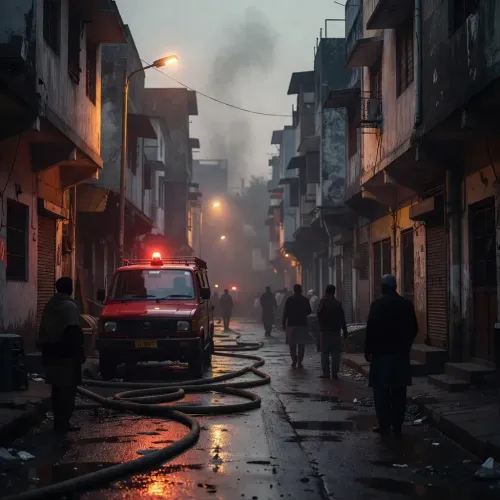
Union Defence Minister Rajnath Singh on Wednesday, 22 July 2026, sharply criticised ongoing student and youth protests in Delhi, calling them politically motivated and accusing some opposition leaders of manufacturing a 'sense of anger' to mislead young Indians. Singh urged the opposition to raise concerns inside Parliament during the ongoing Monsoon Session rather than on the streets.
Context
In a lengthy post in Hindi, Singh said the protests were 'गंभीर चिंता का विषय' ('a matter of serious concern'), but placed the blame not on the students themselves but on political actors he described as using youth as a tool for their own ends. He wrote that it was 'extremely unfortunate' that students and young people were being exploited as a 'political instrument' (राजनीतिक औज़ार) to serve narrow political interests.
Singh directly invoked Prime Minister Narendra Modi, stating that the government led by Modi was 'fully committed' to fulfilling the aspirations and welfare of students and youth. He added: 'It is our responsibility to listen to every concern of our students and address it.'
Policy Backdrop
The Defence Minister's statement follows a well-established constitutional position that Parliament is the designated forum for debating and resolving national issues. Since 2014, the ruling dispensation has repeatedly invoked this principle in response to opposition-led street agitations, particularly those involving students or campus politics.
Singh pointed out that the Monsoon Session of Parliament is currently under way and that the government has already offered to hold 'meaningful debate' (सार्थक बहस) on every issue. He argued the opposition was making an 'inappropriate attempt' to resolve issues on the street rather than inside the legislature. 'In a democracy, Parliament is the place to discuss issues, where the opposition is free to speak,' he said.
Stakeholders and Impact
Singh's post is directed at two distinct audiences: the student and youth community, whom he sought to reassure of the government's sensitivity to their concerns; and the opposition, whom he accused of engineering a 'Manufactured Sense of Anger' — a phrase he used in English within the Hindi post — to confuse and mislead the public, 'especially our children and youth.'
He expressed confidence that India's 'aware, mature, and discerning youth' (जागरूक, परिपक्व और विवेकशील युवा) would see through such attempts and choose the path of 'progress, development, and nation-building.' The statement implicitly distances the government from the substance of the protests while framing the ruling party as the true custodian of youth interests.
The government also issued a commitment that 'no injustice of any kind' would be done to any person, especially students and youth — a formulation that signals intent to engage with legitimate grievances while rejecting the protest format.
What's Next
The immediate test will be whether the Monsoon Session proceeds without further disruptions, and whether the government follows through on its stated willingness to debate the issues that have driven students to the streets. Any formal government-youth dialogue mechanism or legislative response in the coming days will be closely watched as a measure of how seriously the commitment to address student concerns is taken beyond the political messaging.
Frequently Asked Questions
What did Rajnath Singh say about the Delhi student protests?
Rajnath Singh said the protests were 'a matter of serious concern' but accused some opposition leaders of using students as a political tool, calling their efforts a 'Manufactured Sense of Anger' designed to mislead youth.
Why is Rajnath Singh asking the opposition to go to Parliament?
Singh argued that in a democracy, Parliament is the proper forum for debating issues. He noted the Monsoon Session is currently under way and the government has offered meaningful debate on every issue, making street protests an 'inappropriate attempt' to bypass the legislature.
What is the Monsoon Session of Parliament?
The Monsoon Session is the annual parliamentary sitting held between July and August each year, during which legislators debate and pass bills and raise issues of national importance.
What has the Modi government promised regarding student welfare?
Singh stated that the government led by Prime Minister Narendra Modi is 'fully committed' to fulfilling the aspirations and welfare of students and youth, and pledged that no injustice of any kind would be done to any person, especially students.
What is the BJP's position on opposition-led student protests in India?
The BJP has consistently framed opposition-led student protests as politically motivated disruptions rather than genuine expressions of youth grievance, urging opposition parties to use Parliament as the platform for raising concerns instead of organising street agitations.