Rajnath Singh: India has talent for cutting-edge tech, R&D ecosystem needed
Synopsis
Union Defence Minister Rajnath Singh declared on 26 October 2026 that India possesses the talent to develop any cutting-edge technology and that the government is committed to building a robust R&D and innovation ecosystem, reinforcing the Atmanirbhar Bharat defence indigenisation drive.
Key Takeaways
Union Defence Minister Rajnath Singh posted on 26 October 2026 affirming India's talent for developing any cutting-edge global technology.
Singh called for stronger support for R&D and Innovation and pledged government commitment to a 'strong Research Ecosystem.' India's defence R&D architecture includes DRDO , established in 1958 , and iDEX , launched in 2018 to engage startups in defence innovation.
The Atmanirbhar Bharat initiative announced in 2020 set targets to reduce defence import dependence and ring-fence capital budgets for domestic procurement.
The next Union Budget's defence R&D allocation will be a key indicator of whether the stated commitment translates into measurable investment.
India already has the raw talent to develop any cutting-edge technology in the world — what it now needs is the ecosystem to unleash it. That is the core argument Union Defence Minister Rajnath Singh put forward on Monday, 26 October 2026, in a post on X that placed research, development, and innovation at the centre of India's strategic ambitions.
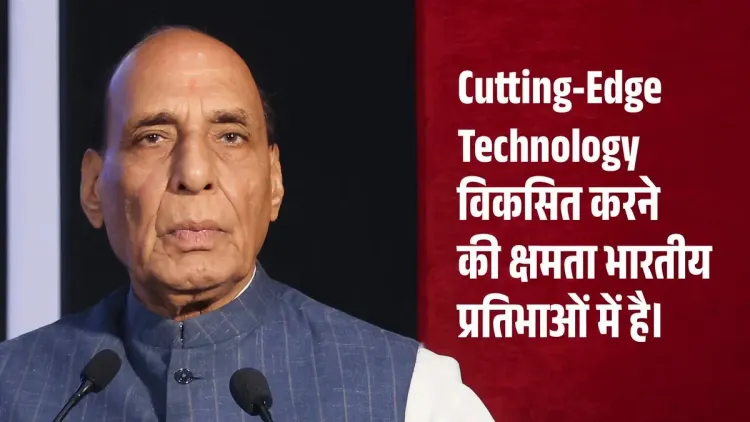
Writing in Hindi, Singh stated: 'भारत के पास दुनिया की किसी भी Cutting-Edge Technology को विकसित करने का Talent है।' ('India has the talent to develop any cutting-edge technology in the world.') He added that what is needed is an emphasis on R&D and innovation, and that the government is committed to building a 'strong Research Ecosystem.'
From DRDO to iDEX: the infrastructure India has already built
The assertion is not made in a vacuum. India has been building its defence R&D architecture for decades, beginning with the establishment of DRDO (Defence Research and Development Organisation) in 1958 as the state's primary engine for indigenous military technology. The journey since has been fitful but real — satellites, missiles, fighter aircraft, and now hypersonic programmes have all moved through DRDO's laboratories.
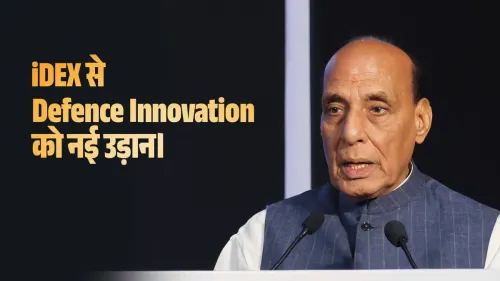
The sharper turn came in 2018, when the government launched iDEX (Innovations for Defence Excellence), a platform explicitly designed to pull private startups and individual innovators into the defence R&D loop — the kind of nimble, risk-tolerant actors that large state labs historically struggle to replicate. The initiative sits at the intersection of national security and commercial innovation, and it has grown steadily since.
Atmanirbhar Bharat's defence pivot and what is still pending
The Atmanirbhar Bharat drive, announced in 2020, gave the indigenisation push its most public political framing, setting hard targets for reducing import dependence and reserving a portion of the defence capital budget for domestically sourced equipment. Singh, as the minister steering that policy, has consistently returned to one theme: India's talent pool is not the bottleneck. The bottleneck is the ecosystem — funding pipelines, intellectual-property frameworks, testing infrastructure, and the speed at which private innovation can reach the armed forces.
That gap is precisely what Monday's post flags. A statement of confidence in Indian talent, paired with a government commitment to ecosystem-building, is a signal aimed at defence scientists, private-sector innovators, and the startup community simultaneously — the three constituencies that any credible R&D surge will need on the same page.
What the next Union Budget will reveal
The real test of the commitment Singh invokes will arrive with the next Union Budget — specifically, whether allocations to defence R&D as a share of overall defence spending move meaningfully upward, and whether DRDO-private sector collaboration frameworks are deepened. Announcements from ongoing defence innovation challenges will also be an early indicator of momentum. India has declared the intent. The infrastructure is in place. The open question is whether the funding and speed of execution can finally match the talent Singh says is already there.
Talent, the minister is saying, is not India's problem. Time is.
Point of View
Slow procurement cycles, and weak private-sector integration. By foregrounding 'ecosystem' rather than 'spending,' the minister is also signalling to the private defence industry that the next policy moves will focus on enabling frameworks, not just government outlays. The timing, ahead of a budget cycle, gives the statement a forward-looking policy dimension: it sets a public benchmark against which R&D allocations will now be measured. If the next budget does not show a meaningful uptick in defence R&D as a share of total defence spending, the gap between stated commitment and fiscal reality will be hard to paper over.
NationPress
26 Oct 2026
Frequently Asked Questions
What did Rajnath Singh say about India's technology capabilities?
Rajnath Singh stated on 26 October 2026 that India has the talent to develop any cutting-edge technology in the world and that the government is committed to building a strong R&D and innovation ecosystem.
What is iDEX in Indian defence?
iDEX, or Innovations for Defence Excellence, is a government initiative launched in 2018 to engage startups, innovators, and private-sector firms in defence R&D, reducing dependence on large state laboratories for all innovation.
What is Atmanirbhar Bharat in the context of defence?
Atmanirbhar Bharat, announced in 2020, is a self-reliance drive that set targets for reducing defence import dependence and reserved portions of the defence capital budget for domestically sourced equipment and technology.
What is DRDO and what role does it play in Indian defence R&D?
DRDO, the Defence Research and Development Organisation, was established in 1958 and remains India's primary state body for indigenous military research and development, working on programmes ranging from missiles to aircraft and emerging technologies.
Why is the Union Budget important for India's defence R&D goals?
The Union Budget determines the actual funding allocated to defence R&D and DRDO, making it the primary mechanism through which stated government commitments to innovation ecosystems are either substantiated or left unfulfilled.