RBI projects FY27 inflation at 5.2%, flags food and energy risks
Synopsis
The RBI's FY27 inflation forecast of 5.2% — with Q3 projected to spike to 6% — is a significant hawkish pivot. Governor Malhotra's declaration that rate recalibration is 'imperative' signals the era of benign inflation, which allowed earlier rate easing, is effectively over. With food price pressures broadening and El Niño adding supply risk, the central bank is bracing for a bumpy year ahead.
Key Takeaways
The RBI projected FY27 CPI inflation at 5.2% , up from a more benign inflation environment the previous year.
Quarterly projections: Q2 at 4.9% , Q3 at 6% , Q4 at 5.7% ; Q1 FY28 at 5.6% .
Core inflation is projected at 4.4% for FY27; rose to 4.2% in August.
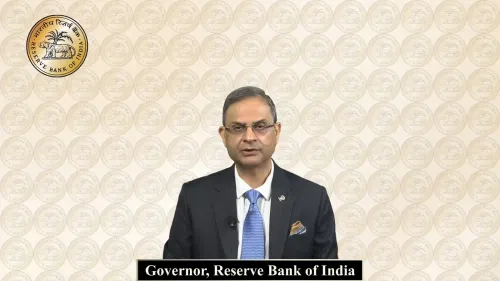
Governor Sanjay Malhotra said rate recalibration is 'imperative' given headline CPI is expected to average nearly 5.8% over the next three quarters.
Food price spikes in sugar and onion , a deficient monsoon , and El Niño conditions are cited as key supply-side risks.
The share of CPI basket items recording inflation above 4% rose to about 37% in August, signalling broadening price pressures.
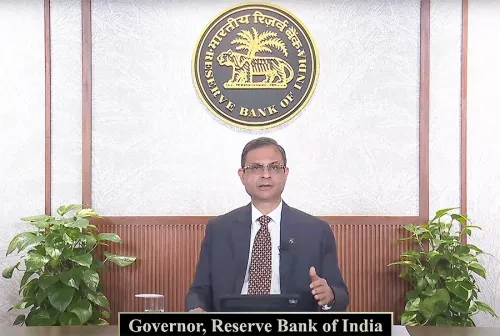
The Reserve Bank of India (RBI) on Wednesday, 7 October projected consumer price inflation (CPI) at 5.2% for FY2026-27, warning that price pressures are 'no longer as benign as they were last year' amid rising food costs, elevated energy prices, and persistent supply-side risks. The projection signals a marked shift in the central bank's inflation outlook and sets the stage for a more cautious monetary policy stance in the months ahead.
Quarterly Inflation Projections
The RBI has laid out a quarter-by-quarter trajectory that maps an uneven but elevated inflation path through the year. Q2 FY27 inflation is seen at 4.9%, rising sharply to 6% in Q3 before easing slightly to 5.7% in Q4. Looking further ahead, inflation for Q1 FY2027-28 is projected at 5.6%. Core inflation — which strips out the most volatile components — is estimated at 4.4% for the full year 2026-27.
What Is Driving Prices Up
RBI Governor Sanjay Malhotra highlighted that headline CPI rose to 4.8% in August, up from 4.5% in July, with the increase driven primarily by higher food and fuel inflation. Food price increases have become more broad-based, with notable spikes recorded in items such as sugar and onion. The rise in fuel inflation in August largely reflected unfavourable base effects, the central bank noted.
Core inflation climbed to 4.2% in August, while core inflation excluding precious metals rose to 2.9%, according to Governor Malhotra. Critically, the weighted share of items in the headline CPI basket recording inflation above 4% increased steadily to around 37% in August — indicating that price pressures are broadening across the consumer basket, not confined to a few categories.
'Core inflation has also picked up indicating some signs of widening price pressures,' Malhotra said in his statement.
Supply-Side Risks on the Horizon
The RBI cautioned that supply-side pressures could persist, citing a deficient monsoon, ongoing El Niño conditions, and elevated energy and commodity prices, with cost pass-through continuing. These structural risks add uncertainty to the inflation trajectory, particularly for the high-risk Q3 FY27 window when the projection peaks at 6%.
This comes amid global commodity markets that remain sensitive to geopolitical disruptions, adding an external dimension to what is partly a domestic food-supply story.
Policy Recalibration Now 'Imperative'
Governor Malhotra was unambiguous about the policy implication. Headline CPI inflation is expected to average almost 5.8% over the next three quarters, he said. 'In this milieu, recalibrating the policy rate is imperative,' Malhotra stated — language that markets will parse carefully for signals on the rate trajectory. The use of 'imperative' marks one of the sharpest inflation-linked rate signals from the RBI in recent memory, suggesting the central bank is prepared to act if price pressures do not moderate.
What This Means for Households and Markets
A sustained inflation print above the RBI's 4% medium-term target for three straight quarters will weigh on real household incomes, particularly for lower-income groups where food constitutes a larger share of spending. For debt markets, the hawkish tone reduces near-term rate cut expectations. Bond yields and the rupee will likely remain sensitive to each successive CPI data release through FY27.
Point of View
And markets should read it as a clear signal that rate cuts are off the table for the foreseeable future. The broadening of price pressures — with 37% of the CPI basket now above 4% — is the more worrying underlying detail that headline numbers obscure. If the deficient monsoon and El Niño compound further, the Q3 peak of 6% could prove optimistic rather than conservative.
NationPress
7 Oct 2026
Frequently Asked Questions
What is the RBI's inflation projection for FY27?
The RBI has projected consumer price inflation at 5.2% for FY2026-27. On a quarterly basis, inflation is seen at 4.9% in Q2, rising to a peak of 6% in Q3, then easing to 5.7% in Q4.
Why is inflation rising in India according to the RBI?
The RBI has cited higher food prices — particularly in sugar and onion — elevated fuel costs, a deficient monsoon, ongoing El Niño conditions, and broad-based supply-side risks. CPI rose to 4.8% in August from 4.5% in July, driven chiefly by food and fuel.
What did RBI Governor Sanjay Malhotra say about interest rates?
Governor Malhotra stated that 'recalibrating the policy rate is imperative,' signalling a hawkish tilt in monetary policy. He noted that headline CPI inflation is expected to average nearly 5.8% over the next three quarters, making the current rate stance difficult to sustain.
What is core inflation and where does the RBI see it?
Core inflation, which excludes the most volatile items, rose to 4.2% in August and is projected at 4.4% for the full FY27. Core inflation excluding precious metals stood at 2.9% in August. The RBI flagged this pickup as a sign of widening price pressures beyond food and fuel.
How does this RBI inflation outlook affect households and bond markets?
Sustained inflation above the RBI's 4% medium-term target for three consecutive quarters will erode real household incomes, especially for lower-income groups with higher food expenditure shares. For debt markets, the hawkish language reduces expectations of near-term rate cuts, keeping bond yields and the rupee sensitive to upcoming CPI prints.