Rijiju Hails Agniveers, iDEX as Pillars of Yuva Shakti
Synopsis
Union Parliamentary Affairs Minister Kiren Rijiju on 13 June 2026 credited over 1.5 lakh Agniveers and iDEX innovators with securing India's future, linking the Agnipath scheme and defence innovation platform to the Aatmanirbhar Bharat vision under the #12YearsOfYuvaShakti banner.
Key Takeaways
Union Parliamentary Affairs Minister Kiren Rijiju posted on 13 June 2026 under #12YearsOfYuvaShakti , celebrating youth contributions to national security.
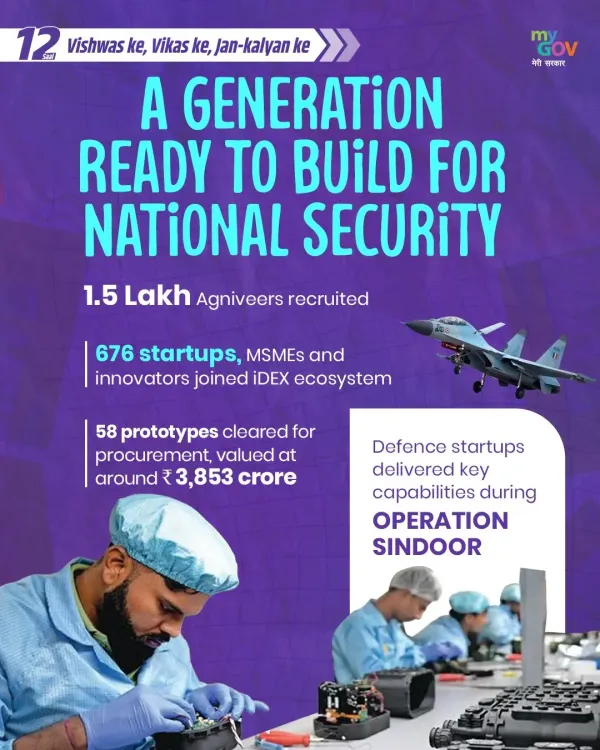
Rijiju cited over 1.5 lakh Agniveers currently serving the nation under the Agnipath scheme launched in June 2022 .
The iDEX platform, launched in April 2018 , was highlighted as a vehicle for young innovators to drive indigenous defence solutions.
Both initiatives are positioned within the Aatmanirbhar Bharat Abhiyan framework announced in May 2020 to reduce defence import dependence.
Parliamentary debates on Agniveer regularisation and upcoming iDEX challenge rounds remain key policy flashpoints to watch.
Union Parliamentary Affairs Minister Kiren Rijiju on Saturday, 13 June 2026, invoked the twin pillars of the Agnipath scheme and the iDEX defence innovation platform to argue that India's youth are actively securing the nation's future, framing their contributions as central to the vision of an Aatmanirbhar Bharat.
Context
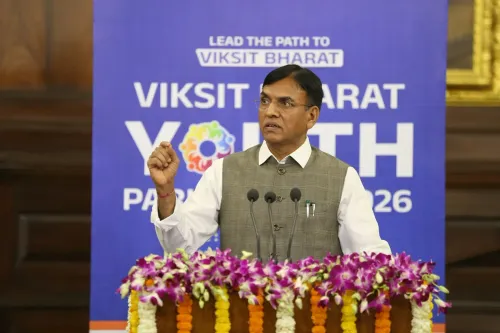
Posting under the hashtag #12YearsOfYuvaShakti, Rijiju wrote: 'India's youth are not just preparing for the future; they are securing it.' He cited over 1.5 lakh Agniveers currently serving the nation alongside young innovators driving defence solutions through iDEX, describing the combination as 'Yuva Shakti' — youth power — that is strengthening national security.
The post comes amid continued public and parliamentary interest in both the Agnipath scheme, which has faced scrutiny since its launch, and the government's broader indigenisation agenda. Rijiju, a senior BJP leader from Arunachal Pradesh, currently holds the Parliamentary Affairs and Minority Affairs portfolios, and has previously overseen youth affairs in government.
Policy Backdrop
The Agnipath scheme was announced in June 2022 by the Ministry of Defence to overhaul traditional permanent recruitment, inducting young personnel as Agniveers on a four-year tour of duty. The scheme was designed to lower the average age profile of the armed forces while managing the long-term pension liability of the defence services.
iDEX — Innovations for Defence Excellence — was launched in April 2018 to build a defence innovation ecosystem connecting startups, MSMEs, and academic institutions with the armed forces. Together, the two initiatives represent a policy effort to simultaneously reform military manpower and accelerate private-sector participation in defence research and development.
Both programmes sit within the larger Aatmanirbhar Bharat Abhiyan, announced in May 2020, which set explicit targets for indigenous defence manufacturing. The government subsequently notified negative import lists for defence equipment in 2020 and 2021 to push domestic production further.
Stakeholders and Impact
Agniveers — the young recruits inducted under Agnipath — are the most direct stakeholders, with their post-service prospects remaining a subject of debate in policy circles. The scheme has drawn both support as a modernisation measure and criticism over the absence of guaranteed permanent absorption after the four-year term.
Defence startups and innovators participating in iDEX challenge rounds stand to benefit from continued government focus on the platform, which has funded numerous indigenous technology projects. For the broader armed forces, the dual emphasis on youth induction and domestic innovation is intended to reduce dependence on foreign equipment imports over the medium term.
What's Next
Parliamentary debates on the possible extension or regularisation of Agniveers are expected to continue in upcoming sessions, with opposition parties having raised questions about long-term employment security for recruits. New iDEX challenge rounds and defence indigenisation targets in the forthcoming Union Budget will be closely watched as indicators of how far the self-reliance agenda has advanced. Rijiju's post, timed to the #12YearsOfYuvaShakti milestone, signals that the ruling party intends to keep youth-led national security as a prominent political and policy narrative heading into the budget cycle.
Point of View
Blunting criticism of the four-year Agniveer contract by foregrounding the number of youth already serving. The timing under a milestone hashtag suggests a coordinated ruling-party communication push rather than a spontaneous statement. By linking manpower reform to innovation policy and Aatmanirbhar Bharat, the BJP is constructing a coherent narrative that frames short-term employment as strategic national service. How this narrative holds up will depend on whether concrete post-service pathways for Agniveers materialise before the next election cycle.
NationPress
13 Sept 2026
Frequently Asked Questions
What is the Agnipath scheme and who are Agniveers?
The Agnipath scheme, announced in June 2022, is a military recruitment reform that inductsyoung personnel into the armed forces as 'Agniveers' on a four-year short-service contract, after which a portion may be retained permanently while the rest are released with a financial package.
What is iDEX and how does it involve India's youth?
iDEX, or Innovations for Defence Excellence, is a government platform launched in April 2018 that funds startups, MSMEs, and young innovators to develop indigenous defence technologies, directly linking private-sector youth talent to the armed forces' modernisation needs.
What did Kiren Rijiju say about Agniveers and iDEX?
On 13 June 2026, Rijiju stated that over 1.5 lakh Agniveers are serving the nation and that young innovators through iDEX are driving defence solutions, calling this combined force 'Yuva Shakti' that is strengthening national security.
What is Aatmanirbhar Bharat and how does it relate to defence?
Aatmanirbhar Bharat Abhiyan, launched in May 2020, is India's self-reliance initiative that includes specific targets for domestic defence manufacturing and technology development, supported by negative import lists for defence equipment notified in 2020 and 2021.
What is the controversy around the Agnipath scheme?
The Agnipath scheme has faced criticism over the lack of guaranteed permanent absorption after the four-year Agniveer term, with opposition parties raising concerns in Parliament about long-term employment security for recruits who complete their service.