Rijiju Calls Out Opposition MPs' Conduct in Parliament
Synopsis
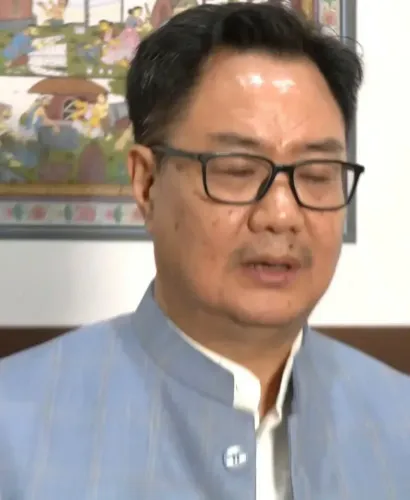
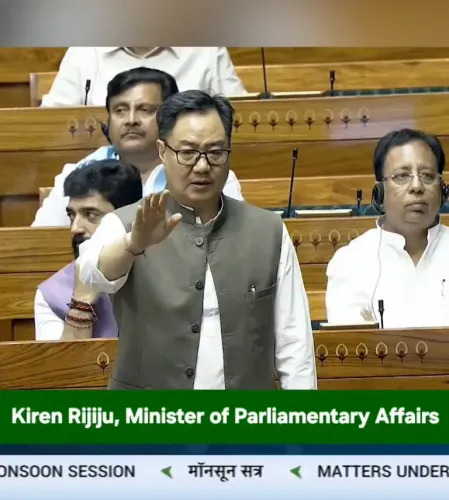
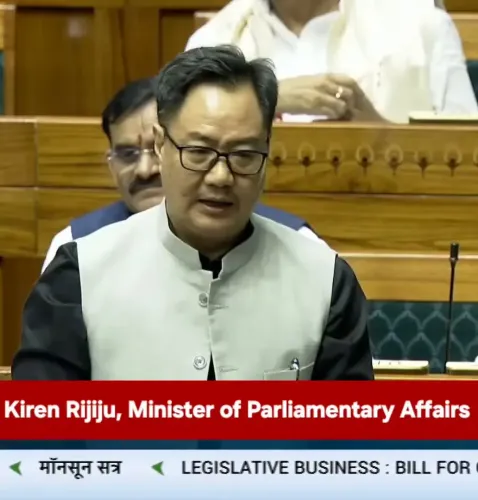
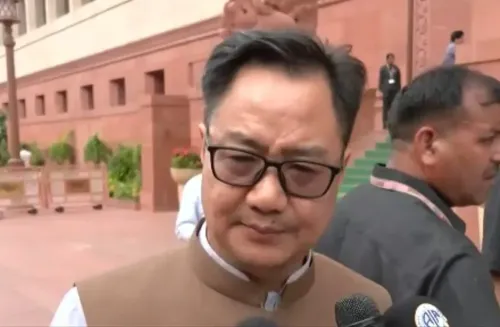
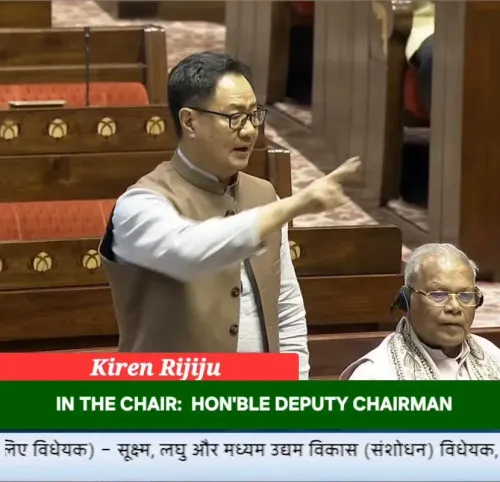
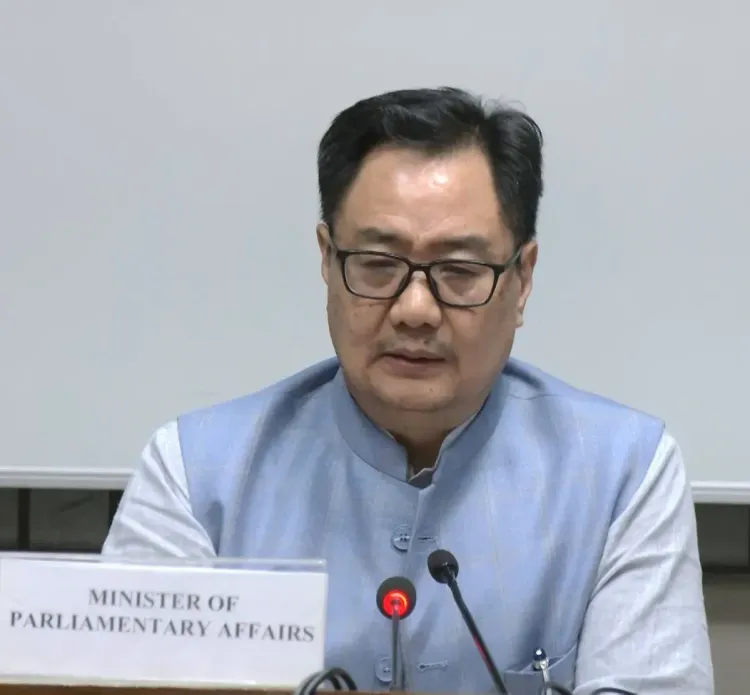
Union Parliamentary Affairs Minister Kiren Rijiju called out opposition MPs on 14 August 2026, saying their behaviour is 'disappointing' and drawing a firm distinction between every Indian's right to protest and an elected MP's duty to raise issues inside Parliament.
Key Takeaways
Kiren Rijiju , Union Parliamentary Affairs Minister, publicly criticised opposition MPs on 14 August 2026 for what he called 'irresponsible behavior'.
Rijiju explicitly affirmed the right to protest for every Indian, at any place — but drew a sharp line for elected MPs, who he said must raise public issues inside Parliament.
The Parliamentary Affairs Ministry is the nodal body for coordinating legislative business across both Houses, making disruptions a direct institutional concern for Rijiju.
Opposition parties have historically argued that protests inside Parliament are themselves a valid form of parliamentary expression when urgent debates are denied.
The pattern of ruling-party ministers criticising opposition conduct in Parliament stretches back to at least the early 2000s , cutting across party lines.
When the nation's elected representatives take their grievances to the streets instead of the floor of the House, something has gone wrong with the system — and Union Parliamentary Affairs Minister Kiren Rijiju is saying so plainly. On Friday, 14 August 2026, the minister posted a pointed rebuke of opposition MPs on X, drawing a clear line between the democratic right to protest and the constitutional duty of a legislator.
Rijiju wrote: 'I'm not old enough and not a veteran Parliamentarian yet, but my experience with current opposition MPs is disappointing due to their irresponsible behavior. Protest is the right of every Indian. Protest at any place. MPs are elected to raise public issues inside the Parliament.'
The Line Rijiju Is Drawing
The minister's framing is deliberate and worth unpacking. He does not deny the right to protest — he explicitly affirms it, for every Indian, anywhere. His objection is narrower and more pointed: that Members of Parliament, uniquely empowered by their mandate, are squandering that mandate by not doing the one thing ordinary citizens cannot — stand inside Parliament and demand answers. It is a distinction that cuts through the usual noise. A farmer can protest at Jantar Mantar. A student can march to Rajpath. An MP has Question Hour, Zero Hour, and the full weight of the legislative floor. Choosing the street over the chamber, Rijiju implies, is not courage — it is abdication.A Pattern as Old as the Modern Opposition
This is not the first time a minister from the ruling side has made this argument, and it will not be the last. Since at least the early 2000s, successive governments — regardless of which party held power — have watched opposition benches walk out, hold placards in the Well of the House, and force adjournments, only to be met with the same counter-charge: you were elected to speak, not to silence. The Parliamentary Affairs Ministry, which Rijiju heads, is the nodal body responsible for coordinating legislative business across both Houses. Disruptions are, in a very direct sense, his problem to manage — which gives his frustration an institutional edge beyond mere political point-scoring.What the Opposition Will Say
Opposition MPs have consistently argued that protests inside Parliament — including in the Well — are themselves a form of parliamentary expression, used when the treasury benches refuse to allow discussion on urgent matters. That counter-argument is also part of the pattern, and it is not without precedent in parliamentary convention. The real test, as always, will come when the next session opens: whether formal notices, privilege motions, or Speaker rulings follow, or whether this remains a sharp exchange in the digital public square. Rijiju is a senior BJP leader from Arunachal Pradesh who has navigated multiple high-profile portfolios. His choice to frame this critique with a note of personal humility — 'I'm not old enough and not a veteran Parliamentarian yet' — makes the rebuke land harder, not softer. It signals that even by his own modest measure, what he is witnessing falls short.Point of View
Not just political point-scoring — as the minister responsible for managing legislative business, he has a direct stake in floor conduct. The framing, which concedes the right to protest before pivoting to MP-specific duty, is designed to be difficult to rebut on democratic grounds alone. It also signals that the government may be building a public record ahead of a contentious session, where opposition disruptions could be framed as self-disqualification from the debate. The recurring nature of this argument across governments, however, suggests it rarely resolves the underlying tension between procedural expectations and opposition leverage tactics.
NationPress
14 Aug 2026
Frequently Asked Questions
What did Kiren Rijiju say about opposition MPs?
Rijiju said his experience with current opposition MPs is 'disappointing due to their irresponsible behavior,' adding that while protest is every Indian's right, MPs are elected specifically to raise public issues inside Parliament.
What is Kiren Rijiju's role as Parliamentary Affairs Minister?
The Parliamentary Affairs Minister coordinates legislative business across the Lok Sabha and Rajya Sabha, liaises between the government and Parliament, and manages the scheduling of bills and other business — making floor disruptions a direct concern of his ministry.
Do opposition MPs have the right to protest inside Parliament?
Opposition parties argue that protests inside Parliament, including in the Well of the House, are a recognised form of parliamentary expression used when the ruling side refuses to allow discussion on urgent matters. The government and Speaker's office have repeatedly contested this view.
How often has Parliament been disrupted by opposition protests in India?
Parliamentary disruptions and adjournments caused by opposition protests have been a recurring feature of Indian legislative sessions since at least the early 2000s, occurring under governments of multiple parties.
What action could follow Rijiju's criticism of opposition MPs?
Possible formal consequences include privilege motions, Speaker rulings on conduct, or notices against specific MPs — though such measures have historically been rare and are more likely to be watched for in the next scheduled parliamentary session.