Rijiju credits Modi's foresight for railway electrification push
Synopsis
Union Minister Kiren Rijiju invoked India's pre-2014 diesel-heavy railway network to argue that PM Modi's electrification drive has shielded the country from a potential energy-supply crisis, making the post during the Prime Minister's visit to Haryana.
Key Takeaways
Union Parliamentary Affairs Minister Kiren Rijiju posted on 17 July 2026 crediting PM Modi with transforming railway energy security.
Before 2014 , a large share of India's broad-gauge trains ran on diesel, creating vulnerability to fuel-supply disruptions.
Post-2014, Indian Railways accelerated electrification with a formal mission for 100 per cent broad-gauge electrification announced in 2017 .
Rijiju framed the shift as forward-looking energy-security policy, not merely an infrastructure upgrade.
The post was made in the context of PM Modi's visit to Haryana , with the hashtag #PMModiInHaryana .
Residual diesel locomotive phase-out and dedicated freight corridor electrification remain areas of ongoing parliamentary and policy attention.
Union Parliamentary Affairs Minister Kiren Rijiju on Friday, 17 July 2026, credited Prime Minister Narendra Modi with transforming India's railway energy security, arguing that the country's heavy reliance on diesel traction before 2014 had left it exposed to a potentially crippling supply crisis — one that proactive electrification has since averted.
Context
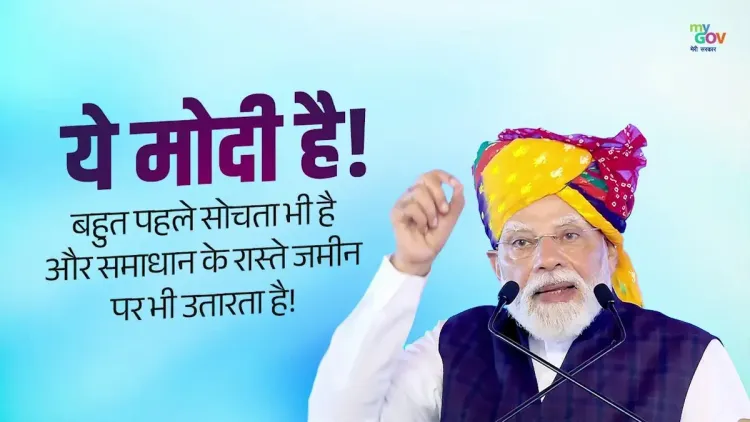
Posting in Hindi with the hashtag #PMModiInHaryana, Rijiju warned of a hypothetical scenario: 'अगर डीजल आना बंद हो गया होता तो, डीजल से चलने वाली ट्रेन कैसे चलती' — 'If diesel supply had stopped, how would diesel-run trains have moved? The country would have been in crisis.' He then contrasted that pre-2014 vulnerability with what he described as Modi's habit of anticipating problems and delivering solutions on the ground.
The post was accompanied by a video and was made in the context of PM Modi's visit to Haryana, where infrastructure and development themes have been a recurring political focus.
Policy Backdrop
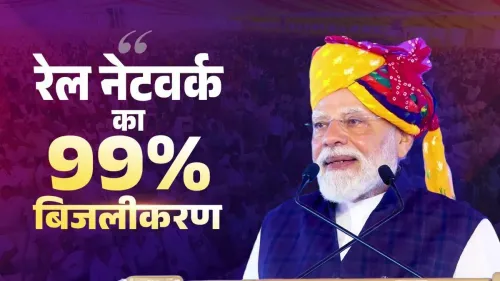
Before 2014, a significant portion of India's broad-gauge rail network depended on diesel traction, making operations sensitive to global crude oil prices and import availability. After 2014, Indian Railways accelerated its electrification programme with the explicit goal of eliminating diesel dependence on the main network.
By 2017, the Ministry of Railways had formalised a mission for 100 per cent electrification of the broad-gauge network, aiming to cut operating costs, reduce carbon emissions, and insulate the system from fuel import shocks. The shift to electric traction also aligns with India's broader energy-transition commitments under its national climate targets.
Rijiju's framing positions railway electrification as an energy-security decision rather than merely an infrastructure upgrade — a narrative the ruling BJP has consistently deployed to distinguish the post-2014 governance approach from what it characterises as reactive, short-term policymaking of earlier governments.
Stakeholders and Impact
Railway passengers and freight operators are the primary beneficiaries of electrification, which enables faster, cleaner, and more reliable services while reducing per-kilometre operating costs. For freight operators in particular, electrification of trunk routes and the Dedicated Freight Corridors directly affects logistics costs across sectors including agriculture, steel, and cement.
The energy-security dimension also touches fuel-import economics: every diesel locomotive replaced by an electric one reduces India's dependence on imported crude, a factor that carries strategic weight given global oil-price volatility. Haryana, a major agricultural and industrial state, is a significant freight-traffic generator and stands to benefit from a fully electrified network.
What's Next
Parliamentary scrutiny of the residual diesel locomotive phase-out schedule and progress on electrifying the last remaining non-electrified pockets of the network is expected to intensify. Questions around the pace of retiring older diesel rolling stock, the readiness of electric locomotive manufacturing capacity, and integration with renewable energy sources for traction power will shape the next phase of the electrification story.
As PM Modi continues engagements in states like Haryana, infrastructure milestones — particularly in railways and highways — are likely to remain central to the BJP's political communication ahead of state and national electoral cycles.
Point of View
He elevates what could be a dry policy achievement into an energy-security argument, a framing that resonates with voters sensitive to price shocks and import dependence. The timing, pegged to PM Modi's Haryana visit, suggests a deliberate effort to localise national infrastructure gains for a politically competitive state. This pattern of connecting railway modernisation to strategic self-reliance is consistent with the government's broader 'Atmanirbhar Bharat' communication arc.
NationPress
17 Jul 2026
Frequently Asked Questions
What did Kiren Rijiju say about Indian Railways and diesel dependence?
Rijiju said that before 2014, a large part of India's train network ran only on diesel, leaving the country exposed to a potential crisis if diesel supply had been disrupted. He credited PM Modi with foreseeing the problem and driving railway electrification as a solution.
What is the status of Indian Railways electrification?
Indian Railways launched a mission for 100 per cent broad-gauge electrification after 2017, significantly reducing the network's dependence on diesel traction and cutting operating costs and fuel imports.
Why is railway electrification important for India's energy security?
Electrification removes reliance on imported diesel fuel for train operations, insulating the railway network from global oil-price volatility and supply disruptions, while also reducing carbon emissions.
What was PM Modi doing in Haryana when Rijiju made this post?
The hashtag #PMModiInHaryana indicates PM Modi was visiting Haryana on 17 July 2026, though the specific event was not detailed in the post. Infrastructure and development have been recurring themes of such visits.
How does railway electrification benefit freight operators in states like Haryana?
Electrification of trunk routes and dedicated freight corridors lowers per-kilometre logistics costs for industries such as agriculture, steel and cement, sectors in which Haryana is a major player.