Rijiju Urges Opposition to Back Student-Focused Bill
Synopsis
Union Parliamentary Affairs Minister Kiren Rijiju on 24 July 2026 announced the government is bringing a 'historic and uncompromising' bill to secure students' futures, citing a Prime Ministerial commitment, and appealed to opposition parties to support the legislation in Parliament.
Key Takeaways
Kiren Rijiju , Union Minister of Parliamentary Affairs, announced a 'historic and uncompromising' education bill on 24 July 2026 .
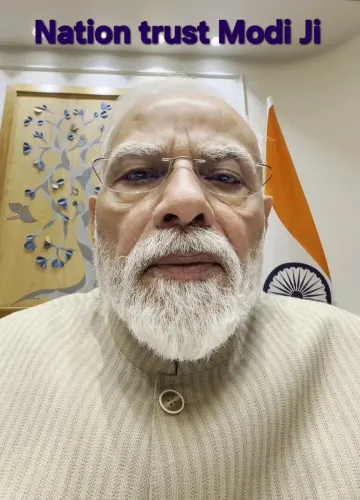
The bill is framed as fulfilment of a commitment made by Prime Minister Narendra Modi .
Rijiju made a direct public appeal to opposition parties to support the bill 'for the sake of the young students.' The announcement aligns with the government's broader push to legislatively implement the National Education Policy 2020 .
Specific provisions and the formal title of the bill have not yet been disclosed publicly.
The bill is expected to be taken up in an upcoming session of Parliament, with possible standing committee review.
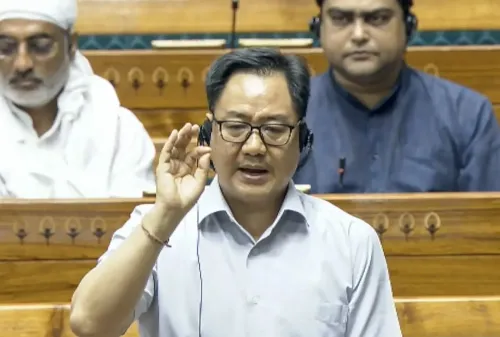
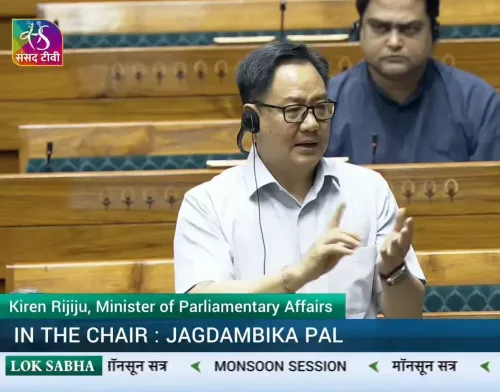
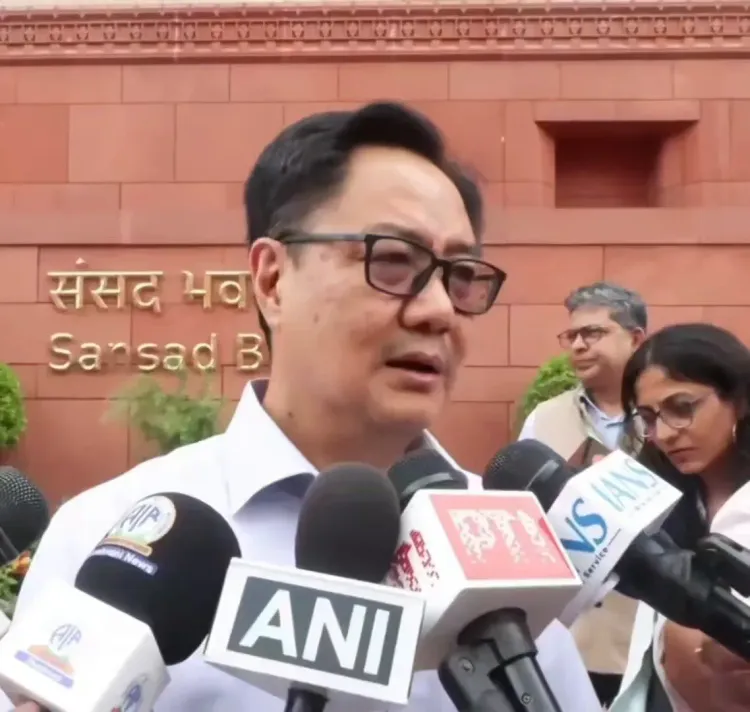
Union Parliamentary Affairs Minister Kiren Rijiju on Friday, 24 July 2026, announced that the government is bringing what he described as a 'historic and uncompromising' bill to secure the future of students, fulfilling a commitment made by Prime Minister Narendra Modi. Rijiju made a direct appeal to opposition parties to support the legislation 'for the sake of the young students.'
Context
Rijiju posted on X stating: 'As committed by the Hon'ble Prime Minister Shri Narendra Modi Ji, Govt is bringing a historic and uncompromising Bill to secure the future of the students. I appeal the opposition parties to support the bill for the sake of the young students.' The post frames the bill as a direct delivery on a Prime Ministerial promise, lending it the weight of a top-level political commitment rather than a routine legislative exercise.
As Union Minister of Parliamentary Affairs, Rijiju is the government's chief floor manager in both Houses of Parliament, making his appeal to the opposition particularly significant. His public call signals that the government anticipates a contested passage and is seeking cross-party consensus ahead of the bill's introduction.
Policy Backdrop
The announcement comes against the backdrop of the National Education Policy (NEP) 2020, the most sweeping overhaul of India's education framework since 1986. NEP 2020 called for new regulatory architecture, multidisciplinary learning structures, and revised statutory frameworks across school and higher education — many of which still await legislative implementation.
Since 2014, the Narendra Modi government has pursued a series of education-sector legislations aimed at aligning existing statutes with NEP objectives. Bills touching on higher education regulation have previously drawn sharp debate in Parliament over issues of federalism, language policy, and the centralisation of academic oversight.
Stakeholders and Impact
Students and higher education institutions are the primary stakeholders identified in the government's framing. The minister's emphasis on 'securing the future of students' suggests the bill may address concerns around examination integrity, institutional accountability, or student welfare — though specific provisions remain unconfirmed at this stage.
Opposition parties will face a political calculus: resisting a bill framed around student welfare risks public criticism, while supporting it without scrutiny could be seen as a legislative concession. The government's choice to publicly appeal for opposition support — rather than relying on its own numbers — indicates awareness of this dynamic and possibly the need for a two-thirds majority or Rajya Sabha arithmetic.
What's Next
The bill is expected to be introduced in the ongoing or upcoming session of Parliament, with a parliamentary standing committee review a likely procedural step before a floor vote. The government's track record on education legislation suggests stakeholder consultations and committee deliberations could shape the final text significantly.
How opposition parties respond to Rijiju's public appeal will be an early indicator of the bill's legislative journey. A broad consensus, if achieved, could mark a rare moment of bipartisan alignment on education reform — a sector that has historically been a fault line in Indian parliamentary politics.
Point of View
Making it harder for opposition parties to resist without appearing anti-student. The invocation of a direct Prime Ministerial commitment elevates the bill's political stakes, signalling that the ruling party intends to make education reform a flagship legislative achievement of this Parliament session. This fits a broader pattern in which the Modi government has used NEP 2020 as a legislative mandate, progressively pushing enabling bills through Parliament while managing federal sensitivities. The opposition's response will reveal whether education can serve as a rare bipartisan space or whether it remains a deeply contested political battleground.
NationPress
24 Jul 2026
Frequently Asked Questions
What is the student bill announced by Kiren Rijiju?
Kiren Rijiju announced on 24 July 2026 that the government is bringing a 'historic and uncompromising' bill aimed at securing the future of students, as committed by Prime Minister Narendra Modi. Specific provisions and the bill's formal title have not yet been made public.
Why is Rijiju appealing to opposition parties to support the education bill?
As Union Minister of Parliamentary Affairs, Rijiju manages the government's legislative business in Parliament. His public appeal suggests the government is seeking broad cross-party support, possibly because the bill requires a special majority or because the government faces a tight arithmetic in the Rajya Sabha.
Is this bill related to the National Education Policy 2020?
The bill fits within the government's broader legislative agenda to implement the National Education Policy 2020, which called for new regulatory frameworks and statutory overhauls in school and higher education. However, no official confirmation linking this specific bill directly to NEP 2020 has been provided.
When will the student bill be introduced in Parliament?
No specific date has been announced. The bill is expected to be introduced in the ongoing or an upcoming session of Parliament, after which it may be referred to a parliamentary standing committee for review.
What has Narendra Modi committed regarding education reform?
Rijiju cited a commitment by Prime Minister Narendra Modi to bring legislation to secure students' futures. The Modi government has prioritised education reform since 2014, most notably through the rollout of the National Education Policy 2020.