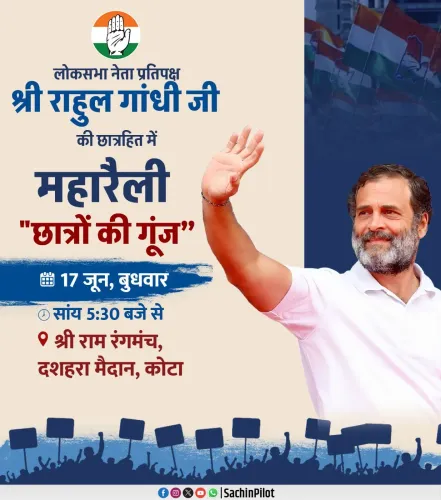
Sachin Pilot shares Sonia Gandhi's column on education failures
Synopsis
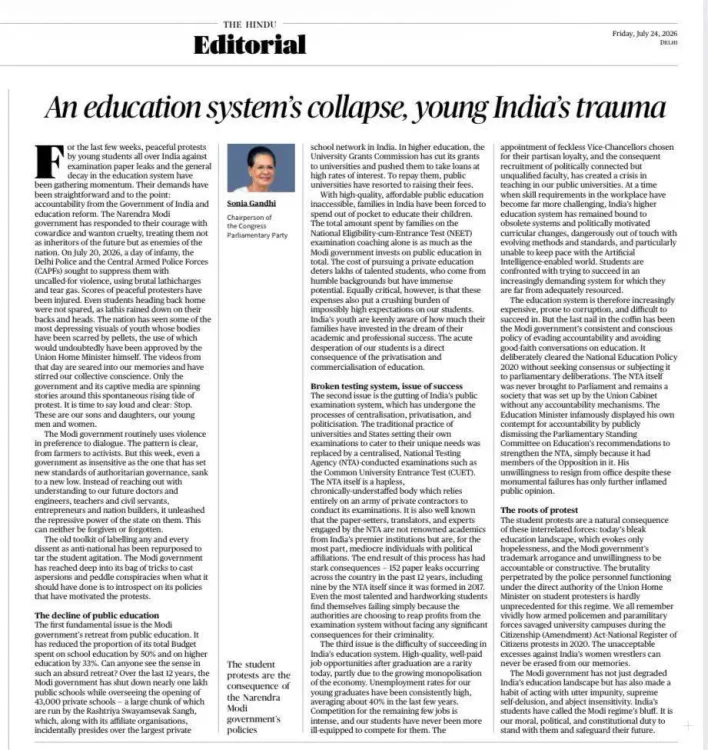
Congress general secretary Sachin Pilot on 24 July 2026 shared CPP Chairperson Sonia Gandhi's published column charging the central government with failing to reform India's education system and disregarding student concerns about quality and accountability, intensifying opposition pressure ahead of the monsoon session.
Key Takeaways
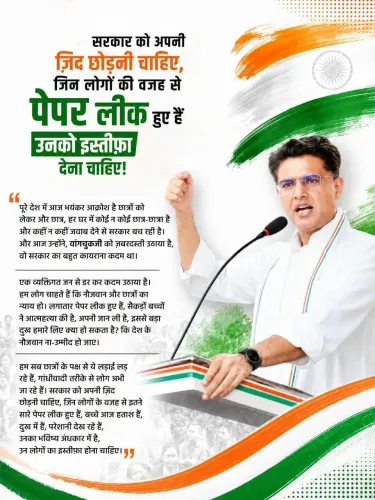
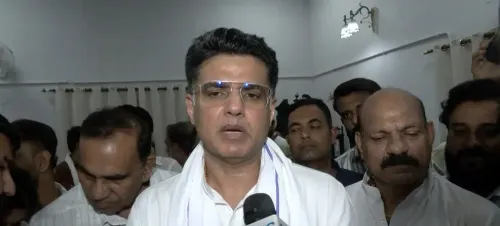
Sachin Pilot , Congress general secretary and Chhattisgarh in-charge, shared Sonia Gandhi's column on 24 July 2026 criticising the government's education record.
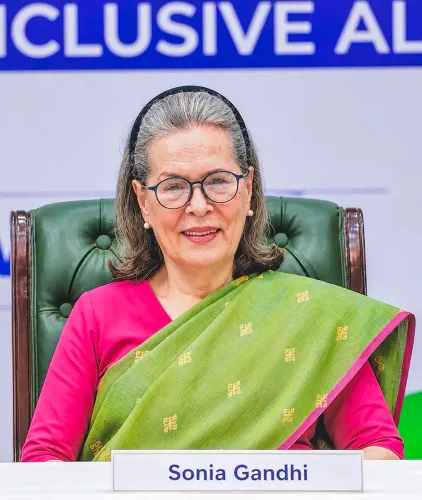
Sonia Gandhi , as CPP Chairperson, charges the central government with failing to reform India's education system and ignoring student concerns about quality and accountability.
The National Education Policy 2020 , approved by the Union Cabinet in July 2020 , remains a contested policy, with opposition parties citing gaps in implementation, funding, and federalism.
The Right of Children to Free and Compulsory Education Act, 2009 guarantees schooling for children aged 6 to 14 and forms the legislative baseline for India's education commitments.
The timing coincides with Parliament's monsoon session , raising the likelihood of floor debates and formal questions directed at the Ministry of Education .
State-level rollout of NEP provisions in the 2026-27 academic year will be a key benchmark in assessing the government's response to these criticisms.
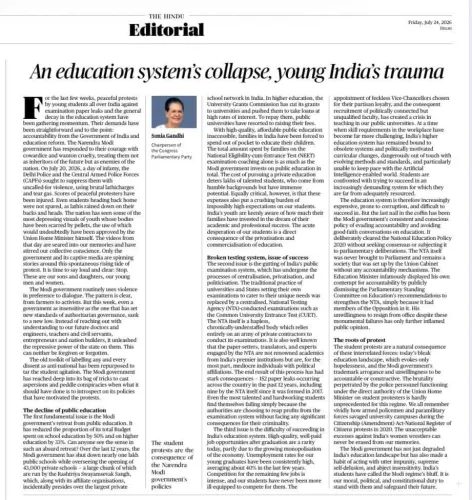
Congress leader and party general secretary Sachin Pilot on Friday, 24 July 2026 shared a column authored by Congress Parliamentary Party Chairperson Smt. Sonia Gandhi, published in a national English daily, which criticises the central government for failing to reform India's education system and for ignoring students' concerns about quality and accountability.
Context
Pilot's post highlights the column as evidence of the opposition's sustained critique of the BJP-led central government's education agenda. Sonia Gandhi's piece, according to the post, argues that the government has been unresponsive to student concerns and has fallen short on delivering meaningful reform. The intervention comes as Parliament's monsoon session is underway, making education policy a live political flashpoint.
Sonia Gandhi, as Chairperson of the Congress Parliamentary Party, carries significant institutional weight within the opposition. Her decision to write a public column signals that the Congress intends to press the education issue at a national level, beyond routine parliamentary questions.
Policy Backdrop
India's education framework has undergone significant legislative and policy changes over the past two decades. The Right of Children to Free and Compulsory Education Act, 2009 guaranteed schooling for children aged 6 to 14, establishing a constitutional floor for access. The National Education Policy (NEP) 2020, approved by the Union Cabinet in July 2020, sought to overhaul curriculum design, pedagogy, and institutional governance, replacing the 1986 policy.
Opposition parties, including the Congress, have consistently challenged the NEP's implementation on grounds of federalism, equity, and adequate funding. Several Congress-governed states have sought modifications to central directives on curriculum and examination structures, reflecting a broader tension between the Centre and states over education's place on the concurrent list.
Stakeholders and Impact
The primary stakeholders in this debate are Indian students — particularly those in school and higher education — along with teachers, state governments, and universities navigating NEP compliance. Quality of education and institutional accountability, the two concerns cited in Sonia Gandhi's column, are widely cited in civil society discussions about learning outcomes across government and aided institutions.
State governments bear much of the implementation burden for education reform, and funding gaps between central allocations and ground-level requirements remain a recurring grievance. Congress-ruled states have at times positioned themselves as alternatives to the Centre's approach, adding a federal dimension to what is also a partisan debate.
What's Next
The Ministry of Education is expected to face pointed questions during the ongoing monsoon session of Parliament, with the Congress likely to use Sonia Gandhi's column as a reference point in floor debates. The 2026–27 academic year is also a critical period for assessing state-level rollout of NEP provisions, and progress reports from states will shape the next phase of the political argument. Whether the government responds formally to the column's specific charges will determine how much traction the issue gains in the coming weeks.
Point of View
Lending the critique an intellectual and civic register that is harder for the government to dismiss as partisan noise. Pilot amplifying it signals a coordinated Congress communication strategy aimed at keeping education as a sustained issue through the monsoon session. The timing aligns with a broader opposition pattern of using the academic year's opening months to highlight NEP implementation gaps, particularly in states where Congress is in power and can contrast its own approach. If the Ministry of Education does not respond substantively, the silence itself becomes part of the opposition's narrative.
NationPress
24 Jul 2026
Frequently Asked Questions
What did Sonia Gandhi write about India's education system?
According to Sachin Pilot's post, Sonia Gandhi wrote a column arguing that the central government has failed to reform India's education system and has ignored students' concerns about quality of education and accountability.
What is the National Education Policy 2020?
The National Education Policy 2020 is a framework approved by the Union Cabinet in July 2020 to overhaul school and higher education in India, replacing the previous policy from 1986. It covers curriculum, pedagogy, and institutional governance.
Why is Congress criticising the government on education?
The Congress has consistently argued that the BJP-led central government's implementation of NEP 2020 falls short on federalism, funding, and equity. Sonia Gandhi's column, as cited by Pilot, focuses specifically on quality of education and institutional accountability.
What is Sonia Gandhi's current role in the Congress party?
Sonia Gandhi is the Chairperson of the Congress Parliamentary Party (CPP). She is a senior leader of the Indian National Congress and a former party president.
What action is expected from the government after this criticism?
The Ministry of Education is expected to face questions during Parliament's monsoon session. State-level reports on NEP rollout in the 2026-27 academic year will also be closely watched as the political debate continues.