Sahyadri Tiger Reserve: 3 translocated tigresses survive monsoon
Synopsis
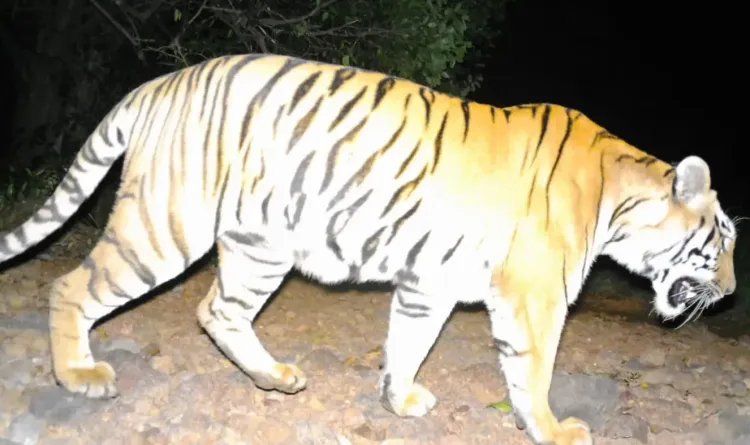
A year after the first tigress was moved in, Sahyadri's tiger experiment is holding up. All three translocated tigresses from Tadoba and Pench survived the Western Ghats monsoon and claimed territories, pushing the reserve's tiger count to seven. The real test now: whether they breed in a landscape that once lost its tigers.
Key Takeaways
All three tigresses translocated to Sahyadri Tiger Reserve have survived the monsoon, according to WII .
STR-T4 , released on 20 November 2025 , has completed one year and holds territory in the Chandoli division.
STR-T5 (Tadoba, released 18 December 2025 ) and STR-T6 (Pench, released 7 February 2026 ) have also established territories.
The reserve's tiger count has grown to seven , including resident males.
Studies found about 451 km² of suitable habitat with a carrying capacity of about 27 tigers .
The reserve earned a “Very Good” rating in the MEE 2022 .
All three tigresses translocated to Maharashtra's Sahyadri Tiger Reserve (STR) from Tadoba-Andhari and Pench tiger reserves have survived their first monsoon in the northern Western Ghats, according to the Wildlife Institute of India (WII). The first of them, STR-T4, has now completed one year in the reserve and established a territory in the Chandoli division. The tiger count in the reserve has risen to seven, the institute said.
Key Developments
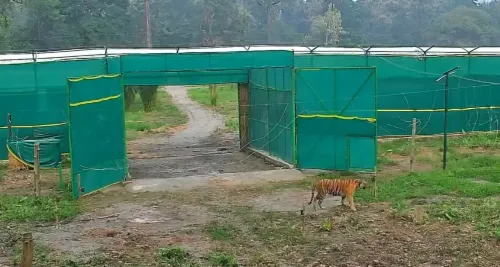
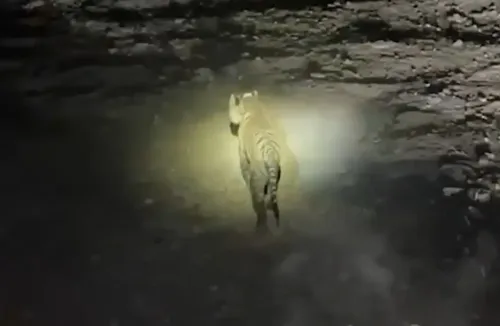
STR-T4 was the first tigress moved from Tadoba Tiger Reserve under the Tiger Recovery Programme. She was released on 20 November 2025 and has since settled in the Chandoli division of the national park, WII announced.
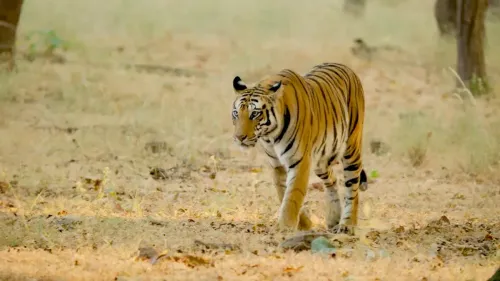
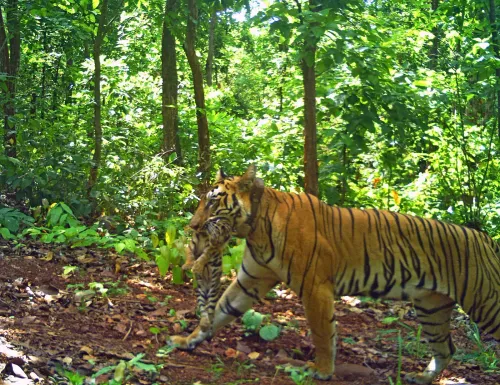
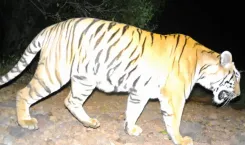
“Similarly, STR-T5 from Tadoba and STR-T6 from Pench have also successfully endured the Sahyadri monsoon. Post-monsoon camera-trap records confirm the presence and established territories of all three tigresses,” the institute said.
“With three translocated tigresses and resident males, the tiger count in Sahyadri Tiger Reserve has grown to seven. This is a promising step towards restoring the breeding population in the Sahyadri landscape,” it added.
Background: A Reserve That Lost Its Tigers
Established in 2010, the Sahyadri Tiger Reserve saw historical declines in its tiger population due to habitat degradation, fragmentation and anthropogenic pressures. The Tiger Recovery Programme was launched in 2017 to restore a viable, self-sustaining breeding population in the northern Western Ghats.
STR, working with WII and the National Tiger Conservation Authority (NTCA), implemented what has been described as India's first scientifically managed tiger translocation programme in the Western Ghats. The approach combined founder tigress translocation with scientific monitoring, habitat and prey management, strengthened protection and community participation.
The Science Behind the Recovery
Phase I focused on assessing feasibility — identifying suitable habitat, evaluating social acceptance, conducting Phase IV monitoring, estimating prey-predator populations, mapping ecological connectivity, and studying human-wildlife interactions across the landscape.
Assessments carried out between 2017 and 2022 included camera trapping, prey density estimation, carnivore sign surveys, vegetation assessments, habitat suitability modelling and connectivity analyses. They found prey densities consistently high at 23.25 to 29.55 individuals per km². Modelling identified about 451 km² of suitable tiger habitat, with an estimated ecological carrying capacity of about 27 tigers under optimal management.
Notably, in 2018, an adult male tiger was camera-trapped in Chandoli National Park — the first confirmed tiger record in the reserve after a gap of three years. Tiger scat documented in 2019 further confirmed that dispersing tigers were using the landscape.
Community and Management Measures
Phase I also involved forming Village Eco-Development Committees (EDCs), conservation awareness drives, digital compensation for human-wildlife conflict losses, capacity building of frontline staff and habitat improvement. Around 50 chital were released at Zolambi to augment the prey base.
These efforts helped the reserve earn a “Very Good” rating in the Management Effectiveness Evaluation (MEE), 2022.
The Active Recovery Phase
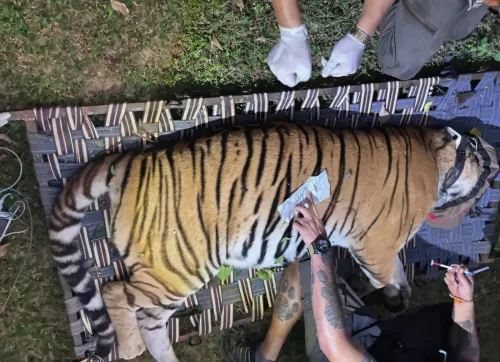
The project moved into its Active Tiger Recovery Phase during 2025–2026. On NTCA and WII recommendations, three founder tigresses were selected based on reproductive age, health status and genetic suitability. STR-T4 and STR-T5 came from Tadoba-Andhari, while STR-T6 came from Pench Tiger Reserve in Maharashtra.
After STR-T4's release in November 2025, STR-T5 followed on 18 December 2025, and STR-T6 was released on 7 February 2026. With all three now holding territories alongside resident males, attention will turn to whether the reserve records its first breeding success in the coming seasons.
Point of View
But it is not yet recovery — that will only be proven when Sahyadri records cubs born in the wild. Tiger translocations in India have had mixed outcomes, and the Satkosia experiment in Odisha is a reminder of how community friction can derail even well-funded efforts. Sahyadri's emphasis on eco-development committees and digital conflict compensation suggests lessons have been absorbed. With seven tigers against an estimated capacity of 27, the reserve has room to grow, but sustained protection and prey management will matter more than the headline success of one year.
NationPress
29 Nov 2026
Frequently Asked Questions
How many tigers are there in Sahyadri Tiger Reserve now?
The tiger count in Sahyadri Tiger Reserve has grown to seven, according to the Wildlife Institute of India. This includes three translocated tigresses and resident males.
Which tigresses were translocated to Sahyadri Tiger Reserve?
Three founder tigresses were translocated: STR-T4 and STR-T5 from Tadoba-Andhari Tiger Reserve and STR-T6 from Pench Tiger Reserve in Maharashtra. They were released on 20 November 2025, 18 December 2025 and 7 February 2026 respectively.
What is the Tiger Recovery Programme at Sahyadri?
It is a programme launched in 2017 to restore a viable, self-sustaining breeding tiger population in the northern Western Ghats. It is run by STR with the Wildlife Institute of India and the National Tiger Conservation Authority.
Why did Sahyadri Tiger Reserve lose its tigers?
The reserve, established in 2010, experienced historical declines in tiger numbers due to habitat degradation, fragmentation and anthropogenic pressures. In 2018, a male tiger camera-trapped in Chandoli was the first confirmed record after a three-year gap.
How many tigers can Sahyadri Tiger Reserve support?
Habitat suitability modelling estimated an ecological carrying capacity of about 27 tigers under optimal management. The studies identified around 451 km² of suitable habitat with high prey densities.