Samrat Choudhary Hails India's Defence Export Leap Under PM Modi
Synopsis
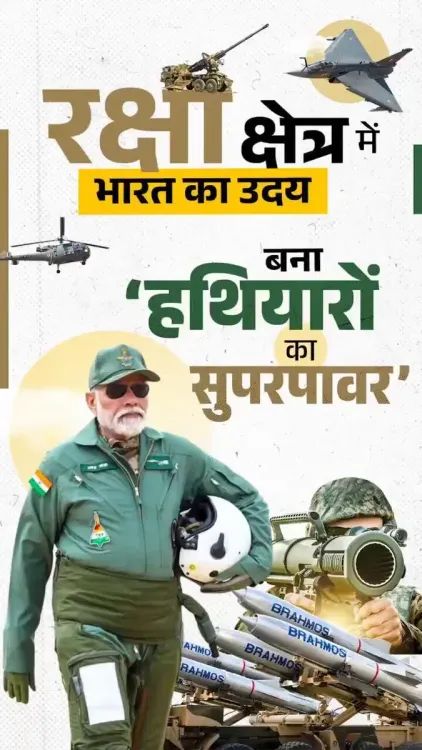
Bihar Deputy Chief Minister Samrat Choudhary praised PM Narendra Modi for India's defence indigenisation drive, citing exports to over 100 countries and the shift from 'Make in India' to 'Make for the World' as part of the BJP's #12YearsOfSeva messaging on the Modi government's tenure at the Centre.
Key Takeaways
Bihar Deputy CM Samrat Choudhary posted on X on June 3, 2026, lauding PM Modi's leadership on defence self-reliance.
He cited Indian defence equipment reaching more than 100 countries as evidence of strategic capability.
The post invoked the journey from 'Make in India' (2014) to 'Make for the World'.
Hashtags #12YearsOfSeva, #AtmanirbharBharat and #MakeInIndia tied the message to the BJP's tenure milestone.
Atmanirbhar Bharat, launched May 2020, anchors the indigenous defence production push.
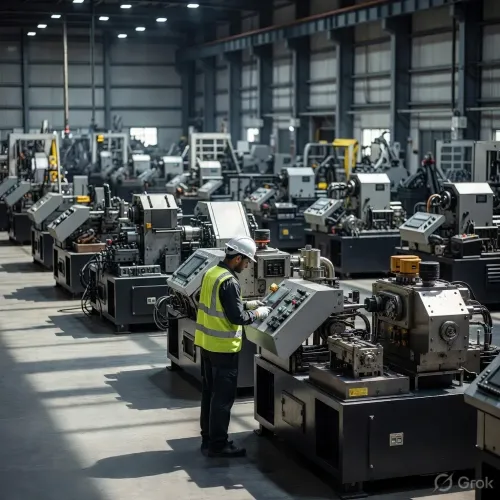
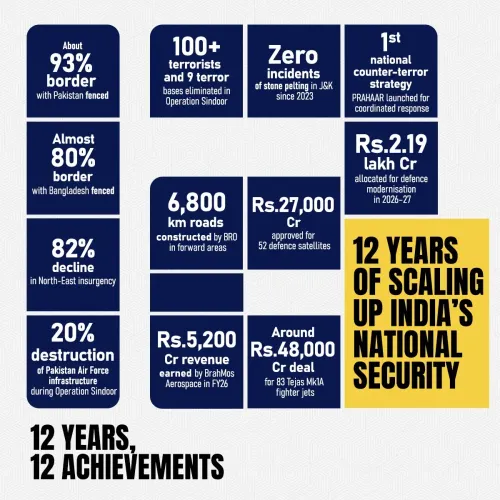
Bihar Deputy Chief Minister Samrat Choudhary on Wednesday, June 3, 2026, credited Prime Minister Narendra Modi's leadership for what he described as 'historic achievements' in India's drive toward self-reliance in the defence sector. In a post on X, the senior BJP leader spotlighted the country's rising defence exports, indigenous systems development and the reach of Indian military equipment to more than 100 countries.
'Under the leadership of respected Prime Minister Shri Narendra Modi ji, India has achieved historic milestones in the direction of self-reliance in the defence sector,' Choudhary wrote in Hindi. He framed the journey from 'Make in India' to 'Make for the World' as proof of New India's 'growing strategic capability and global prestige', tagging the post with #12YearsOfSeva, #AtmanirbharBharat and #MakeInIndia.
Context
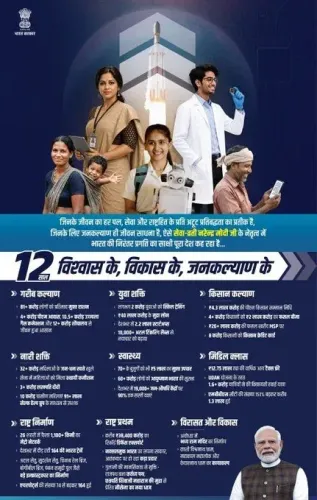
The message lands as the ruling Bharatiya Janata Party marks twelve years of the Modi-led government at the Centre, a milestone reflected in the hashtag #12YearsOfSeva. Defence indigenisation has been a recurring talking point for the party, used to project continuity of policy and a narrative of strategic ascent.
Choudhary, who serves as Deputy Chief Minister of Bihar and is among the BJP's most prominent state-level voices, has frequently amplified central government themes alongside state-specific messaging. The defence post fits a broader pattern of state leaders aligning with the Centre's flagship campaigns ahead of high-profile political seasons.
Policy backdrop
The Make in India initiative was launched in September 2014 with a dedicated defence manufacturing vertical aimed at reducing import dependence and building domestic capacity. It was followed by the Atmanirbhar Bharat Abhiyan, announced in May 2020, whose five-tranche package included specific provisions for indigenous defence production and procurement reform.
Successive governments have set rising export targets through the decade, including a stated goal of ₹35,000 crore in annual defence exports announced in 2022. Procurement procedure updates and the rollout of defence production corridors have anchored the policy push, alongside a phased shift in language from import substitution to global supply.
Stakeholders and impact
The principal beneficiaries of the policy arc are India's domestic defence manufacturers — both public sector units and a growing tier of private firms — and the armed forces, which are expected to source a greater share of platforms locally. Export growth, if sustained, would diversify the customer base for Indian-made systems and embed strategic ties with partner nations.
For the BJP politically, the indigenisation story doubles as a governance metric. Statements like Choudhary's link a national-security achievement directly to the Prime Minister's stewardship, a framing the party has used consistently across the 2014, 2019 and 2024 general election cycles.
What's next
Attention will turn to forthcoming editions of DefExpo and Aero India, the country's flagship defence showcases, where new export contracts and indigenous platforms are typically unveiled. Parliamentary scrutiny of the defence budget and any further revisions to the Defence Procurement Procedure will also indicate whether the export trajectory matches the rhetoric.
For Choudhary and the BJP's state leadership, expect continued amplification of central achievements through the #12YearsOfSeva campaign — a messaging exercise that knits state-level political capital to the Centre's signature policy claims.
Point of View
The party reinforces a familiar template: state leaders amplifying central achievements to consolidate the Modi brand. The 'Make in India' to 'Make for the World' formulation also signals continuity with the strategic-sector rhetoric used in space and pharmaceuticals, suggesting the indigenisation story will remain a core political asset through the next electoral cycle.
NationPress
17 Oct 2026
Frequently Asked Questions
Who is Samrat Choudhary?
Samrat Choudhary is the Deputy Chief Minister of Bihar and a senior BJP leader. He is among the party's prominent state-level voices and frequently amplifies central government policy themes.
What did Samrat Choudhary say about India's defence sector?
He credited PM Narendra Modi's leadership for 'historic achievements' in defence self-reliance, citing export growth, indigenous systems development and the reach of Indian defence equipment to more than 100 countries.
What is the Atmanirbhar Bharat campaign?
Atmanirbhar Bharat is a self-reliance initiative announced in May 2020. Its five-tranche package included dedicated provisions for indigenous defence production and procurement reform.
When was Make in India launched?
Make in India was launched in September 2014. It included a dedicated defence manufacturing vertical aimed at boosting domestic industry and reducing import dependence.
What does #12YearsOfSeva refer to?
It refers to the BJP's campaign marking twelve years of the Narendra Modi-led government at the Centre, used to highlight policy achievements across sectors including defence.