Vishvas Sarang slams Digvijaya Singh over 'Hindutva' remarks in MP
Synopsis
Digvijaya Singh's claim that 'spreading hatred is Hindutva' — made during a visit to Guna, MP — has set off a cross-party firestorm. BJP's Vishvas Sarang called it a 'journey of fragmentation', while Shiv Sena's Shaina NC accused Singh of pseudo-secularism for electoral gain. The row lays bare the increasingly combative contest over who gets to define Sanatan Dharma in Indian politics.
Key Takeaways
Digvijaya Singh said in Guna, Madhya Pradesh on 5 November that 'spreading hatred is Hindutva', linking it to the RSS and VHP .
He also claimed the term 'Hinduism' was coined by Vinayak Damodar Savarkar and had no connection with equality.
MP Minister Vishvas Sarang accused Singh of 'politics of division' and said the remarks were 'extremely objectionable and will not be tolerated.' Shiv Sena leader Shaina NC criticised Singh for 'pseudo-secularism for votes', citing a pattern of contradictory statements.
The controversy escalates Singh's 'Sanatan Yatra' , framed as a Congress effort to reclaim religious ground from the BJP .
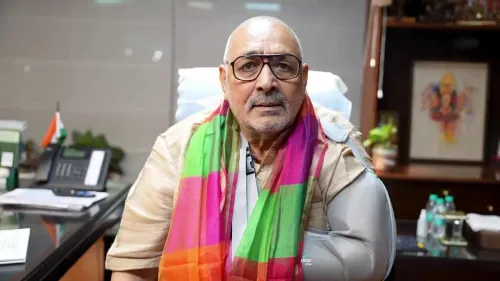
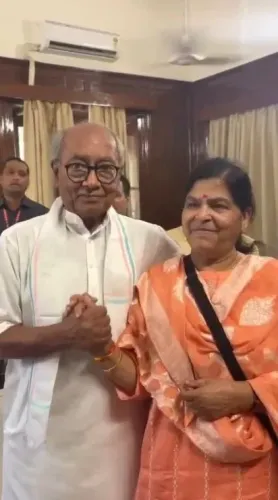
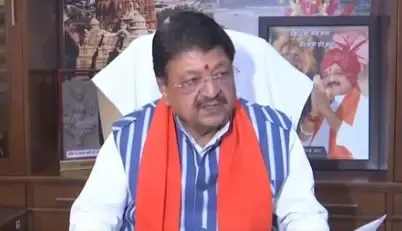
Madhya Pradesh Minister Vishvas Sarang on Thursday, 5 November launched a sharp attack on senior Congress leader Digvijaya Singh over remarks the veteran politician made in Guna, Madhya Pradesh, drawing a distinction between Sanatan Dharma and Hindutva — and linking the latter to organisations such as the Rashtriya Swayamsevak Sangh (RSS) and the Vishwa Hindu Parishad (VHP). Minister Sarang accused Singh of engaging in 'politics of division' and said the remarks were 'extremely objectionable.'
What Digvijaya Singh Said
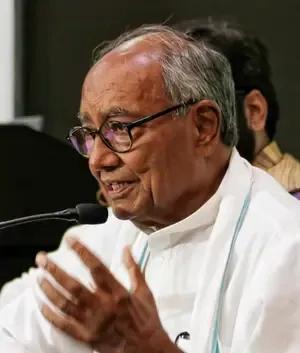
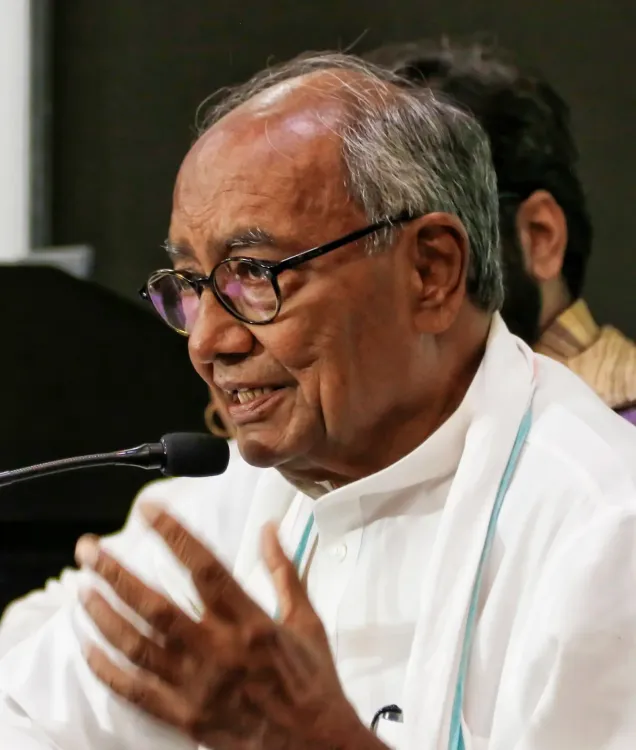
Speaking to the media during his visit to Guna, Digvijaya Singh stated that Sanatan Dharma respects all religions and works for the welfare of the world. He added: 'Spreading hatred is Hindutva which is done by the Rashtriya Swayamsevak Sangh and Visva Hindu Parishad who consider Veer Savarkar as their leader.' Singh also claimed that the term 'Hinduism' was coined by Vinayak Damodar Savarkar and asserted it had no connection with equality. He said his understanding of Sanatan Dharma was shaped by his mother, who taught him it stood for love, affection, and empathy.
Sarang's Rebuttal
Reacting swiftly, Minister Sarang characterised Singh's ongoing 'Sanatan Yatra' as 'a journey of fragmentation aimed at defaming Hindu religion and Sanatan philosophy.' He questioned whether Singh — whom he accused of glorifying Zakir Naik, describing the latter as 'anti-national and anti-Hindu' — was qualified to define Hindutva or lecture on Sanatan Dharma. 'On the one hand, he claims that he follows Sanatan, and on the other hand, he abuses Hindus. Will he stoop this low just to bake his own political bread? This is extremely objectionable and will not be tolerated,' Sarang said.
Shiv Sena Joins the Criticism
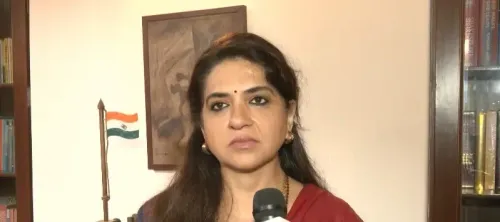
The controversy is not new. Digvijaya Singh had earlier come under fire after a press conference in which he distinguished Sanatan Dharma from Hinduism and discussed the Holy Quran's use of the term 'kafir.' Shiv Sena leader Shaina NC accused the Congress leader of 'pseudo-secularism' aimed at electoral gains. 'This party believes in pseudo-secularism. It is for votes. They will continue to appease people for votes,' she said. Shaina NC also pointed to Singh's history of controversial statements, arguing they reflected 'confusion and duality.'
Broader Political Context
The row reflects a recurring fault line in Indian politics — the contested meanings of Hindutva, Hinduism, and Sanatan Dharma — and the Bharatiya Janata Party (BJP)'s consistent strategy of framing Congress leaders' remarks on faith as vote-bank politics. Notably, Singh's 'Sanatan Yatra' was itself positioned as an effort to reclaim religious ground from the BJP, making his remarks in Guna a significant escalation of that campaign. With assembly-level political activity intensifying in Madhya Pradesh, the exchange is unlikely to be the last word on this front.
Point of View
He is attempting to split a monolithic Hindu identity that the BJP has spent a decade cementing. The strategy carries real risk: it invites precisely the kind of counter-mobilisation Sarang is now executing. What mainstream coverage underplays is that Singh's 'Sanatan Yatra' is itself an admission that Congress has ceded the religion-and-culture terrain to the BJP — and is now trying to fight its way back on the BJP's chosen ground, using the BJP's own vocabulary. That is a dangerous game to play when your opponent wrote the rulebook.
NationPress
6 Nov 2026
Frequently Asked Questions
What did Digvijaya Singh say about Hindutva in Madhya Pradesh?
Digvijaya Singh, speaking to media in Guna on 5 November, said that 'spreading hatred is Hindutva' and attributed this to the RSS and VHP, whom he said consider Veer Savarkar their leader. He drew a distinction between Sanatan Dharma — which he described as rooted in love and empathy — and Hindutva.
How did Madhya Pradesh Minister Vishvas Sarang respond?
Minister Vishvas Sarang accused Digvijaya Singh of 'politics of division', calling his Sanatan Yatra 'a journey of fragmentation aimed at defaming Hindu religion.' He questioned Singh's credibility on the subject, alleging that Singh had praised figures he described as anti-national and anti-Hindu.
Why has Shiv Sena also criticised Digvijaya Singh?
Shiv Sena leader Shaina NC accused Singh of practising 'pseudo-secularism for votes', arguing his remarks on Sanatan Dharma and his references to the Holy Quran reflect electoral opportunism rather than genuine religious conviction. She pointed to a history of contradictory statements by Singh on faith-related issues.
What is Digvijaya Singh's 'Sanatan Yatra'?
The Sanatan Yatra is a political-religious outreach initiative by Congress leader Digvijaya Singh, positioned as an effort to engage with Hindu religious sentiment on Congress's own terms. Critics, including BJP leaders, have characterised it as an attempt to split Hindu voters rather than a sincere religious undertaking.
What is the broader political significance of this row?
The dispute reflects a deepening contest in Indian politics over the definition of Hindu identity, with Congress attempting to reclaim religious vocabulary long dominated by the BJP. The exchange in Madhya Pradesh is part of a wider pattern of opposition parties trying to engage — rather than avoid — debates on Hindutva and Sanatan Dharma ahead of electoral cycles.