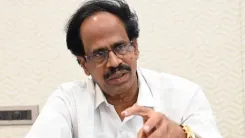
SC issues notice on Chandigarh plea against HC order quashing Bhagwant Mann protest case
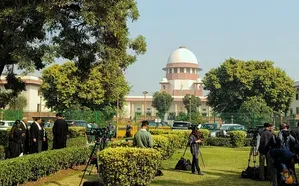
Synopsis
The Supreme Court has stepped in to examine whether the Punjab and Haryana High Court was right to quash criminal proceedings against Punjab CM Bhagwant Mann over a 2020 protest that allegedly turned violent. At stake is a significant legal question: can an unlawful assembly exist without a Section 144 order in force — and can political leaders be held liable for mob violence without a named overt act?
Key Takeaways
The Supreme Court issued notice on 30 July in a plea by Chandigarh Administration challenging the High Court's quashing of a protest case against Punjab CM Bhagwant Mann .
The Bench is headed by Chief Justice of India Surya Kant , with Justice Joymalya Bagchi and Justice V.
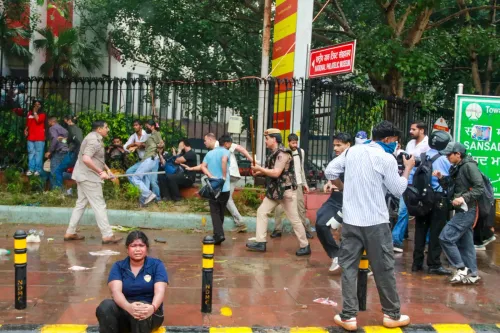
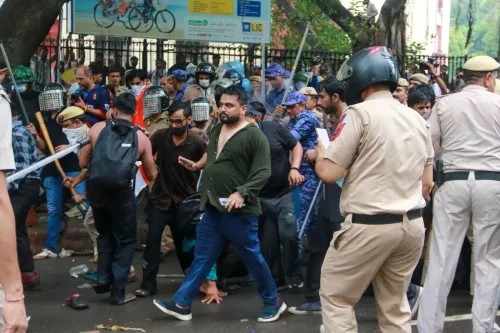
The case relates to a 10 January 2020 protest by 750–800 AAP workers near the then Punjab CM's residence in Chandigarh , in which police personnel were allegedly injured.
The Punjab and Haryana High Court quashed the FIR on 29 November 2025 , finding no specific overt act attributed to the accused and no Section 144 CrPC order in force.
The Centre's law officer argued that liability under Section 149 IPC does not require a personal overt act — any act by a member of an unlawful assembly is attributable to all members.
The matter is tentatively listed next before the Supreme Court on 18 September .
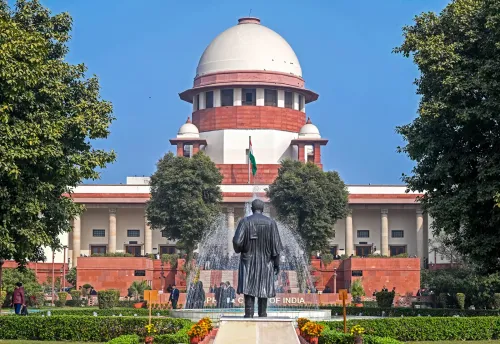
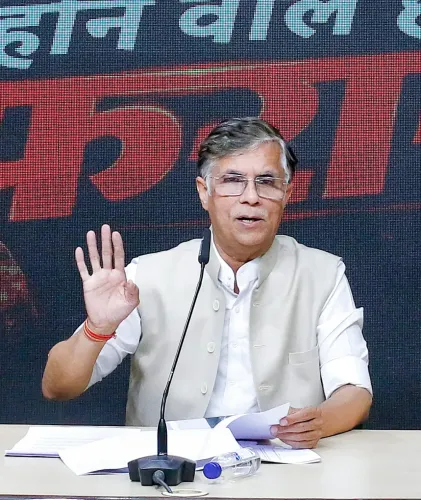
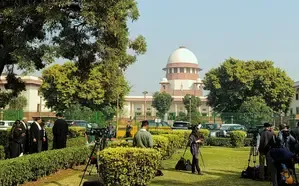
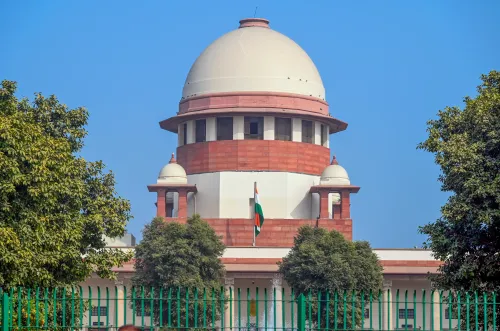
The Supreme Court on Thursday, 30 July issued notice on a special leave petition filed by the Union Territory of Chandigarh challenging a Punjab and Haryana High Court order that quashed criminal proceedings against Punjab Chief Minister Bhagwant Mann and three other Aam Aadmi Party (AAP) leaders in connection with a 2020 protest that allegedly turned violent and left police personnel injured.
The Bench and the Petition
A three-judge Bench comprising Chief Justice of India Surya Kant, Justice Joymalya Bagchi, and Justice V. Mohana heard the petition and issued notice after brief arguments. The special leave petition (SLP) names Bhagwant Mann, Aman Arora, Daljit Singh Cheema, and Maheshinder Singh Grewal as respondents. According to the Supreme Court's computerised case status, the matter is tentatively listed next on 18 September.
What Chandigarh Administration Argued
Additional Solicitor General S.V. Raju, appearing for the Chandigarh Administration, contended that the High Court had erred in concluding that no unlawful assembly existed solely because no prohibitory order under Section 144 of the Code of Criminal Procedure (CrPC) was in force at the time.
'Unlawful assembly was admittedly there. The accused were present. Named in the FIR. Unlawful assembly indulged in violence; injuries caused to police officers. Prima facie offence made out,' ASG Raju submitted before the Bench.
He further argued that even absent a specific overt act, any act committed by a member of an unlawful assembly attracts liability under Section 149 of the Indian Penal Code (IPC) — a principle of constructive liability well established in criminal jurisprudence. 'Even if he was not involved in an overt act, any act by a member of the assembly is attributable to him,' he added.
Background: The 2020 Protest and the FIR
The case stems from an FIR registered at Police Station North, Sector 3, Chandigarh, arising from a 10 January 2020 protest by AAP workers and leaders near the official residence of the then Punjab Chief Minister. The protest was against a hike in electricity tariffs.
According to the prosecution, approximately 750–800 AAP workers had gathered at the site. Police alleged that after being stopped from advancing towards the residence, protesters pushed officers, attempted to breach barricades, and pelted stones, causing injuries to personnel on duty. The FIR invoked Sections 147, 149, 332, and 353 IPC; a charge under Section 188 IPC was subsequently dropped.
How the High Court Ruled
The Punjab and Haryana High Court, in a judgment delivered on 29 November 2025, allowed the petitions filed by Mann and the other accused and quashed the FIR and all consequential proceedings. A single-judge Bench of Justice Tribhuvan Dahiya held that the absence of a Section 144 CrPC order meant the assembly could not be termed unlawful on that ground alone.
Critically, the High Court found that no specific overt act — including stone-pelting or assault — had been attributed to any of the petitioners. It observed that 'nobody has been named from amongst the persons present who allegedly pelted stones on the police force' and that 'there is no basis to ascribe the alleged act of throwing stones by the mob to the petitioners.' The court further noted that the alleged injuries appeared to have resulted from 'grappling and pushing' during the protest, not from targeted violence by the named accused.
Since unlawful assembly is the legal prerequisite — or sine qua non — for offences under Sections 146 and 149 IPC, the High Court concluded that 'ingredients of none of the offences alleged can be said to have been made out against any of the petitioners even prima facie.'
What Happens Next
With the Supreme Court having issued notice, the respondents — including Chief Minister Mann — will now be required to file their replies. The legal question at the heart of the case is whether the absence of a Section 144 order is a necessary precondition for establishing an unlawful assembly, or whether facts on the ground can independently satisfy that threshold. The outcome could have implications for how protest-related criminal liability is assessed across India. The matter is next expected to be heard on 18 September.
Point of View
But that interpretation is contestable: the IPC's definition of unlawful assembly under Section 141 does not make a prohibitory order a prerequisite. If the Supreme Court overturns the High Court, it would reaffirm a stricter reading of constructive liability that could make it harder for political leaders to insulate themselves from protest-related FIRs by arguing they personally committed no overt act. The case also arrives at a politically charged moment, with AAP in power in Punjab and the Chandigarh Administration — a Union Territory under Centre oversight — pressing the appeal. That institutional dynamic is worth watching as the matter progresses.
NationPress
13 Sept 2026
Frequently Asked Questions
Why did the Supreme Court issue notice in the Bhagwant Mann protest case?
The Supreme Court issued notice on 30 July after the Chandigarh Administration challenged a Punjab and Haryana High Court order that quashed criminal proceedings against Punjab CM Bhagwant Mann and three other AAP leaders. The court found the legal question — whether an unlawful assembly can exist without a Section 144 CrPC order — worth examining.
What was the 2020 protest case against Bhagwant Mann about?
The case stems from a 10 January 2020 protest by approximately 750–800 AAP workers near the then Punjab Chief Minister's residence in Chandigarh, held against a hike in electricity tariffs. Police alleged that protesters pushed officers, breached barricades, and pelted stones, injuring personnel on duty; an FIR was registered under Sections 147, 149, 332, and 353 IPC.
Why did the Punjab and Haryana High Court quash the FIR against Bhagwant Mann?
The High Court, in its 29 November 2025 judgment, found that no specific overt act — including stone-pelting — had been attributed to any of the named accused, including Mann. It also held that since no Section 144 CrPC order was in force, the assembly could not be termed unlawful, and therefore the foundational requirement for offences under Sections 146 and 149 IPC was not met.
What is the key legal argument made by the Chandigarh Administration?
Additional Solicitor General S.V. Raju argued that the High Court erred in treating the absence of a Section 144 order as decisive. He contended that an unlawful assembly existed on the facts, and that under Section 149 IPC, all members of such an assembly share liability for any act committed by any member — regardless of whether they personally committed an overt act.
When will the Supreme Court next hear the Bhagwant Mann protest case?
According to the Supreme Court's computerised case status, the matter is tentatively listed next on 18 September. Respondents, including Chief Minister Mann, are expected to file their replies before that date.