SC issues notice to Centre, ECI on CEC immunity challenge under 2023 Act
Synopsis
The Supreme Court has now issued notice on three separate fronts targeting the ECI's 2023 statutory framework — immunity from prosecution, the CEC's individual powers, and the exclusion of the CJI from the appointment panel. Taken together, they amount to a comprehensive judicial stress-test of India's election watchdog at a moment of heightened scrutiny over its independence.
Key Takeaways
The Supreme Court on 13 October issued notice to the Centre and ECI on a PIL by ADR challenging blanket immunity under Section 16 of the 2023 Act .
A bench of CJI Surya Kant and Justices Bagchi and Mohana will next hear the matter on 2 November .
ADR argues Section 16 violates Articles 14 and 19 of the Constitution by shielding alleged corruption and arbitrary power from judicial review.
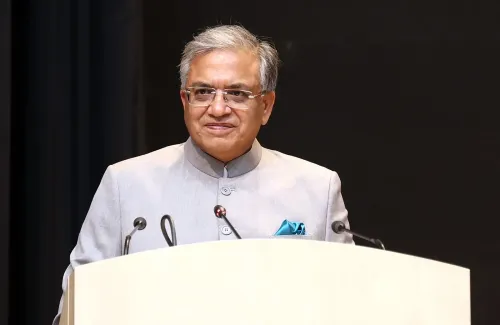
On 5 October , the same bench issued notice on a separate plea questioning whether CEC Gyanesh Kumar can individually exercise powers vested in the full ECI.
A split verdict on 23 September left unresolved whether the exclusion of the CJI from the ECI appointment panel warrants a Constitution Bench.
The 2023 Act replaced the Supreme Court's own March 2023 interim arrangement in Anoop Baranwal v.
Union of India that had included the CJI on the selection panel.
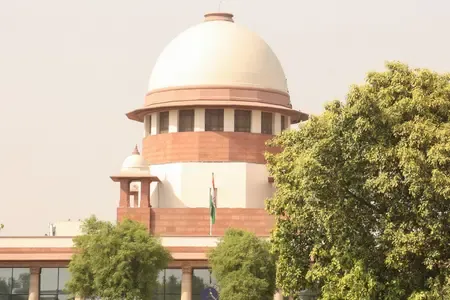
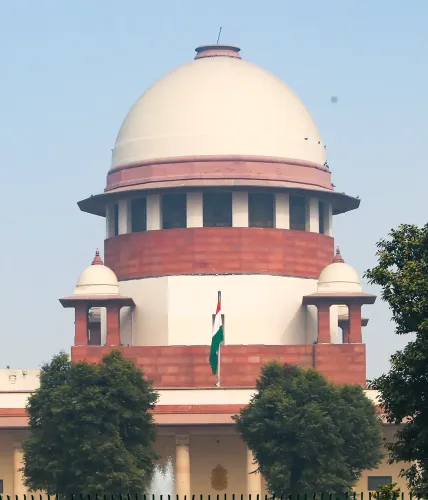
The Supreme Court on Tuesday, 13 October issued notice to the Centre and the Election Commission of India (ECI) on a public interest litigation challenging the blanket immunity granted to the Chief Election Commissioner (CEC) and other Election Commissioners under Section 16 of the Chief Election Commissioner and the other Election Commissioners (Appointment, Conditions of Service and Term of Office) Act, 2023. The PIL was filed by the Association for Democratic Reforms (ADR), a prominent electoral watchdog.
A bench comprising Chief Justice of India Surya Kant and Justices Joymalya Bagchi and V. Mohana sought responses from the Union government and the poll panel. The matter is tentatively listed for further hearing on 2 November, according to the apex court's case status records.
What Section 16 Says
Section 16 of the 2023 Act provides a sweeping shield to serving and former CECs and Election Commissioners, barring courts from entertaining or continuing any civil or criminal proceedings against them for any act, thing, or word committed while discharging — or purporting to discharge — their official duties. The provision reads: 'Notwithstanding anything contained in any other law for the time being in force, no Court shall entertain or continue any civil or criminal proceedings against any person who is or was a Chief Election Commissioner or an Election Commissioner for any act, thing or word, committed, done or spoken by him when, or in the course of acting or purporting to act in the discharge of his official duty or function.'
ADR's Constitutional Challenge
The ADR has contended that the provision violates Articles 14 and 19 of the Constitution. The petitioner argues that granting such sweeping protection to constitutional functionaries undermines accountability and places them beyond the ordinary reach of law. The plea specifically warns that the immunity could shield alleged arbitrary exercise of power and corruption from judicial scrutiny — a concern critics say is especially pointed given the ECI's outsized role in administering elections to the world's largest democracy.
Broader Judicial Scrutiny of ECI's Framework
This PIL is the latest in a series of legal challenges directed at the statutory and constitutional framework governing the ECI. On 5 October, the Supreme Court issued notice to the Centre, the ECI, and the three Election Commissioners on a separate plea questioning whether CEC Gyanesh Kumar could individually exercise or represent powers vested in the multi-member constitutional body. Senior advocate Vikas Singh, appearing for that petitioner, alleged that the CEC's functioning was contrary to the statutory framework, and that Article 324 of the Constitution vests superintendence, direction and control of elections in the ECI as an institution — not in the CEC acting alone.
Notably, the constitutional validity of the 2023 Act itself — particularly its exclusion of the Chief Justice of India from the selection committee for appointing the CEC and Election Commissioners — has also come under judicial scrutiny. On 23 September, a two-judge bench of the Supreme Court delivered a split verdict on whether petitions challenging the law should be referred to a Constitution Bench. Justice Dipankar Datta rejected the plea for reference, while Justice Satish Chandra Sharma held that the challenge raised a substantial question of constitutional interpretation and favoured placing the matter before a larger bench. Both judges directed that the papers be placed before CJI Surya Kant to consider constituting a Constitution Bench.
The 2023 Law and Its Selection Committee
Under the 2023 Act, the selection committee for appointing the CEC and Election Commissioners comprises the Prime Minister, the Leader of Opposition in the Lok Sabha, and a Union Cabinet Minister nominated by the Prime Minister. This replaced the earlier interim arrangement prescribed by the Supreme Court in its March 2023 judgment in Anoop Baranwal v. Union of India, which had included the CJI alongside the Prime Minister and the Leader of Opposition. Opposition parties and civil society groups have argued that the removal of the CJI weakens the independence of the appointment process.
What Happens Next
With the next hearing tentatively set for 2 November, the Centre and ECI will be required to file their responses. The accumulation of concurrent challenges — on immunity, on the CEC's individual powers, and on the selection committee's composition — signals that the Supreme Court may be moving toward a comprehensive examination of the ECI's constitutional and statutory standing. The outcome could have lasting implications for electoral accountability in India.
Point of View
Individual CEC powers, and the appointment panel's composition — are not isolated legal skirmishes; they reflect a deeper institutional anxiety about whether the poll body has been re-engineered for insulation rather than independence. The blanket immunity clause in Section 16 is particularly consequential: it inverts the accountability logic that usually applies to constitutional authorities. The Court's willingness to issue notice on all three fronts, without consolidating them, suggests it may be allowing the challenges to develop separately before deciding whether a Constitution Bench is warranted — a sequencing that could take years, even as elections proceed under the contested framework.
NationPress
13 Oct 2026
Frequently Asked Questions
What is the Supreme Court's PIL notice on CEC immunity about?
The Supreme Court issued notice on 13 October to the Centre and ECI on a plea by the Association for Democratic Reforms (ADR) challenging Section 16 of the 2023 Act, which bars courts from entertaining civil or criminal proceedings against serving or former CECs and Election Commissioners for acts done in their official capacity. ADR argues this immunity violates Articles 14 and 19 of the Constitution.
What does Section 16 of the 2023 Election Commissioner Act say?
Section 16 grants blanket legal immunity to serving and former CECs and Election Commissioners, preventing any court from entertaining or continuing civil or criminal proceedings against them for acts performed in the discharge of their official duties. ADR contends this shields alleged corruption and arbitrary power from judicial scrutiny.
When is the next Supreme Court hearing on this matter?
The matter is tentatively listed for further hearing on 2 November, according to the apex court's case status records. The Centre and ECI are expected to file their responses before that date.
What other legal challenges are pending against the ECI's 2023 Act?
Two other significant challenges are underway. On 5 October, the Supreme Court issued notice on a plea questioning whether CEC Gyanesh Kumar can individually exercise powers vested in the full ECI. Separately, a split verdict on 23 September left unresolved whether petitions challenging the exclusion of the CJI from the ECI appointment panel should be referred to a Constitution Bench.
How did the 2023 Act change the ECI appointment process?
The 2023 Act replaced an interim arrangement the Supreme Court had prescribed in Anoop Baranwal v. Union of India (March 2023), which included the Chief Justice of India on the selection panel alongside the Prime Minister and the Leader of Opposition. Under the new law, the CJI was dropped and replaced by a Union Cabinet Minister nominated by the Prime Minister.