Supreme Court seeks state-wise data on rehab centres for children with disabilities
Synopsis
Only 10 states and UTs have notified minimum mental health standards years after the law mandated them, and a large share of disability rehabilitation centres reportedly operate without registration. The Supreme Court has now stepped in, directing the Centre to produce a full state-wise account — a move that could force long-overdue accountability across India's institutional care system for children with disabilities.
Key Takeaways
The Supreme Court on 8 October 2026 directed the Centre to compile state-wise data on regulation, registration, and monitoring of rehabilitation centres for children with disabilities .
The order came from a Bench led by CJI Surya Kant , alongside Justices Joymalya Bagchi and V.
Mohana , hearing a PIL by Rahul Bajaj and Zaheer Abbas Jan .
Only 10 states and UTs have notified minimum standards for mental health establishments under the Mental Healthcare Act, 2017 .
A large number of disability institutions reportedly operate without registration under Section 50 of the RPwD Act, 2016 .
A 2025 surprise inspection in Srinagar found a child development centre unregistered, understaffed, and lacking adequate infrastructure.
The next hearing is scheduled for 22 October , when the Centre is expected to file a detailed affidavit.
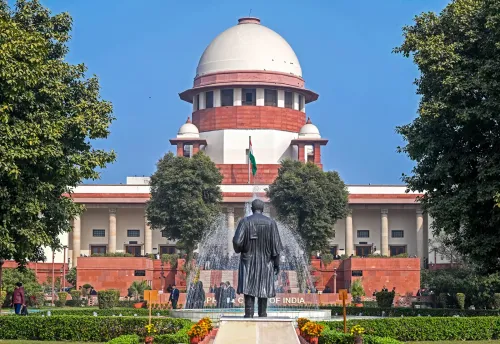
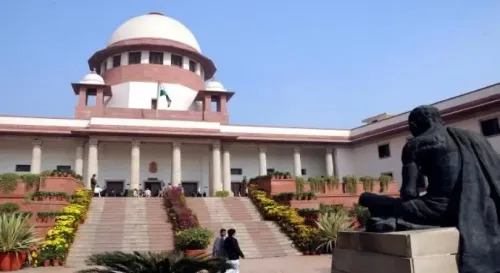
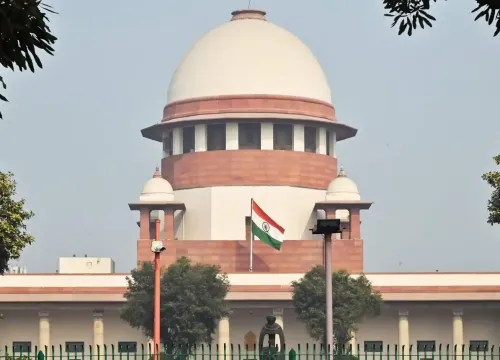
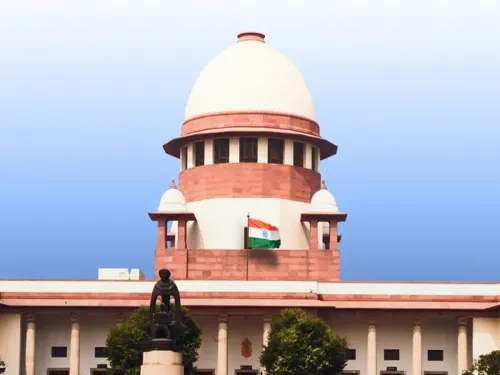
The Supreme Court of India on Thursday, 8 October 2026, directed the Centre to compile and place on record state-wise data on the regulation, registration, and monitoring of rehabilitation centres and other establishments catering to children with disabilities. The directive came while hearing a Public Interest Litigation (PIL) that has flagged sweeping systemic failures in the protection of disabled children across the country.
The Bench and the PIL
A three-judge Bench comprising Chief Justice of India (CJI) Surya Kant and Justices Joymalya Bagchi and V. Mohana passed the directions while hearing a PIL filed jointly by disability rights lawyer Rahul Bajaj and child rights activist Zaheer Abbas Jan. The petition alleges widespread non-compliance with statutory safeguards meant to protect persons with disabilities, particularly children, in institutional care.
What the Court Has Directed
The CJI Kant-led Bench asked the Union government to coordinate with all states and Union Territories (UTs) and furnish, by way of an affidavit, comprehensive information on three counts: the constitution and functioning of statutory authorities under the Rights of Persons with Disabilities (RPwD) Act, 2016; the formulation and notification of minimum standards for mental health establishments; and the inspection and monitoring mechanisms currently in place for rehabilitation facilities. The matter has been listed for further hearing on 22 October.
Key Gaps Highlighted by Petitioners
Arguing before the Bench, Bajaj submitted that rehabilitation centres for persons with disabilities are required by law to obtain compulsory state-level registration under the RPwD Act. He stressed the urgent need for empirical data to verify whether the designated statutory authorities have actually been constituted across all states and whether they are actively discharging their regulatory and monitoring responsibilities.
Referring to the Mental Healthcare Act, 2017, Bajaj pointed out that only 10 states and UTs have so far notified the requisite minimum standards for mental health establishments — a significant shortfall given the law has been in force for several years. The petition contends that a large number of institutions operating for persons with disabilities are not registered under Section 50 of the RPwD Act, which prohibits establishment or maintenance of such an institution without a certificate of registration from the competent authority.
Findings from Ground Inspection
The petitioners relied, in part, on findings from a surprise inspection conducted by the Child Welfare Committee, Srinagar, in 2025 at a child development centre. According to the plea, the institution lacked registration under both the RPwD Act and the Rehabilitation Council of India (RCI) Act, 1992, and suffered from inadequate infrastructure, insufficient qualified staff, and poor programme implementation. The case illustrates, petitioners argue, the gap between legislative intent and on-the-ground reality.
Broader Legislative Framework at Stake
The petition has flagged alleged systemic failures across three central statutes: the RPwD Act, 2016; the RCI Act, 1992; and the Mental Healthcare Act, 2017. Collectively, these laws envisage a layered oversight architecture — from state-level registration of facilities to the operation of State Mental Health Authorities and mandated quality standards. Critics argue that the architecture exists largely on paper, leaving children with disabilities vulnerable to unregulated, under-staffed care environments.
The Supreme Court's next hearing on 22 October will determine whether the Centre has furnished the requisite affidavit, and is likely to set the timeline for states and UTs to comply — a development that could have far-reaching consequences for how India regulates institutional care for its most vulnerable citizens.
Point of View
Yet state compliance has been patchy at best. The fact that only 10 states have notified minimum mental health standards years after the Mental Healthcare Act came into force is not an administrative oversight — it is a policy failure that has had real consequences for children in institutional care. The Centre's affidavit, due before 22 October, will be a litmus test of whether the government even has the granular data to govern this space. If it does not, that absence itself is the story.
NationPress
8 Oct 2026
Frequently Asked Questions
What did the Supreme Court direct regarding rehabilitation centres for children with disabilities?
The Supreme Court directed the Centre to compile and place on record state-wise data on the regulation, registration, and monitoring of rehabilitation centres catering to children with disabilities. The order was passed on 8 October 2026 by a Bench led by CJI Surya Kant, and the Centre must file an affidavit before the next hearing on 22 October.
What is the RPwD Act and why is it relevant here?
The Rights of Persons with Disabilities (RPwD) Act, 2016, is a central law that mandates compulsory state-level registration of rehabilitation centres under Section 50, prohibiting any institution from operating without a certificate from the competent authority. The PIL argues that a large number of such institutions currently function without this registration, undermining regulatory oversight.
Why have only 10 states notified mental health standards?
According to submissions by petitioner Rahul Bajaj, only 10 states and UTs have so far notified the minimum standards for mental health establishments as required under the Mental Healthcare Act, 2017. The petition treats this as evidence of systemic non-compliance by state governments with their statutory obligations.
What did the Srinagar child welfare inspection find?
A surprise inspection by the Child Welfare Committee, Srinagar, in 2025 found a child development centre that lacked registration under both the RPwD Act and the RCI Act, 1992, and suffered from inadequate infrastructure, insufficient qualified staff, and poor programme implementation. Petitioners cited this as a concrete example of the regulatory failures alleged in the PIL.
When is the next Supreme Court hearing on this matter?
The Supreme Court has listed the matter for further hearing on 22 October 2026, by which date the Centre is expected to have coordinated with all states and UTs and filed a comprehensive affidavit covering statutory authority constitution, minimum standard notifications, and monitoring mechanisms.