SC disposes of PIL on municipal governance in Scheduled Areas, tells MP to approach Centre
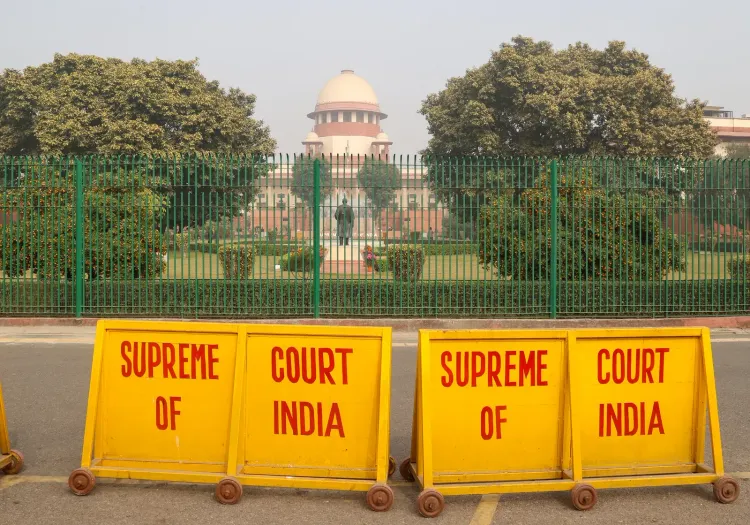
Synopsis
A PIL highlighting over 30 years of legislative inaction on municipal governance in Scheduled Areas was disposed of by the Supreme Court, which told the MP-petitioner to take the issue to Parliament or the concerned Ministry. The constitutional gap — no municipal law equivalent to PESA — continues to affect urban governance in tribal regions across India.
Key Takeaways
The Supreme Court disposed of a PIL on 4 August seeking legislation for municipal governance in Scheduled Areas , without ruling on the merits.
A bench led by CJI Surya Kant told petitioner and MP Raj Kumar Roat to approach the concerned Ministry or introduce a private member's Bill in Parliament.
The Constitution (Seventy-Fourth Amendment) Act, 1992 excluded Scheduled Areas from automatic urban local self-governance provisions under Article 243ZC .
While PESA (1996) extended Panchayat governance to Scheduled Areas, no equivalent law for municipalities has been enacted in over 30 years .
The Municipalities (Extension to Scheduled Areas) Bill, 2001 was tabled but never passed, leaving a governance vacuum in urbanising tribal settlements.
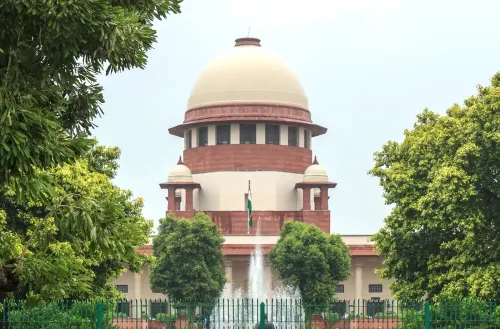
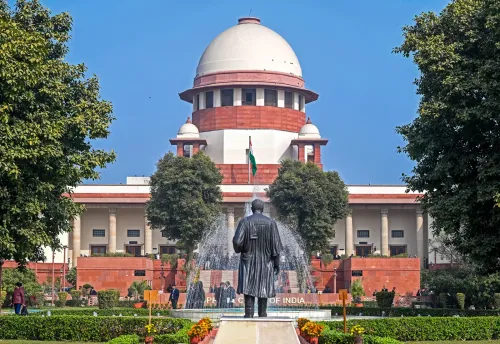
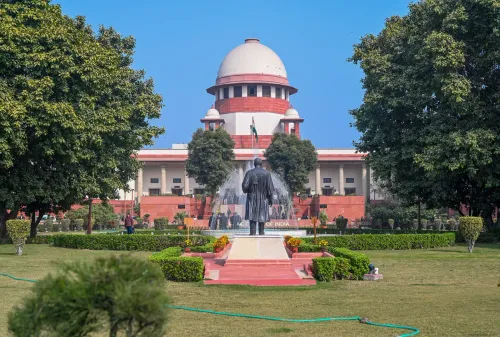
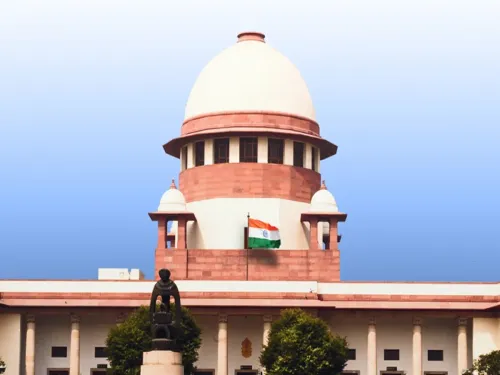
The Supreme Court on Tuesday, 4 August disposed of a Public Interest Litigation (PIL) that sought directions to the Centre to enact legislation and frame policy for democratic urban local self-governance in Scheduled Areas. A bench led by Chief Justice of India (CJI) Surya Kant, along with Justices Joymalya Bagchi and V. Mohana, declined to rule on the merits, holding that the matter fell squarely within the legislative policy domain.
What the Court Said
The bench granted liberty to the petitioner to approach the concerned Ministry directly. Notably, the CJI observed that since the petitioner, Raj Kumar Roat, is a Member of Parliament, he could pursue the issue through the legislative route by introducing a private member's Bill. The court also questioned why the matter had been brought before the judiciary when it lay within the competence of the legislature.
Background of the PIL
The PIL, filed by Raj Kumar Roat through advocate Anilendra Pandey, centred on a constitutional gap that has persisted for over three decades. The Constitution (Seventy-Fourth Amendment) Act, 1992 introduced Part IX-A providing for urban local self-government. However, Article 243ZC explicitly excluded Scheduled Areas from its automatic application, while empowering Parliament to extend its provisions through separate legislation.
The petition pointed out that while Parliament enacted the Panchayats (Extension to Scheduled Areas) Act, 1996 (PESA) to bring Panchayat-level governance to Scheduled Areas, no equivalent law has ever been passed for municipalities — despite more than 30 years having elapsed since the constitutional amendment.
The Legislative Vacuum
The plea referenced the Municipalities (Extension to Scheduled Areas) Bill, 2001, which acknowledged the need for a separate municipal framework for Scheduled Areas but was never enacted. According to the petition, this prolonged inaction has created a continuing 'constitutional, legislative and governance vacuum' in urban and urbanising settlements within Scheduled Areas, undermining representative governance, civic administration, local planning, public participation, and municipal accountability.
This is a significant concern given the rapid urbanisation of tribal regions across states such as Jharkhand, Chhattisgarh, Odisha, and parts of Madhya Pradesh, where Scheduled Areas overlap with growing towns that lack a clear municipal governance framework.
Reliefs Sought and Court's Disposition
Among the reliefs sought, the petitioner had asked the Centre to constitute an expert committee comprising representatives from the Ministry of Tribal Affairs, the Ministry of Housing and Urban Affairs, constitutional experts, urban planners, and tribal governance specialists to recommend legislative and institutional reforms. An interim direction was also sought for a comprehensive study, in consultation with states having Scheduled Areas, on the existing status of urban local governance in such regions.
The apex court, without expressing any opinion on the merits of these issues, disposed of the matter and left it open for the petitioner to pursue remedies before the competent Ministry and through the legislative process. The ball is now effectively in Parliament's court — where critics argue it has remained, unanswered, for over three decades.
Point of View
In practice, a polite deflection: private member's Bills in India almost never become law. The governance vacuum in Scheduled Areas is not a technicality; it affects civic accountability, local planning, and public services for some of India's most marginalised communities. The absence of a MESA equivalent, three decades after PESA, is a failure of legislative will that judicial restraint alone cannot remedy.
NationPress
19 Sept 2026
Frequently Asked Questions
What was the PIL about that the Supreme Court disposed of on 4 August?
The PIL, filed by MP Raj Kumar Roat, sought directions to the Centre to enact legislation and frame policy for democratic urban local self-governance in Scheduled Areas under Article 243ZC read with the Fifth Schedule of the Constitution. The Supreme Court disposed of it without ruling on the merits, directing the petitioner to approach the concerned Ministry.
Why has municipal governance in Scheduled Areas remained unlegislated for over 30 years?
The Constitution (Seventy-Fourth Amendment) Act, 1992 excluded Scheduled Areas from automatic urban local self-governance provisions, requiring Parliament to pass a separate law. While PESA (1996) extended Panchayat governance to these areas, no equivalent municipalities law has been enacted despite the Municipalities (Extension to Scheduled Areas) Bill, 2001 being introduced and lapsed.
What is PESA and how does it relate to this case?
The Panchayats (Extension to Scheduled Areas) Act, 1996 (PESA) extended Panchayat-level democratic governance to Scheduled Areas. The PIL argued that a similar law is needed for municipalities, as urban and urbanising settlements in Scheduled Areas currently lack a clear constitutional and legislative framework for civic governance.
Who is the petitioner and what specific reliefs did the PIL seek?
The petitioner is Raj Kumar Roat, a Member of Parliament, who filed the PIL through advocate Anilendra Pandey. The plea sought constitution of an expert committee from the Ministries of Tribal Affairs and Housing and Urban Affairs, along with constitutional, urban planning, and tribal governance experts, to recommend legislative reforms, and an interim comprehensive study on existing urban local governance in Scheduled Areas.
What happens next after the Supreme Court's disposal?
The Supreme Court has left it open for the petitioner to approach the competent Ministry and pursue the issue through the legislative process, including by introducing a private member's Bill in Parliament. No timeline or further judicial direction has been set.