Amit Shah opens Ganesh Gyanarthi Exhibition in Mumbai, backs manuscript mission
Synopsis
Amit Shah's appearance at the Asiatic Society of Mumbai was more than a ceremonial inauguration — it was a policy directive. He called for the Society's manuscripts to be integrated into the Gyan Bharatam National Manuscript Mission, proposed a Maharashtra-wide ancestral document collection drive, and pledged continued Centre support, framing India's ancient knowledge tradition as a live national resource, not a museum artefact.
Key Takeaways
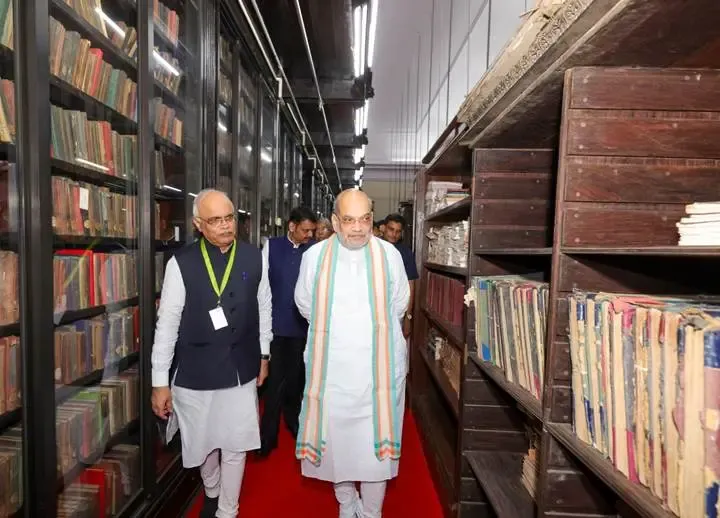
Home Minister Amit Shah inaugurated the Ganesh Gyanarthi Exhibition at the Asiatic Society of Mumbai on 13 September 2026 .
Shah called for full integration of the Society's manuscripts with the Gyan Bharatam National Manuscript Mission .
He proposed a campaign to collect ancestral documents from villages and scholars' homes across Maharashtra for the Gyan Bharatam Manuscript Survey.
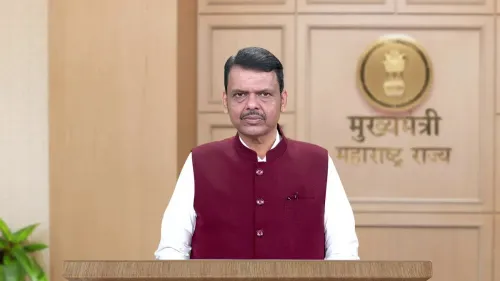
Shah disclosed he had asked Chief Minister Devendra Fadnavis to empower the Society and confirmed Centre support under PM Modi .
He envisioned a national knowledge repository linking similar institutions from across India with the Asiatic Society of Mumbai.
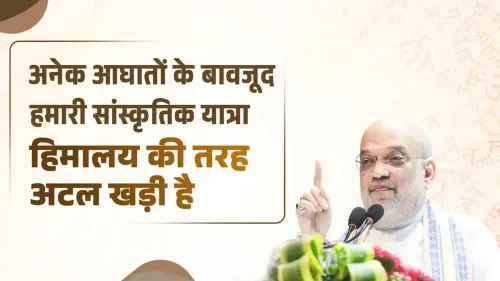
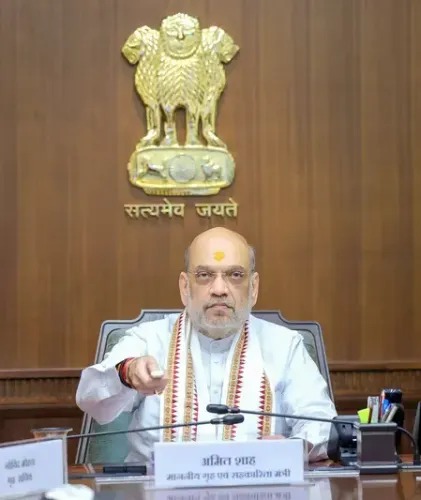
Union Home Minister Amit Shah on Sunday, 13 September 2026, inaugurated the 'Ganesh Gyanarthi Exhibition' organised by the Asiatic Society of Mumbai, using the occasion to call for a national effort to preserve and research India's ancient knowledge traditions. Shah stressed that civilisations which fail to protect their history and cultural memory are destined to decline, regardless of their present power.
Key Remarks by the Home Minister
Speaking at the inauguration, Shah said that 'many forces' had attempted over centuries to erase India's intellectual heritage — describing it as knowledge 'ready to guide the world' — but had ultimately failed. He argued that a nation which safeguards its 'smriti', history, values, language, records and traditions cannot be truly enslaved, no matter how long it remains under external domination.
Shah added that he had come to the Asiatic Society 'not as a Minister but as a participant in the movement to carry forward the Indian knowledge tradition for thousands of years.' He also noted that India's knowledge had long been articulated through a colonial lens, designed, in his view, to instil 'a collective inferiority complex' and erode public self-confidence.
Gyan Bharatam Mission and the Road Ahead
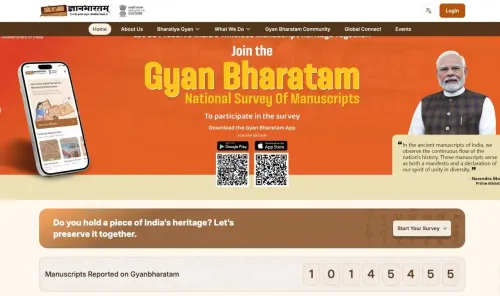
The Home Minister outlined a three-pronged agenda for the Asiatic Society's expansion. First, he urged the Society to fully integrate its manuscript holdings with the Gyan Bharatam National Manuscript Mission launched by the Government of India. Second, he called for a state-wide campaign to collect ancestral documents from villages across Maharashtra and from the homes of scholars, linking them to the Gyan Bharatam Manuscript Survey. Third, he proposed dedicated research arrangements for all departments associated with manuscripts held at the institution.
Shah recounted that at an earlier informal meeting of the mission, a Jain monk had asserted that the manuscripts contained 'the seed to make India the best in the world in economic and defence terms.' He called for structured research to unlock that potential.
Government Support and Maharashtra's Role
Shah disclosed that he had spoken to Maharashtra Chief Minister Devendra Fadnavis about empowering the Asiatic Society, and affirmed that under Prime Minister Narendra Modi's leadership, the Centre would continue providing 'every possible support and cooperation' to the institution. He described Maharashtra as the land of the 'Saraswats', saying the primacy of knowledge is already inherent in its cultural energy.
Vision for a Shared National Repository
Shah envisioned a connected network linking similar institutions from every village, town and state across India with the Asiatic Society of Mumbai — creating a shared knowledge repository accessible to students, researchers and scholars nationwide. This comes amid the Centre's broader push to document and digitise India's manuscript heritage under the Gyan Bharatam Mission, which has been expanding its scope in recent months.
Point of View
Not merely a cultural one, is a recurring motif in this government's cultural policy. What remains untested is whether the promised state-level support from Fadnavis translates into recurring budget allocations or remains a one-occasion commitment. The real measure of this initiative will be how many of the Society's estimated holdings are catalogued, digitised and made openly accessible — metrics that have lagged ambition in previous manuscript preservation efforts.
NationPress
13 Sept 2026
Frequently Asked Questions
What is the Ganesh Gyanarthi Exhibition inaugurated by Amit Shah?
The Ganesh Gyanarthi Exhibition is a cultural and knowledge showcase organised by the Asiatic Society of Mumbai, inaugurated by Union Home Minister Amit Shah on 13 September 2026. The event served as a platform for Shah to outline the government's vision for preserving and researching India's manuscript heritage.
What is the Gyan Bharatam National Manuscript Mission?
The Gyan Bharatam National Manuscript Mission is a Government of India initiative aimed at surveying, documenting and researching ancient manuscripts held in institutions and private collections across the country. Shah urged the Asiatic Society of Mumbai to integrate its holdings fully with this mission and its associated manuscript survey.
What did Amit Shah ask the Asiatic Society of Mumbai to do?
Shah outlined three priorities: integrate the Society's manuscripts with the Gyan Bharatam National Manuscript Mission, run a campaign to collect ancestral documents from villages and scholars' homes across Maharashtra, and establish dedicated research arrangements for its manuscript departments.
What role does Maharashtra play in this knowledge initiative?
Shah described Maharashtra as the land of the 'Saraswats', arguing that the primacy of knowledge is inherent in its culture. He also disclosed that he had spoken to Chief Minister Devendra Fadnavis about empowering the Asiatic Society, indicating state-level buy-in for the initiative.
What is the broader vision Shah outlined for India's knowledge institutions?
Shah called for a national network linking similar institutions from every village, town and state with the Asiatic Society of Mumbai, creating a shared knowledge repository accessible to students, researchers and scholars across India. He reaffirmed that the Centre under PM Modi would continue supporting the Asiatic Society.