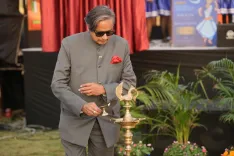
Shekhawat calls for 'Made in India' sports gear on every field
Synopsis
Union Culture and Tourism Minister Gajendra Singh Shekhawat has called for every athlete on Indian fields — domestic or foreign — to use Made in India sports gear, clothing, and footwear, linking athletic excellence to indigenous equipment manufacturing under Make in India and Atmanirbhar Bharat.
Key Takeaways
Union Minister Gajendra Singh Shekhawat posted on November 5, 2026 calling for all sports gear, clothing, and footwear used by athletes in India to be Made in India .
He framed the goal as a twin ambition: producing world-class players and world-class sports equipment simultaneously.
India already operates major sports goods manufacturing clusters in Meerut (UP) and Jalandhar (Punjab), which export globally.
The statement aligns with the government's Make in India (launched September 2014) and Atmanirbhar Bharat self-reliance doctrines.
No specific new scheme or production-linked incentive was announced; the post signals intent rather than a formal policy move.
Manufacturers, federations, and event organisers in the sports goods sector will watch for follow-up incentives or procurement mandates.
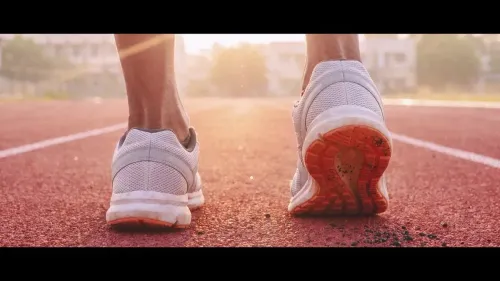
Every athlete who steps onto a field — Indian or foreign — should be wearing Made in India shoes, carrying Made in India equipment. That is the vision Union Culture and Tourism Minister Gajendra Singh Shekhawat put on record on Thursday, November 5, 2026, in a pointed call for India to become not just a producer of world-class players, but a manufacturer of world-class sports gear.
Posting on X, Shekhawat said, 'जब कोई भारतीय या विदेशी खिलाड़ी किसी मैदान पर उतरे, तो उसके sports gear भी Made in India हों और उसके कपड़े-जूते भी Made in India हों' — 'When any Indian or foreign player steps onto a field, their sports gear should be Made in India, their clothing and shoes too.' He framed it as a twin ambition: athletic excellence and indigenous equipment supply chains advancing together.
Meerut, Jalandhar and the manufacturing backbone already in place
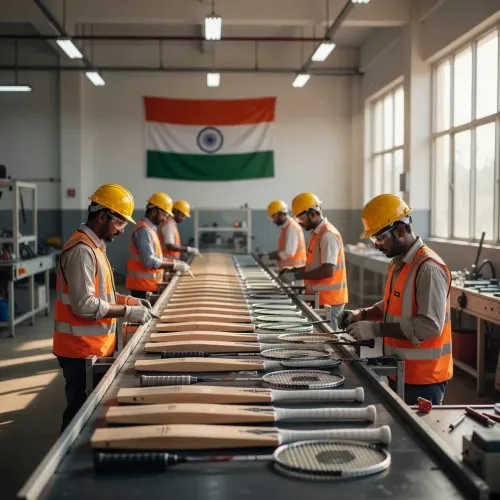
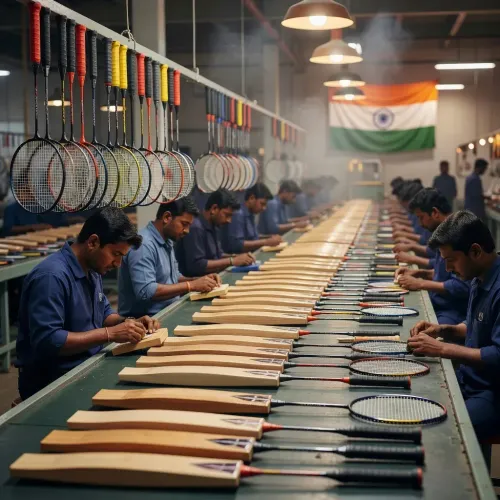
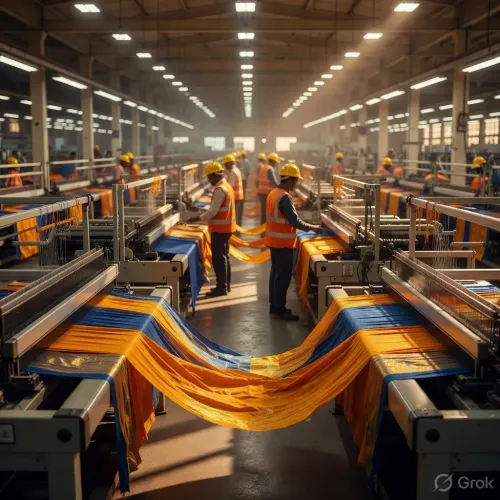
Shekhawat's statement lands on ground that already has roots. India's sports goods manufacturing clusters — centred on Meerut in Uttar Pradesh and Jalandhar in Punjab — have supplied bats, balls, hockey sticks, and protective gear to global markets for decades. The sector feeds export pipelines into Europe and North America, yet domestic athletes have often trained and competed with imported gear at the top end.
The gap between what India produces and what India's own elite athletes use is precisely the tension the minister is highlighting. His framing — that a world-class player deserves world-class Indian-made equipment — is a direct call to close that loop.
Where Make in India and Atmanirbhar Bharat meet the sporting arena
The statement slots neatly into the architecture of two flagship economic doctrines. Make in India, launched in September 2014, set out to build domestic manufacturing capacity and reduce import dependence across sectors. Atmanirbhar Bharat deepened that push, emphasising self-reliance in strategic and consumer supply chains alike. Sports goods — relatively low-tech to manufacture, high in visibility when used by athletes at televised international events — are an unusually potent symbol for both programmes.
When an Indian olympian's racket or a visiting foreign team's jersey bears an Indian brand at a global tournament, the optics carry a marketing force no advertisement can replicate. That is the upstream logic running through Shekhawat's post.
What the sports goods sector will be watching next
The minister's remarks, delivered with a video attached, stop short of announcing a specific scheme or production-linked incentive for the sports goods sector. But they signal intent — and intent from a Union Cabinet minister often precedes policy. Manufacturers in Meerut and Jalandhar, athletes' associations, and the sporting federations that procure equipment at scale will be parsing whether a formal push — tariff adjustments, PLI expansion, or procurement mandates for domestic events — follows.
India has used multi-sport events as leverage before, nudging organisers toward domestic procurement. If that playbook extends to gear standards at future tournaments hosted on Indian soil, today's statement could mark the opening move.
Point of View
The statement reads as agenda-setting, staking out a cross-ministerial aspiration ahead of potential formal measures. The twin framing — athletic excellence plus manufacturing self-reliance — is politically efficient: it speaks to national pride, economic nationalism, and the aspirations of a growing sports industry in a single breath. The real test will be whether this translates into coordinated PLI or procurement policy, or remains inspirational rhetoric.
NationPress
5 Nov 2026
Frequently Asked Questions
What did Gajendra Singh Shekhawat say about sports equipment?
Shekhawat called for every athlete who plays in India — whether Indian or foreign — to use sports gear, clothing, and footwear that is Made in India, saying India should produce both world-class players and world-class sports equipment.
Where is sports goods manufacturing done in India?
India's main sports goods manufacturing clusters are in Meerut , Uttar Pradesh and Jalandhar , Punjab, which produce bats, balls, hockey sticks, protective gear and more for both domestic use and global export.
How does this relate to Make in India?
Make in India, launched in September 2014, aims to build domestic manufacturing and reduce import dependence. Shekhawat's call directly applies that philosophy to the sports goods sector, pushing for Indian-made gear to replace imports used by athletes.
Is there a new government scheme for Made in India sports gear?
No specific new scheme or production-linked incentive for sports goods was announced in this post. It expresses ministerial intent, and industry observers are watching for any formal policy follow-through.
What is Atmanirbhar Bharat and how does it apply to sports?
Atmanirbhar Bharat is India's self-reliance economic doctrine that extends Make in India into strategic and consumer supply chains. Applied to sports, it means encouraging Indian athletes and event organisers to procure domestically manufactured equipment rather than relying on imports.