Shekhawat Defends E20 Fuel: Facts Over Rumours

Synopsis
Union Minister Gajendra Singh Shekhawat on August 2 defended India's E20 ethanol-blended fuel programme against online misinformation, citing scientific testing and the policy's roots in the National Policy on Biofuels, 2018, aimed at cutting crude oil imports.
Key Takeaways
Gajendra Singh Shekhawat , Union Minister of Culture and Tourism, publicly countered misinformation about E20 fuel on August 2, 2026 .
E20 is petrol blended with 20% ethanol , designed to reduce India's dependence on imported crude oil.
The programme is rooted in the National Policy on Biofuels, 2018 ; the blending target was advanced to 2025 in 2021.
Shekhawat cited scientific testing, vehicle safety trials, and evidence-based policymaking as the three pillars of the E20 initiative.
The minister urged citizens to avoid fake news and rely on verified information about the fuel's safety and performance.
Beyond energy security, E20 supports farmer incomes by channelling surplus sugarcane into ethanol production.
With misinformation about India's ethanol-blending programme spreading online, Union Culture and Tourism Minister Gajendra Singh Shekhawat stepped in on Sunday, August 2, 2026, to set the record straight — urging citizens to trust research and evidence over rumours circulating about E20 fuel.
Posting in Hindi, Shekhawat declared: 'अफवाहों से नहीं, तथ्यों से जानिए सच!' — 'Know the truth from facts, not rumours!' He framed E20 — petrol blended with 20% ethanol — as a major step toward strengthening India's energy security and cutting its dependence on imported crude oil. The minister pointed to three pillars backing the policy: scientific testing, comprehensive safety and performance trials for vehicles, and a foundation in research and evidence rather than hearsay.
What E20 Actually Is — and Why It Exists
E20 is not new policy improvisation. It flows directly from India's National Policy on Biofuels, 2018, which set a framework for progressively increasing ethanol blending in transport fuels. In 2021, the government accelerated the timeline, advancing the target for 20% ethanol blending to 2025. The logic is straightforward: India imports a massive share of its crude oil, a structural vulnerability that drains foreign exchange. Blending domestically produced ethanol into petrol chips away at that dependence.
There is a second dividend. Surplus sugarcane — a perennial headache for farmers and sugar mills alike — feeds ethanol distilleries, converting an agricultural glut into fuel and supporting rural incomes in the process. Lower tailpipe emissions round out the case.
Shekhawat's Push Against Fake News on Fuel
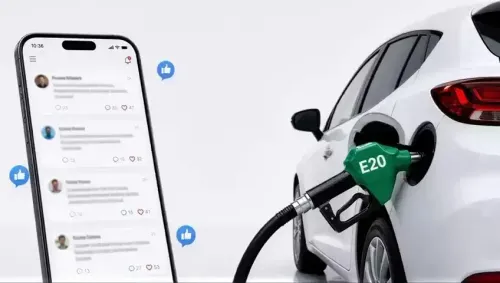
The minister's intervention signals that misinformation about E20's safety or its effect on engine performance has been gaining traction — enough to warrant a senior BJP leader weighing in publicly. Shekhawat's post is pointed: it does not just defend the policy, it names the enemy. 'Avoid fake news, trust correct information,' he wrote, positioning the government as the authoritative counter-voice to viral claims about vehicle damage or fuel quality.
The stakeholders watching this debate closely are vehicle owners anxious about compatibility, oil marketing companies rolling out E20 at pumps, and ethanol producers whose business case depends on sustained government commitment. For all three, public trust in the fuel is not a soft concern — it is an economic one.
India's ethanol blending programme has survived across political cycles precisely because its energy-security rationale is hard to argue with. The question now is whether the government's fact-check offensive can outrun the rumour mill as E20 rolls out nationally.
Point of View
Rather than the Petroleum ministry, is stepping into this space suggests the BJP is deploying its broader leadership bench to defend a flagship energy policy. The move fits a wider pattern: as E20 reaches everyday consumers at the pump, the government's messaging challenge shifts from policy design to public persuasion. If the rumour cycle is not arrested, it could slow adoption and complicate the 2025 blending target.
NationPress
2 Aug 2026
Frequently Asked Questions
What is E20 fuel in India?
E20 is petrol blended with 20% ethanol, promoted by the Indian government under the National Policy on Biofuels, 2018, to reduce crude oil imports and lower emissions.
Is E20 fuel safe for my car?
The government states that E20 has undergone comprehensive scientific testing for vehicle safety and performance. Shekhawat emphasised the policy is based on research and evidence, not rumour.
Why is India promoting ethanol blending in petrol?
India imports a large share of its crude oil. Blending domestically produced ethanol reduces that import dependence, saves foreign exchange, supports sugarcane farmers, and cuts tailpipe emissions.
When is India's E20 ethanol blending target?
The target for 20% ethanol blending was originally set under the 2018 biofuel policy and was advanced to 2025 in 2021.
Why did Gajendra Singh Shekhawat post about E20 fuel?
Shekhawat posted on August 2, 2026, to counter misinformation spreading online about E20's safety and performance, urging citizens to trust scientific testing and government-verified information.