Shekhawat marks 11 years of Digital India, hails e-governance gains

Synopsis
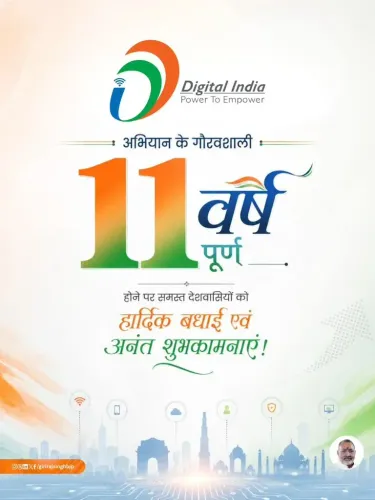
Union Culture and Tourism Minister Gajendra Singh Shekhawat on 1 July 2026 marked Digital India's 11th anniversary, hailing the programme's role in advancing e-governance, digital payments, and citizen empowerment since its launch by PM Modi in 2015.
Key Takeaways
Digital India turned 11 years old on 1 July 2026 , marking over a decade since its launch by PM Narendra Modi at Indira Gandhi Stadium, New Delhi on 1 July 2015 .
Union Minister Gajendra Singh Shekhawat posted on X to mark the anniversary, calling the programme a 'new chapter of good governance, service, and innovation.' The programme's digital public infrastructure stack — Aadhaar, UPI, and DigiLocker — has shifted government service delivery from physical to electronic modes over the past decade.
Digital payments and paperless governance processes have been positioned as tools of transparency and reduced leakage in welfare delivery.
Parliamentary focus in 2026-27 is expected on Digital India Phase 2 budget allocation and new MeitY guidelines on AI-enabled e-governance services.
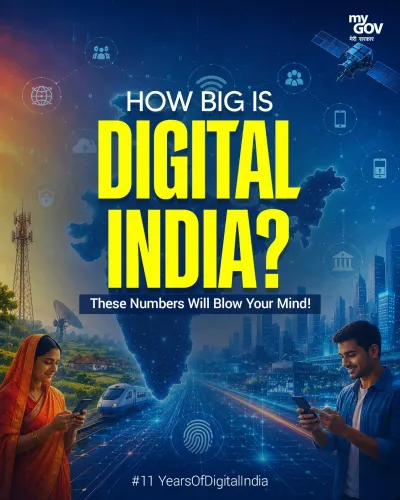
Union Culture and Tourism Minister Gajendra Singh Shekhawat on Wednesday, 1 July 2026 marked the 11th anniversary of Digital India, crediting the flagship programme with transforming governance, services, and innovation for every Indian citizen. Posting on X with the hashtag #11YearsOfDigitalIndia, the senior BJP leader and Lok Sabha MP from Jodhpur, Rajasthan underlined how digital payments and e-governance have made life simpler, more transparent, and more empowering.
Context
Digital India was formally launched on 1 July 2015 by Prime Minister Narendra Modi at Indira Gandhi Stadium, New Delhi, consolidating earlier e-governance efforts that dated back to the National e-Governance Plan of 2006. The programme set out to build robust digital infrastructure, deliver government services electronically, and ensure universal digital literacy across the country. Shekhawat's post, in Hindi, captured that founding ambition: 'डिजिटल इंडिया ने सुशासन, सेवा और नवाचार का नया अध्याय लिखा है' ('Digital India has written a new chapter of good governance, service, and innovation').
The minister noted that technology — spanning digital payments to e-governance — had made the life of every citizen 'more simple, transparent, and empowered.' The anniversary post is consistent with a broader pattern of official messaging that uses programme milestones to highlight cumulative adoption and institutional momentum.
Policy Backdrop
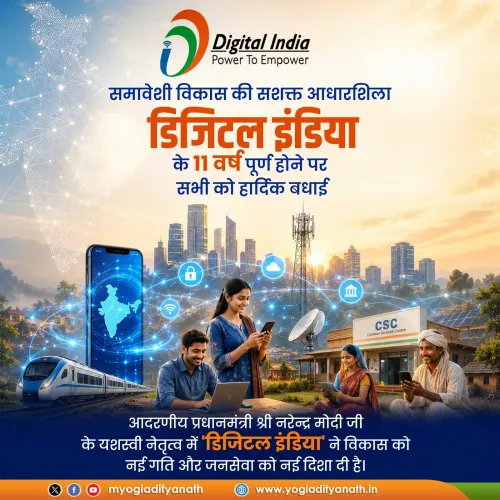
Over the past 11 years, the Union government has built layered digital public infrastructure combining Aadhaar, the Unified Payments Interface (UPI), and DigiLocker to shift service delivery from physical counters to electronic platforms. This stack has been positioned as an instrument of transparency and reduced leakage in welfare delivery. Digital payments, in particular, have seen rapid and widespread adoption across urban and rural India alike.
The Ministry of Electronics and Information Technology (MeitY) has been the nodal body overseeing Digital India's rollout, with state governments serving as key implementation partners. Parliamentary attention in the 2026-27 session is expected to focus on Digital India Phase 2 budget allocations and emerging AI-enabled e-governance guidelines that could shape the programme's next decade.
Stakeholders and Impact
The primary beneficiaries of Digital India are Indian citizens — particularly those in previously underserved regions — who can now access government services, subsidies, and financial systems through mobile and internet platforms. State governments have been integral partners, integrating their own service portals and payment systems into the national digital architecture. The shift to paperless processes across ministries has also been cited as a structural check on corruption and administrative delay.
Shekhawat's participation in the anniversary conversation reflects the programme's cross-ministerial relevance: Digital India's tools underpin functions from tourism promotion to cultural heritage archiving, areas directly within his own portfolio.
What's Next
As Digital India enters its 12th year, parliamentary deliberations on Phase 2 funding and new MeitY directives on artificial intelligence in public service delivery are expected to define the programme's forward trajectory. The government's ability to deepen last-mile digital access and expand AI-powered governance tools will be closely watched by both policymakers and civil society. How these investments translate into measurable outcomes for citizens will shape the political narrative around digital governance heading into the next electoral cycle.
Point of View
Service, and innovation' in a single breath, the minister ties Digital India's decade-long record to the BJP's broader brand of technology-driven administration. The cross-ministerial resonance — digital tools now underpin tourism promotion and cultural heritage archiving, both within Shekhawat's own portfolio — signals that Digital India has matured from a standalone scheme into foundational infrastructure. The real test for the programme's second decade will be whether AI-enabled e-governance investments translate into measurable, last-mile outcomes rather than headline metrics.
NationPress
1 Jul 2026
Frequently Asked Questions
When was Digital India launched and by whom?
Digital India was launched on 1 July 2015 by Prime Minister Narendra Modi at Indira Gandhi Stadium, New Delhi , building on earlier e-governance efforts under the National e-Governance Plan of 2006.
What did Gajendra Singh Shekhawat say about Digital India's anniversary?
Minister Gajendra Singh Shekhawat posted on X on 1 July 2026 saying Digital India had 'written a new chapter of good governance, service, and innovation,' and that technology had made citizens' lives 'more simple, transparent, and empowered.'
What are the key pillars of Digital India?
Digital India's core infrastructure pillars include Aadhaar (digital identity), UPI (unified payments), and DigiLocker (paperless document storage), which together enable electronic delivery of government services and welfare.
What is Digital India Phase 2?
Digital India Phase 2 refers to the next stage of the programme, with parliamentary attention in 2026-27 expected to focus on fresh budget allocations and new MeitY guidelines on AI-enabled e-governance services.
Who oversees the Digital India programme?
The Ministry of Electronics and Information Technology (MeitY) is the nodal Union ministry overseeing Digital India, with state governments serving as key implementation partners for service delivery.