Shekhawat marks Emergency anniversary as 'Samvidhan Hatya Diwas'
Synopsis
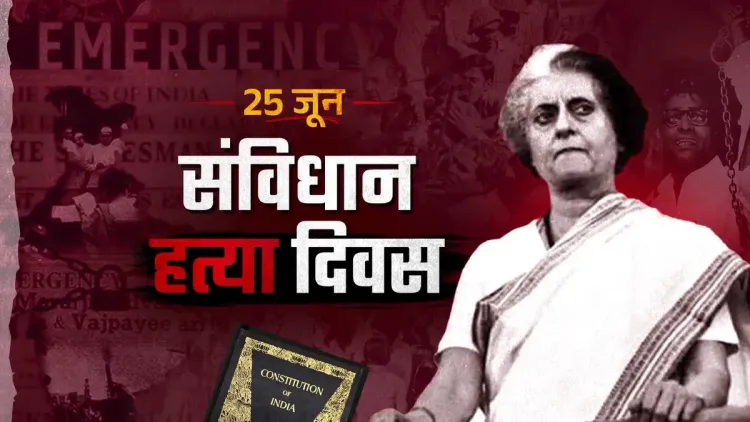
On the 51st anniversary of the 1975 Emergency, Union Culture and Tourism Minister Gajendra Singh Shekhawat condemned the Congress-era suspension of democracy, shared a commemorative video, and underlined the government's designation of 25 June as 'Samvidhan Hatya Diwas' to honour those who resisted authoritarian rule.
Key Takeaways
25 June 2026 marks the 51st anniversary of the proclamation of the National Emergency by Prime Minister Indira Gandhi in 1975 .
The Allahabad High Court had declared Indira Gandhi's 1971 Lok Sabha election void on 12 June 1975 , triggering the constitutional crisis.
The Emergency lasted 21 months , during which fundamental rights were suspended, press censorship was imposed, and thousands were detained without trial.
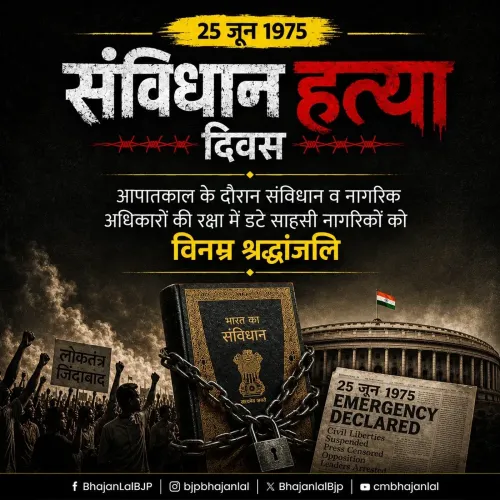
The Union government designated 25 June as Samvidhan Hatya Diwas on 11 July 2024 to annually commemorate those who resisted Emergency-era repression.
The 44th Constitutional Amendment (1978) , enacted by the Janata government, removed 'internal disturbance' as a ground for Emergency and reinforced judicial review.
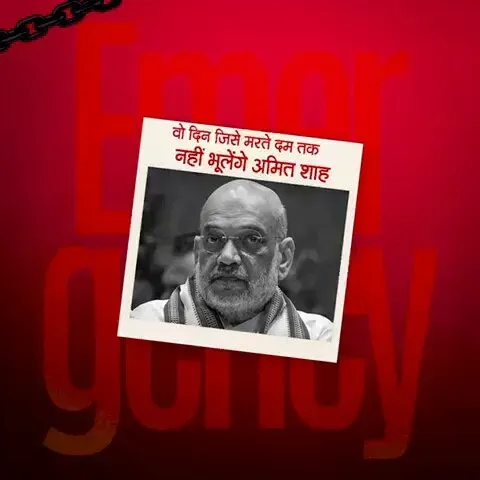
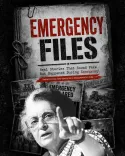
Minister Shekhawat shared a video on the occasion, framing the Emergency as an example of 'Congress and Indira Gandhi's dictatorial thinking.'
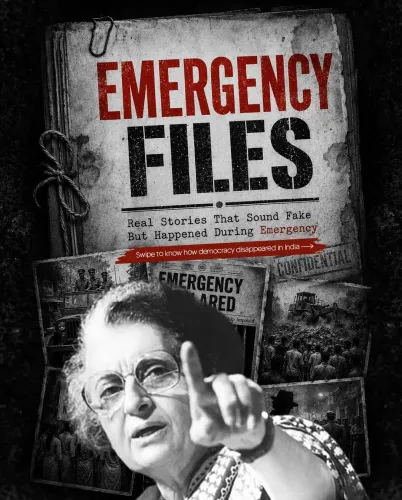
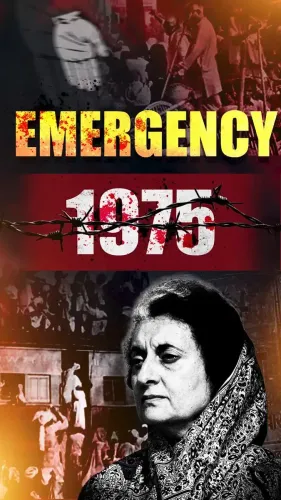
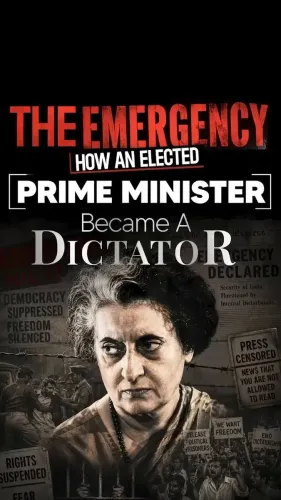
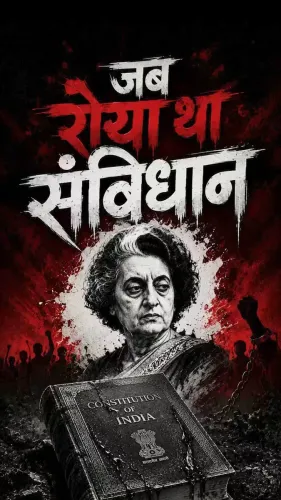
Union Culture and Tourism Minister Gajendra Singh Shekhawat on Wednesday, 25 June 2026, marked the 51st anniversary of the 1975 Emergency by calling it a dark day for Indian democracy, sharing a video recounting the 21-month period and reiterating the government's designation of the date as 'Samvidhan Hatya Diwas' (Constitution Murder Day).
Context
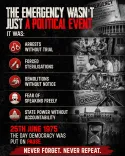
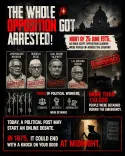
In his post, Shekhawat wrote: '25 June 1975 — jab loktantra ko Congress ne kuchla!' ('25 June 1975 — the day Congress crushed democracy!'). He stated that after the Allahabad High Court declared Indira Gandhi's Lok Sabha election void, her government imposed a national Emergency on 25 June 1975 to protect its hold on power. The minister described the period as one in which fundamental rights were suspended, press censorship was enforced, and opposition leaders, journalists, and thousands of pro-democracy citizens were imprisoned.
Shekhawat also referenced forced sterilisations, political arrests, and deaths of innocent people as among the gravest abuses of that era, characterising the Congress and Indira Gandhi's approach as 'dictatorial thinking that put democracy in chains.'
Policy Backdrop
The Allahabad High Court had on 12 June 1975 ruled Indira Gandhi's 1971 Lok Sabha election from Rae Bareli void on grounds of electoral malpractice. Days later, on 25 June 1975, the Emergency was proclaimed under Article 352 of the Constitution, citing 'internal disturbance.' It remained in force for 21 months, ending on 21 March 1977.
The subsequent Janata Party government enacted the 44th Constitutional Amendment in 1978, removing 'internal disturbance' as a valid ground for an Emergency and strengthening judicial oversight. On 11 July 2024, the Union government announced that 25 June would henceforth be observed annually as Samvidhan Hatya Diwas, to honour those who resisted Emergency-era repression.
Stakeholders and Impact
The official observance of Samvidhan Hatya Diwas is intended to commemorate civil liberties advocates, journalists, opposition politicians, and ordinary citizens who were detained or otherwise affected during the Emergency. Civil liberties groups and constitutional scholars have long documented the suspension of habeas corpus, pre-censorship of newspapers, and large-scale detentions under the Maintenance of Internal Security Act (MISA) during this period.
The Congress party has consistently contested the BJP-led government's framing of the Emergency anniversary as a political tool, while BJP and its allies have made annual commemorations a fixture of their democratic-accountability narrative. The institutionalisation of the day mirrors similar commemorative observances, such as Partition Horrors Remembrance Day on 14 August.
What's Next
Government programmes, parliamentary references, and cultural events are expected to mark 25 June each year under the Samvidhan Hatya Diwas framework. Opposition parties are likely to counter with their own historical readings, particularly as the anniversary approaches future election cycles. As the ruling dispensation continues to institutionalise memory of the Emergency, the day is set to remain a recurring flashpoint in India's political discourse around constitutional values and democratic accountability.
Point of View
Using historical anniversaries to reinforce a narrative of Congress authoritarianism versus post-2014 constitutional guardianship. The government's formalisation of 'Samvidhan Hatya Diwas' in 2024 transformed what was once a partisan talking point into state-sanctioned remembrance, giving ministers institutional cover to amplify the message annually. This mirrors the pattern set by 'Partition Horrors Remembrance Day,' signalling a deliberate strategy of competitive memory-making ahead of electoral cycles. The Congress party's predictable counter-narrative ensures the Emergency remains a live fault line in Indian politics rather than settled history.
NationPress
25 Jun 2026
Frequently Asked Questions
What is Samvidhan Hatya Diwas and when was it declared?
Samvidhan Hatya Diwas, or 'Constitution Murder Day,' is an annual observance on 25 June to mark the anniversary of the 1975 Emergency and honour those who resisted it. The Union government declared it on 11 July 2024.
Why was the Emergency imposed in 1975?
The Emergency was proclaimed on 25 June 1975 by Prime Minister Indira Gandhi under Article 352 of the Constitution, citing 'internal disturbance,' after the Allahabad High Court invalidated her 1971 Lok Sabha election on grounds of electoral malpractice.
How long did the 1975 Emergency last?
The Emergency lasted 21 months, from 25 June 1975 to 21 March 1977, when it was revoked ahead of general elections that brought the Janata Party to power.
What changes did India make to prevent a repeat of the 1975 Emergency?
The Janata government enacted the 44th Constitutional Amendment in 1978, which removed 'internal disturbance' as a valid ground for declaring an Emergency and strengthened judicial review of such proclamations.
What did Gajendra Singh Shekhawat say about the Emergency on 25 June 2026?
Shekhawat called 25 June 1975 a 'black day for Indian democracy,' condemned the suspension of fundamental rights, press censorship, and mass detentions under Congress rule, and shared a video commemorating the period while reiterating the Samvidhan Hatya Diwas observance.