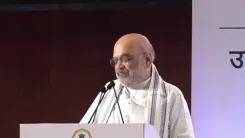
Shekhawat shares PM Modi's tribute to Jana Sangh founder Mukherjee
Synopsis
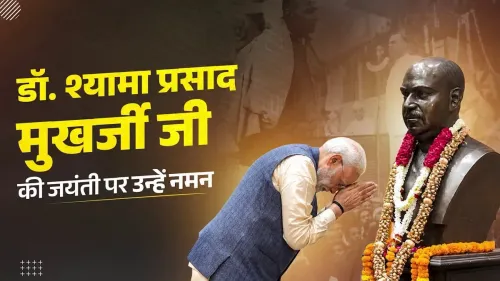
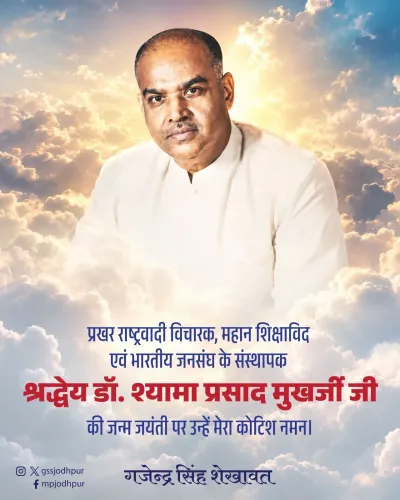
Union Minister Gajendra Singh Shekhawat amplified PM Modi's tribute to Dr. Shyama Prasad Mukherjee on his birth anniversary, framing the Jana Sangh founder's 1951 initiative as the ideological origin of the BJP, today described by the party as the world's largest democratic political organisation.
Key Takeaways
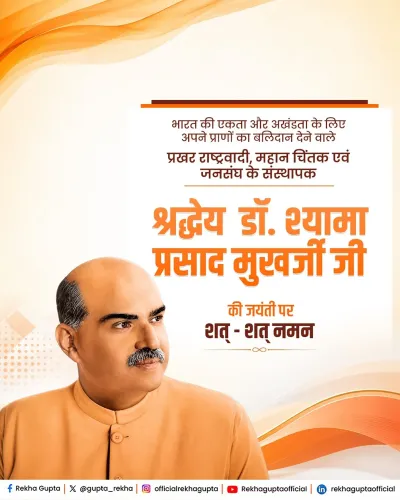
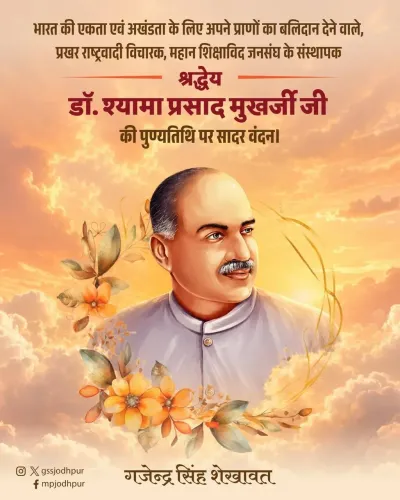
Union Minister Gajendra Singh Shekhawat shared a tribute statement by PM Narendra Modi honouring Dr.
Shyama Prasad Mukherjee on his birth anniversary, 6 July .
Mukherjee founded the Bharatiya Jana Sangh on 21 October 1951 as the first organised non-Congress ideological platform in independent India.
PM Modi's statement describes Mukherjee's act of founding the Jana Sangh as 'an expression of unwavering faith in ideological diversity, national thought, and public participation in democracy.' The Bharatiya Janata Party , formed on 6 April 1980 , is presented as the direct successor to the Jana Sangh and claims the status of the world's largest democratic political organisation.
The tribute is part of a consistent BJP pattern of linking present governance to a 75-year ideological lineage, reinforcing party identity beyond recent electoral success.
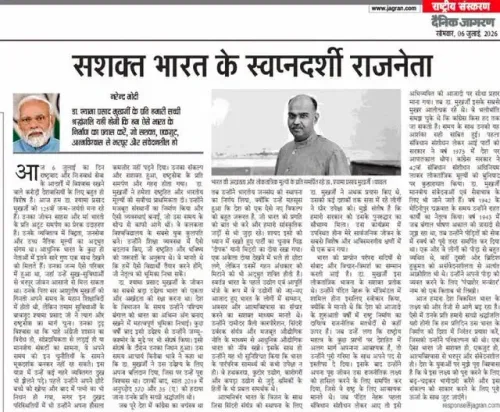
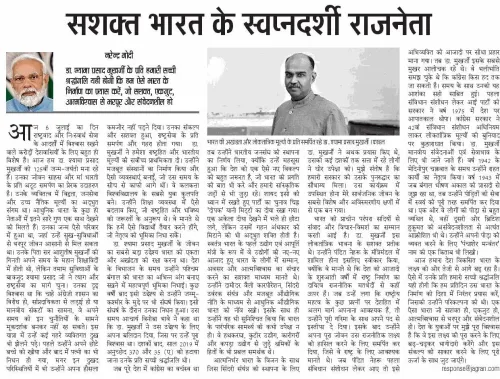
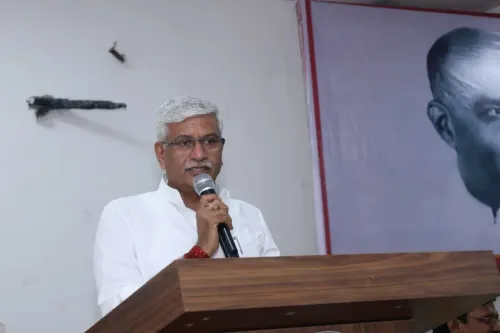
Union Culture and Tourism Minister Gajendra Singh Shekhawat on Monday, 7 July 2026, shared on X a statement by Prime Minister Narendra Modi paying tribute to Dr. Shyama Prasad Mukherjee, founder of the Bharatiya Jana Sangh, describing his legacy as the ideological seed from which the Bharatiya Janata Party grew into what the BJP calls the world's largest democratic political organisation.
Context
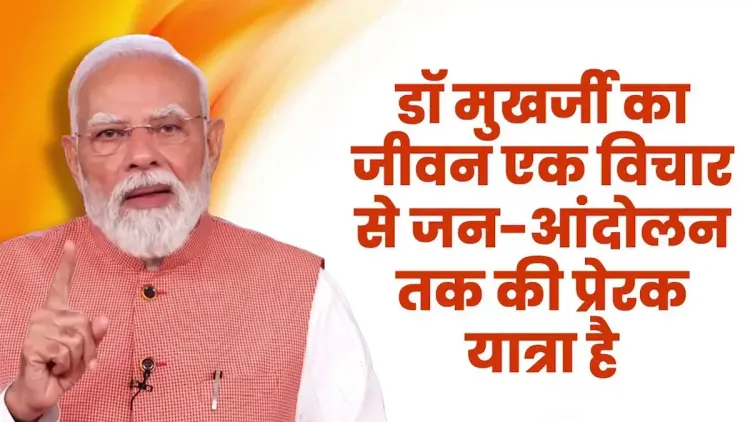
The post carries a statement attributed to Prime Minister Modi that reads, in translation: 'Dr. Shyama Prasad Mukherjee ka jeevan ek vichar se jan-andolan tak ki parinama ka prerak hai' — 'The life of Dr. Shyama Prasad Mukherjee is an inspiration for the journey from a single idea to a mass movement.' The statement goes on to note that when the Jana Sangh was established, Congress dominated every direction, and there was no space for an alternative thought. It credits Mukherjee with the courage to challenge those circumstances and build a new ideological current.
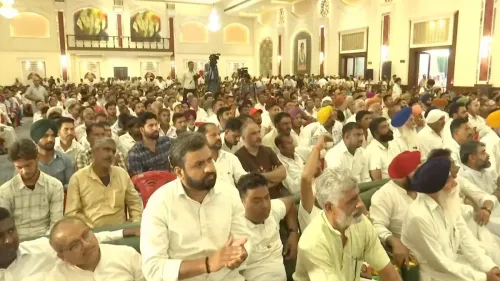
The tribute is pegged to the legacy of Dr. Mukherjee, whose birth anniversary falls on 6 July. Shekhawat's decision to amplify the Prime Minister's words on the occasion underscores the BJP's institutional emphasis on this date as a moment of party remembrance and ideological reaffirmation.
Policy Backdrop
The Bharatiya Jana Sangh was founded on 21 October 1951 by Dr. Shyama Prasad Mukherjee as a non-Congress platform advocating cultural nationalism, integrated nationhood, and opposition to what the party described as Nehruvian consensus. Mukherjee, a former Union minister, had resigned from the Cabinet in 1950 over differences on the Nehru–Liaquat Pact and subsequently built an independent political vehicle.
The Bharatiya Janata Party was formally constituted on 6 April 1980, after the collapse of the Janata Party experiment, and has consistently positioned itself as the organisational and ideological heir to the Jana Sangh. Prime Minister Modi's statement, as shared by Shekhawat, frames this lineage explicitly: 'That very Bharatiya Jana Sangh is today, in the form of the Bharatiya Janata Party, serving the people as the world's largest democratic force.'
Stakeholders and Impact
The tribute is directed primarily at BJP workers, political historians, and the party's wider support base, reinforcing an origin narrative that links present electoral dominance to a decades-long ideological struggle. By invoking democratic pluralism — the statement describes the Jana Sangh's founding as 'an expression of unwavering faith in ideological diversity, national thought, and public participation in democracy' — the messaging seeks to ground the BJP's current position in a principled rather than purely electoral story.
For political historians, the framing is significant: it situates the post-independence Congress monopoly as a democratic deficit that Mukherjee's initiative corrected, a reading that recurs in BJP commemorations and parliamentary debates on constitutional integration themes, including the abrogation of Article 370 in 2019, which the party directly links to Mukherjee's opposition to special status for Jammu and Kashmir.
What's Next
The BJP is expected to mark Mukherjee's birth anniversary through a series of party events, exhibitions, and social-media campaigns, consistent with its annual commemorative calendar. References to his legacy are also likely to feature in forthcoming BJP National Executive deliberations and in parliamentary debates where the party's foundational ideology is invoked.
As the BJP approaches future electoral cycles, the continued elevation of Mukherjee's memory signals that the party intends to keep its pre-1980 ideological lineage central to its public identity — framing governance not as a recent phenomenon but as the culmination of a 75-year ideological journey.
Point of View
The BJP reframes its dominance as the vindication of a long-suppressed ideological strand rather than a product of recent political fortune. The explicit invocation of Congress's post-independence monopoly as a democratic deficit is a recurring rhetorical device that simultaneously honours a founding figure and critiques the opposition's historical legitimacy. Anchoring this messaging around a birth anniversary ensures it lands as commemoration rather than provocation, giving it broader cultural reach. The forward-looking coda — that future generations will study Mukherjee's vision — is a signal that the party intends this lineage narrative to outlast any single electoral cycle.
NationPress
6 Jul 2026
Frequently Asked Questions
Who was Dr. Shyama Prasad Mukherjee?
Dr. Shyama Prasad Mukherjee was an Indian politician and academic who founded the Bharatiya Jana Sangh on 21 October 1951 . He had earlier served as a Union minister but resigned in 1950 over policy differences and went on to build an ideological alternative to the Congress. He is also known for his opposition to special status for Jammu and Kashmir under Article 370.
What is the connection between Jana Sangh and BJP?
The Bharatiya Janata Party , founded on 6 April 1980 , directly traces its organisational and ideological roots to the Bharatiya Jana Sangh founded by Dr. Mukherjee in 1951 . After the Jana Sangh merged into the Janata Party in 1977 and that experiment ended, its leaders reconstituted the movement as the BJP.
Why did Gajendra Singh Shekhawat post about Mukherjee?
Gajendra Singh Shekhawat , Union Culture and Tourism Minister and BJP MP from Jodhpur , shared PM Modi's tribute statement on 6 July , which is Dr. Mukherjee's birth anniversary, as part of the BJP's annual commemorative observance of its founding ideologue.
What did PM Modi say about Shyama Prasad Mukherjee?
PM Modi's statement, as shared by Shekhawat, described Mukherjee's life as 'an inspiration for the journey from a single idea to a mass movement.' It credited him with the courage to challenge Congress dominance and said his founding of the Jana Sangh was 'an expression of unwavering faith in ideological diversity, national thought, and public participation in democracy.'
When was the Bharatiya Jana Sangh founded?
The Bharatiya Jana Sangh was founded on 21 October 1951 by Dr. Shyama Prasad Mukherjee in New Delhi as a non-Congress political platform at a time when the Indian National Congress was the overwhelmingly dominant force in national politics.