Shekhawat shares Shah's pitch on BJP Bengal governance push
Synopsis
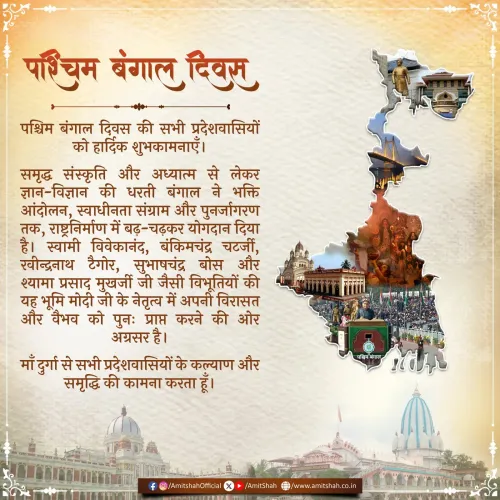
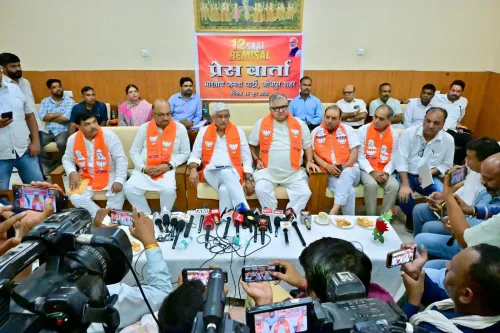
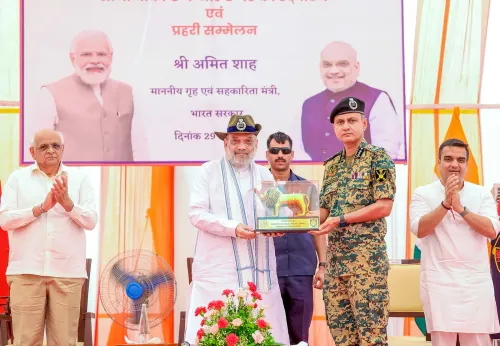
Union Minister Gajendra Singh Shekhawat amplified a video of Home Minister Amit Shah outlining BJP West Bengal's rapid delivery push — covering Ayushman Bharat, Lakhpati Didi, BSF fencing, a UCC committee, an anti-corruption panel, and a new public-order amendment bill.
Key Takeaways
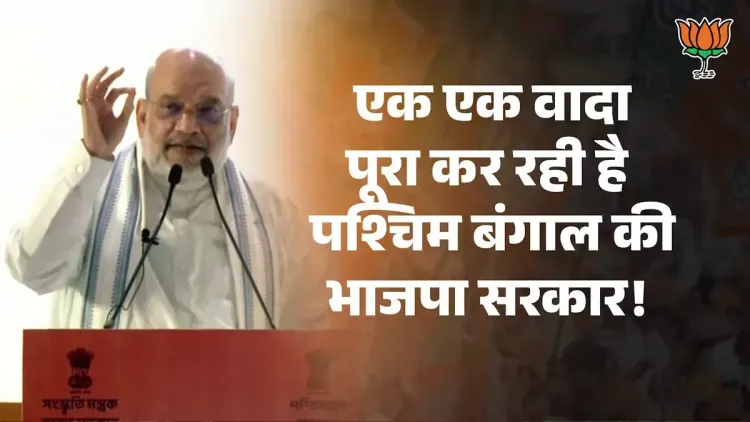
Union Culture Minister Gajendra Singh Shekhawat shared a video of Home Minister Amit Shah on 6 July 2026 detailing the BJP's West Bengal governance agenda.
The list includes Annapurna Yojana , free bus service , Lakhpati Didi Mission , and Ayushman Bharat health cover of up to Rs 5 lakh per family .
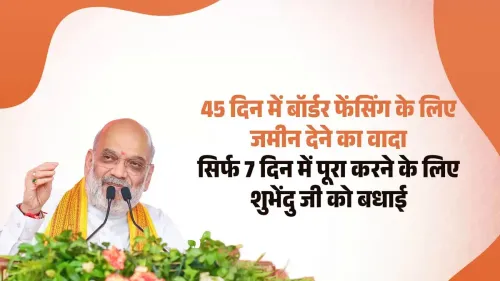
Land has been allocated to the BSF for border fencing along the India-Bangladesh frontier , addressing a long-pending security demand.
A UCC committee and an anti-corruption inquiry committee have been constituted, alongside the proposed West Bengal Maintenance of Public Order Amendment Bill 2026 .
An infiltrator-identification and removal drive has been initiated, a politically salient issue in the state.
The messaging mirrors the BJP's established pattern of simultaneous scheme rollouts ahead of electoral cycles.
Union Culture and Tourism Minister Gajendra Singh Shekhawat on Monday, 6 July 2026, shared a video of Union Home Minister Amit Shah detailing a sweeping list of governance and welfare commitments that the BJP is projecting as its delivery agenda for West Bengal, ranging from health coverage and women's empowerment to border fencing and a new public-order law.
Context
Shekhawat's post enumerates a cluster of schemes and legislative actions, quoting Shah on how the BJP in West Bengal is 'working rapidly to fulfil its promises one by one without wasting time.' The list includes the Annapurna Yojana (food security), free bus service, Lakhpati Didi Mission, Ayushman Bharat, construction of a cancer hospital, land allocation to the BSF for border fencing, an anti-corruption inquiry committee, a UCC committee, the proposed West Bengal Maintenance of Public Order Amendment Bill 2026, and the initiation of identifying and removing infiltrators.
The post is anchored to a video of Shah and is framed as proof of promise-keeping, a narrative the BJP has deployed consistently in states where it holds or contests power.
Policy Backdrop
Ayushman Bharat Pradhan Mantri Jan Arogya Yojana, launched in September 2018, provides health insurance cover of up to Rs 5 lakh per family annually and remains one of the BJP's most-cited welfare flagship schemes. West Bengal was among the states that had not implemented the scheme under the previous administration, making its rollout a politically significant milestone for any BJP government in the state.
The Lakhpati Didi Mission targets women in self-help groups, aiming to raise household incomes above Rs 1 lakh per year. The Uniform Civil Code has been a core BJP manifesto commitment since 2014, and the formation of a UCC committee in Bengal would mark a significant step in that direction at the state level.
The BSF has long sought land access along the India-Bangladesh frontier to complete border fencing, a process repeatedly cited as critical to curbing cross-border infiltration — an issue that carries particular electoral salience in Bengal.
Stakeholders and Impact
The measures, if implemented, span a wide cross-section of West Bengal's population: women in self-help groups stand to benefit from the Lakhpati Didi Mission; low-income families would gain health cover under Ayushman Bharat; and border communities would be directly affected by BSF fencing operations and the infiltrator-identification drive.
The proposed West Bengal Maintenance of Public Order Amendment Bill 2026 signals a legislative push on law-and-order, a domain where the BJP has consistently criticised the state's earlier administration. The anti-corruption committee is positioned as an accountability mechanism targeting past governance.
What's Next
Political observers will watch for the formal tabling and passage of the West Bengal Maintenance of Public Order Amendment Bill 2026 in the state assembly, as well as official notifications constituting the UCC committee and the corruption inquiry panel. The pace at which these announcements translate into gazette notifications and on-ground implementation will determine whether the BJP's delivery narrative holds through the next electoral cycle.
Shekhawat's amplification of Shah's messaging signals a coordinated national-level effort to project West Bengal as a model of rapid BJP governance, a template the party is likely to replicate in its communications ahead of future state and parliamentary contests.
Point of View
Spanning welfare, health, border security, personal law reform, and anti-corruption, is deliberate: it signals comprehensive governance rather than selective delivery. Bundling BSF fencing and infiltrator removal with Ayushman Bharat and Lakhpati Didi in a single post is a calibrated attempt to hold together the BJP's dual voter appeal — welfare beneficiaries and security-conscious nationalists. The intensity of this messaging in mid-2026 suggests the party is building a pre-election record in West Bengal well in advance of the next assembly contest.
NationPress
6 Jul 2026
Frequently Asked Questions
What schemes did Amit Shah list for West Bengal?
Amit Shah listed Annapurna Yojana, free bus service, Lakhpati Didi Mission, Ayushman Bharat, a cancer hospital, BSF border fencing land allocation, an anti-corruption committee, a UCC committee, the West Bengal Maintenance of Public Order Amendment Bill 2026, and an infiltrator-removal drive.
What is the Lakhpati Didi Mission?
The Lakhpati Didi Mission is a women's self-help group initiative that aims to raise household incomes above Rs 1 lakh annually, empowering rural and semi-urban women through skill development and entrepreneurship support.
Why is BSF fencing significant in West Bengal?
The BSF has long required land access along the India-Bangladesh frontier to complete border fencing aimed at curbing cross-border infiltration, an issue with high security and electoral salience in West Bengal.
What is the West Bengal Maintenance of Public Order Amendment Bill 2026?
It is a proposed state legislative amendment to strengthen law-and-order powers in West Bengal, listed by Home Minister Amit Shah as part of the BJP government's governance agenda in the state.
Why did Gajendra Singh Shekhawat post about West Bengal governance?
Shekhawat, a senior BJP leader and Union minister, shared the video as part of a coordinated national-level effort to publicise the BJP's governance record in West Bengal, amplifying Home Minister Amit Shah's messaging to a wider audience.