Shillong Ropeway Project: Minister calls stakeholder meet as protests hit Day 5

Synopsis
Five days into an indefinite women-led sit-in, Meghalaya Cabinet Minister Sanbor Shullai has called the first formal stakeholder consultation over the contested Shillong Ropeway Project. The meeting could decide whether a key urban connectivity plan is scrapped, shifted, or salvaged — making it a defining test of how the state government handles community pushback on infrastructure.
Key Takeaways
Protests against the Shillong Ropeway Project entered their fifth consecutive day on 10 November 2026 .
Cabinet Minister Sanbor Shullai has convened a stakeholder meeting at the State Convention Centre, Shillong on Wednesday.
The meeting is organised by the 19-South Shillong Advisory Committee , chaired by Shullai.
Protests are led by women under the Joint Action Committee (JAC) , demanding the project be scrapped or relocated.
Stakeholder inputs will be compiled and submitted to the Meghalaya government for a final decision on the project's future.
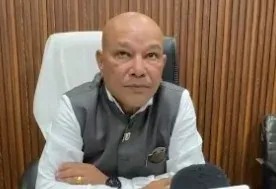
Meghalaya Cabinet Minister and South Shillong legislator Sanbor Shullai has convened a stakeholder consultation on Wednesday, 10 November 2026, to deliberate on the proposed Shillong Ropeway Project, even as an indefinite sit-in protest demanding the plan's scrapping or relocation entered its fifth consecutive day. The meeting, organised under the 19-South Shillong Advisory Committee, will be held at the State Convention Centre in Shillong.
What the Meeting Entails
Shullai, who chairs the advisory committee, will preside over the consultation to gather views and suggestions from residents and various community organisations. A letter issued by the committee on Tuesday formally invited stakeholders to submit their concerns, which will subsequently be compiled and placed before the Meghalaya government for consideration. The session is being closely watched as a potential turning point in the project's fate.
The Protests on the Ground
The demonstrations are being staged by a section of women under the banner of the Joint Action Committee (JAC), who have maintained an indefinite sit-in at the project's proposed location in Shillong. The protesters have put forward two demands: either the government scraps the ropeway plan entirely or shifts it to an alternative site. Several traditional bodies and social organisations have since joined the debate, amplifying pressure on elected representatives to respond.
Why the Project Is Contested
The Shillong Ropeway Project is part of a broader urban connectivity initiative designed to ease chronic traffic congestion in the rapidly growing hill city. The aerial transport system would connect key locations and reduce dependence on road-based travel — a pressing need given Shillong's difficult terrain and gridlocked roads. However, concerns over the project's precise alignment, its proximity to residential clusters, and the potential disruption to surrounding communities have turned what was conceived as an infrastructure solution into a contentious civic dispute.
Broader Political and Community Stakes
The involvement of multiple traditional bodies and social organisations signals that the opposition extends beyond a localised neighbourhood grievance. This is the first formal government-initiated consultation since the protests began, suggesting that the administration is seeking a negotiated path rather than pushing ahead unilaterally. How the state government synthesises the feedback from Wednesday's meeting is likely to determine the project's timeline and configuration.
What Happens Next
Stakeholder inputs from Wednesday's meeting will be forwarded to the Meghalaya government, which will then decide on the project's future. Whether the government opts to modify the alignment, relocate the terminal points, or proceed with the original plan remains to be seen. The outcome will serve as a litmus test for how the state balances infrastructure ambition with community consent in one of the Northeast's most densely populated hill cities.
Point of View
Land use, and livelihoods in ways that flat-terrain projects do not. The fact that traditional bodies and social organisations have been drawn in suggests the opposition is culturally rooted, not merely logistical. If the Meghalaya government proceeds without meaningfully incorporating community concerns, it risks setting a precedent that large-scale projects can be pushed through on connectivity logic alone — an approach that has historically stalled, not accelerated, development in the Northeast.
NationPress
10 Nov 2026
Frequently Asked Questions
What is the Shillong Ropeway Project?
The Shillong Ropeway Project is a proposed aerial transport system in Shillong, Meghalaya, intended to connect key locations across the hill city and reduce traffic congestion. It is part of the state government's broader urban connectivity and infrastructure development push.
Why are people protesting against the ropeway project?
Protesters, led by women under the Joint Action Committee (JAC), oppose the project's proposed location, citing concerns over its alignment and potential impact on local communities. They have demanded that the government either scrap the project entirely or shift it to an alternative site.
What is the 10 November stakeholder meeting about?
Cabinet Minister Sanbor Shullai has convened a meeting of residents and organisations under the 19-South Shillong Advisory Committee at the State Convention Centre on 10 November. The goal is to collect community views and suggestions, which will then be submitted to the Meghalaya government to inform a decision on the project's future.
Who is Sanbor Shullai?
Sanbor Shullai is a Meghalaya Cabinet Minister and the legislator representing the South Shillong constituency. He also chairs the 19-South Shillong Advisory Committee, which has called the stakeholder meeting.
What happens after the stakeholder meeting?
Concerns and suggestions gathered at Wednesday's meeting will be compiled by the advisory committee and formally submitted to the Meghalaya government. The state government will then decide whether to proceed with the original project plan, modify its alignment, or relocate it.