Shivraj Singh Chouhan Hails Mandu as Heartbeat of MP
Synopsis
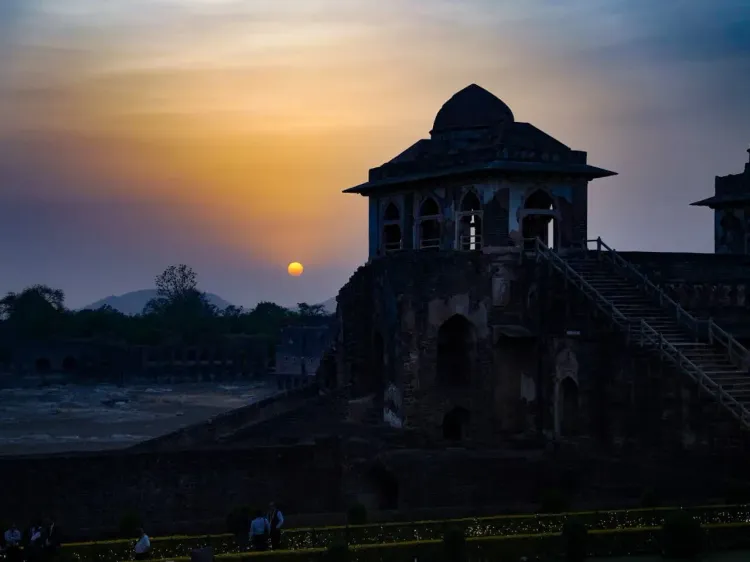
Union Agriculture Minister Shivraj Singh Chouhan on June 12, 2026, celebrated Mandu — the medieval heritage town in Madhya Pradesh's Dhar district — as the 'heartbeat' of India's heart, sharing four photographs and invoking the town's legendary romance and architectural legacy.
Key Takeaways
Shivraj Singh Chouhan posted on June 12, 2026 , calling Madhya Pradesh the heart of India and Mandu its heartbeat.
The post included four images from Mandu, amplifying visual interest in the heritage site.
Mandu is located in Dhar district , western Madhya Pradesh, and features 15th–16th century Malwa Sultanate monuments including Jahaz Mahal .
Chouhan served four terms as Chief Minister of Madhya Pradesh before becoming Union Agriculture Minister.
The post aligns with a broader pattern of Indian ministers using social media to promote regional heritage and tourism.
Stakeholders include heritage tourists, local communities in Dhar district, and monument conservation bodies such as the Archaeological Survey of India .
Union Agriculture Minister Shivraj Singh Chouhan on Friday, June 12, 2026, took to X to celebrate the historic town of Mandu in Madhya Pradesh, calling it the beating heart of a state he described as the heart of India — sharing four images from the heritage site alongside his evocative tribute.
Context
In his post, Chouhan wrote in Hindi: 'Madhya Pradesh desh ka dil hai, aur Mandu us dil ki dhadkan, jo ek baar sun le, woh ise bhool nahi paata' — translating to: 'Madhya Pradesh is the heart of the country, and Mandu is the heartbeat of that heart; whoever hears it once can never forget it.' The post was accompanied by four photographs, underscoring the visual splendour of the site.
Mandu, located in the Dhar district of western Madhya Pradesh, is one of India's most significant medieval heritage destinations. Its monuments — built primarily during the Malwa Sultanate in the 15th and 16th centuries — include the iconic Jahaz Mahal (Ship Palace) and the ruins associated with the legendary romance of Baz Bahadur and Roopmati.
Policy Backdrop
Chouhan served four terms as Chief Minister of Madhya Pradesh before joining the Union Cabinet, and his identification with the state's cultural identity runs deep. Indian ministers with strong state-level executive backgrounds routinely use social media platforms to spotlight regional heritage, reinforcing a narrative that weaves local pride into national identity.
Both state and central governments have consistently sought to leverage India's cultural assets for tourism promotion and soft-power messaging. Madhya Pradesh has in recent years positioned itself as a major heritage tourism destination, with sites such as Khajuraho, Sanchi, and Orchha drawing domestic and international visitors alongside Mandu.
Stakeholders and Impact
The post directly amplifies visibility for Mandu's heritage tourism sector. For local communities in Dhar district, increased footfall translates into livelihoods tied to hospitality, guides, handicrafts, and transport. Heritage conservation bodies and the Archaeological Survey of India, which maintains several of Mandu's protected monuments, are also key stakeholders in any sustained attention the site receives.
For the broader tourism industry in Madhya Pradesh, a high-profile endorsement from a Union Minister — one who governed the state for over a decade — carries symbolic weight that state tourism campaigns often seek to replicate through official channels.
What's Next
Attention now turns to whether Chouhan's public spotlight on Mandu is followed by concrete action — whether at the central or state level — on monument conservation, tourism infrastructure, or connectivity improvements in western Madhya Pradesh. Any announcement linking the Ministry of Rural Development or allied ministries to heritage-linked rural tourism in the region would be a natural follow-up to watch.
For now, the post reinforces a long-standing cultural narrative: that Madhya Pradesh, sitting at India's geographic centre, holds a unique place in the country's civilisational story — and that Mandu, with its layered history of love, architecture, and loss, remains its most poetic expression.
Point of View
He reinforces a regional pride narrative that has electoral and soft-power utility. The post fits a well-established pattern where senior BJP leaders use heritage imagery to signal civilisational continuity and state-level achievement. Whether it translates into policy action on Mandu's conservation or tourism infrastructure will be the real measure of intent.
NationPress
27 Oct 2026
Frequently Asked Questions
Why is Mandu famous in India?
Mandu is a historic town in Madhya Pradesh's Dhar district, renowned for its 15th–16th century Malwa Sultanate monuments including Jahaz Mahal and the legendary love story of Baz Bahadur and Roopmati, making it one of India's most evocative medieval heritage sites.
What did Shivraj Singh Chouhan say about Mandu?
Chouhan posted in Hindi that 'Madhya Pradesh is the heart of the country, and Mandu is the heartbeat of that heart; whoever hears it once can never forget it,' sharing four photographs of the heritage town.
Where is Mandu located?
Mandu is located in Dhar district in western Madhya Pradesh, central India.
What is Jahaz Mahal in Mandu?
Jahaz Mahal, or the Ship Palace, is one of Mandu's most iconic monuments, built during the Malwa Sultanate era and named for its ship-like appearance when surrounded by water during the monsoon season.
Is Shivraj Singh Chouhan from Madhya Pradesh?
Yes, Shivraj Singh Chouhan is a senior BJP leader who served four terms as Chief Minister of Madhya Pradesh and now serves as Union Minister of Agriculture and Farmers Welfare and Rural Development.