Uttarakhand CM outlines 2035 vision: STPI, disaster-safe infra

Synopsis
Uttarakhand's Chief Minister on 27 October 2026 outlined a twin-track agenda: repairing subsidence-hit zones including Joshimath with disaster-proof infrastructure, and boosting youth employment through a first-of-its-kind STPI campus in Dehradun, anchored by a 2035 prosperity roadmap.
Key Takeaways
Joshimath and other land-subsidence-affected areas are receiving focused attention for disaster-resistant construction and slope-stabilisation.
Road and helicopter-service connectivity is being upgraded as part of Uttarakhand's infrastructure resilience push.
A Software Technology Parks of India (STPI) campus has been established in Dehradun — described as the first such facility in the state — to create IT and startup opportunities for youth.
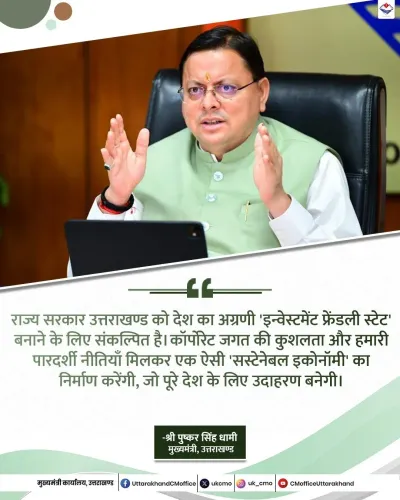
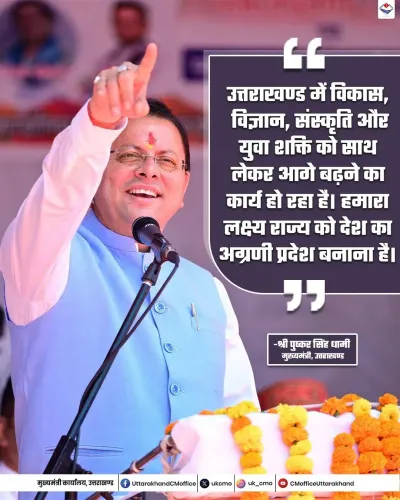
The government has set a target of building a prosperous Uttarakhand by 2035 through quality investment and local employment generation.
Development policy is explicitly paired with preservation of the state's heritage and culture.
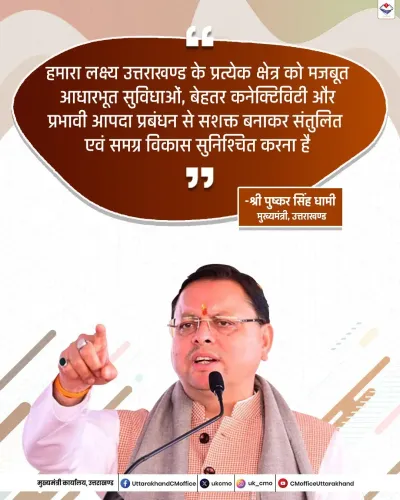
The Chief Minister stressed janBhagidari (public participation) and good governance as the foundation of the 'Viksit Uttarakhand' vision.
From the slopes of a subsidence-scarred Joshimath to a brand-new technology park in Dehradun, Uttarakhand's Chief Minister has laid out an ambitious dual agenda — rebuilding the state's most vulnerable terrain while simultaneously wiring it into India's IT economy. On Tuesday, 27 October 2026, the Chief Minister's Office of Uttarakhand shared the Chief Minister's remarks underscoring the government's commitment to disaster-resilient infrastructure and a 2035 development horizon.
Joshimath and beyond: repairing the land beneath Uttarakhand's feet
The Chief Minister pointed to land-subsidence-affected zones — Joshimath prominently among them — as a priority repair site. Since dramatic cracking of homes and roads shook the town starting in late 2022, the state has been under pressure to move from emergency response to durable, slope-stabilised reconstruction. The remarks confirm that disaster-resistant construction, along with road and helicopter-service connectivity, remains live government work — not a completed chapter.
Himalayan states have learned an expensive lesson over the past decade: building fast on fragile geology compounds disaster rather than preventing it. Uttarakhand's pivot toward explicitly 'disaster-proof' standards for new infrastructure signals an attempt to break that cycle, though rollout details will be the real test.
Dehradun's new STPI campus and what it means for Uttarakhand's youth
Perhaps the sharpest economic signal in the statement is the establishment of a Software Technology Parks of India (STPI) campus in Dehradun — described as a first for the state. STPI, the Central government body that has incubated India's software-export industry since the 1990s, has steadily expanded beyond metros to give smaller cities a seat at the IT table. A Dehradun node plugs Uttarakhand directly into that national network, offering infrastructure, incentives, and a recognised address for startups and IT firms looking to grow outside Bengaluru or Hyderabad.
For a state whose young workforce has historically migrated for tech jobs, the proposition is pointed: the opportunity comes to you. The Chief Minister framed this explicitly as 'new opportunities for youth in the IT and startup sector.'
The 2035 roadmap: quality investment, local jobs, cultural preservation
The Chief Minister mapped out a longer arc — a 'prosperous Uttarakhand' by 2035 — resting on four pillars: quality investment, local employment generation, better services, and modern facilities. Crucially, development is paired with an explicit commitment to virasat aur sanskriti ka sanrakshan (heritage and culture preservation), a nod to the state's identity as a Himalayan, pilgrimage-rich region where overdevelopment has historically created as many problems as it has solved.
The statement closes on a note of collective ownership: 'Our goal is not merely to make plans, but to ensure their benefits reach every citizen.' The Chief Minister tied progress directly to janBhagidari — public participation — alongside good governance and continuous development. Three words. Simple formula. The execution, as always, will write the real story.
Point of View
And economic catch-up through IT and investment attraction. Linking an STPI campus announcement to disaster-infrastructure work in the same breath is a deliberate narrative move — it positions Uttarakhand not merely as a relief-case state but as an emerging investment destination. The 2035 timeline also mirrors the national 'Viksit Bharat' framing, suggesting the state is consciously aligning its messaging with central government development optics ahead of future investor summits or budget cycles. Whether the dual agenda translates into funded, time-bound projects or remains aspirational will depend on what the next state budget and capital expenditure allocations actually show.
NationPress
27 Oct 2026
Frequently Asked Questions
What is the Uttarakhand government doing about Joshimath land subsidence?
The Uttarakhand Chief Minister stated on 27 October 2026 that special attention is being given to land-subsidence-affected areas including Joshimath , with work underway on disaster-resistant construction and improved road and helicopter connectivity.
What is the new STPI campus in Dehradun?
A campus of Software Technology Parks of India (STPI) , a Central government body that promotes IT infrastructure and software exports, has been established in Dehradun . The Chief Minister described it as the first such facility in Uttarakhand, aimed at creating jobs for youth in the IT and startup sector.
What is Uttarakhand's 2035 development vision?
The Chief Minister outlined a goal of building a 'prosperous Uttarakhand' by 2035 , focusing on quality investment, local employment, better public services, modern facilities, and preservation of the state's heritage and culture.
What does janBhagidari mean in the context of Uttarakhand's governance?
JanBhagidari means public participation. The Chief Minister used the term to emphasise that the 'Viksit Uttarakhand' vision can only be achieved through active citizen involvement alongside good governance and continuous development.
How is Uttarakhand balancing development and cultural preservation?
The Chief Minister explicitly stated that the government's priority is to pursue development while also protecting heritage and culture — a position reflecting the unique challenge of modernising a state whose economy and identity are closely tied to its Himalayan and pilgrimage character.