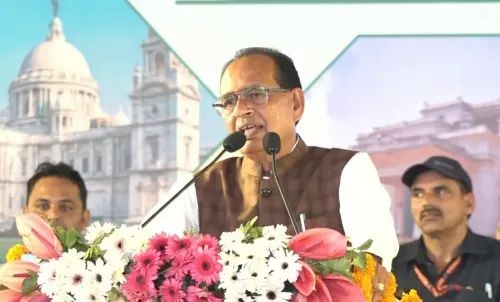
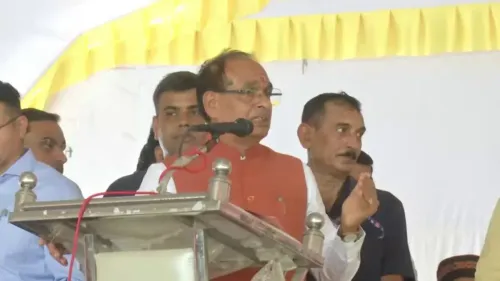
Shivraj launches key agri schemes for West Bengal from Tarakeshwar
Synopsis
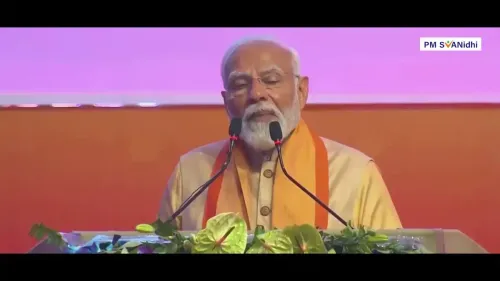
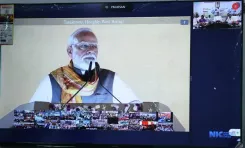
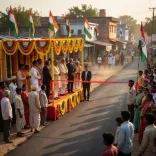
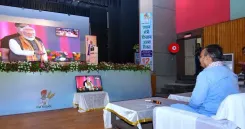
Prime Minister Modi launched four central agriculture schemes and dedicated over ₹213 crore in rural roads to West Bengal from Tarakeshwar in Hooghly district on 20 June 2026. Agriculture Minister Shivraj Singh Chouhan called it a historic moment opening new doors of development for the state's farmers after years of alleged deprivation under the state government.
Key Takeaways
Four agriculture schemes — Digital Agriculture Mission, PM Fasal Bima Yojana, National Mission on Natural Farming, and PM Krishi Dhan-Dhanya Yojana — were formally launched in West Bengal.
315.22 km of new rural roads worth over ₹213.12 crore were dedicated under PMGSY Phase III .
The event was held at Tarakeshwar, Hooghly district , on 20 June 2026 .
Projects linked to railways, animal husbandry, and fisheries were also dedicated to the state at the same event.
Agriculture Minister Shivraj Singh Chouhan said West Bengal farmers had been 'deprived for years' of central welfare schemes by the state government.
The launches are framed as part of the Centre's 'Viksit Bharat' development agenda.
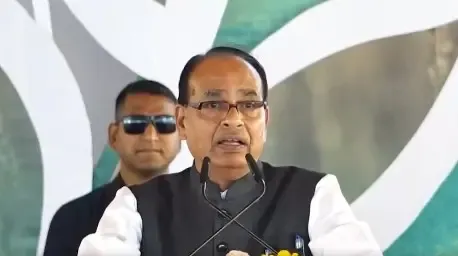
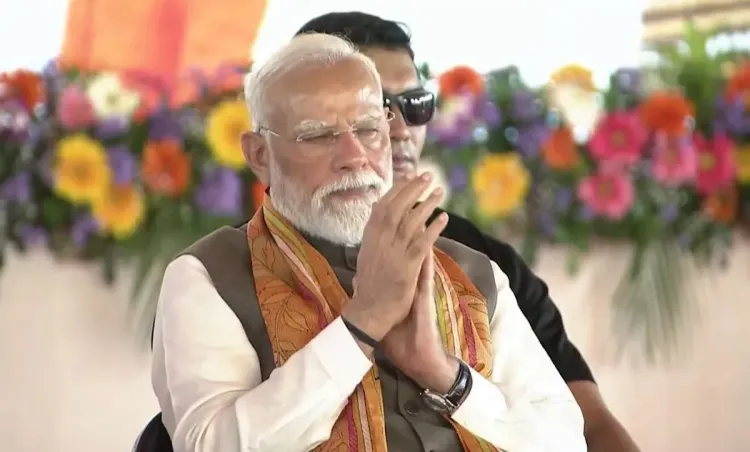
Union Agriculture Minister Shivraj Singh Chouhan on Saturday, 20 June 2026 hailed the launch of multiple central agriculture and rural development schemes in West Bengal, saying the event marked 'a sunrise of development' for the state. Prime Minister Narendra Modi unveiled the initiatives from Tarakeshwar in Hooghly district, covering four flagship agriculture programmes and rural road projects worth over ₹213.12 crore.
Context
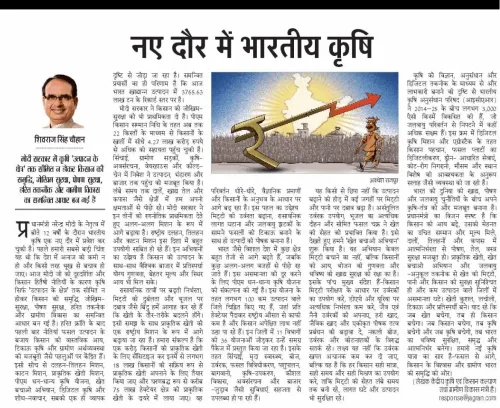
Chouhan, posting on X in Hindi, described the occasion as 'जनकल्याण के एक नए युग का शुभारंभ' ('the beginning of a new era of public welfare'). He said PM Modi had gifted West Bengal a package of schemes linked to the Ministries of Agriculture and Rural Development, calling it a 'historic occasion' that would give fresh momentum to farm-sector growth and rural infrastructure.
The minister specifically noted that West Bengal's farmers had 'for years been deprived of many central welfare schemes by the state's previous government' — a pointed reference to the Trinamool Congress administration, which has governed the state since 2011. Chouhan framed the launch as opening 'new doors of development, prosperity and self-reliance' for the state's farming community.
Policy Backdrop
Four agriculture ministry schemes were formally launched in West Bengal at the event. These are the Digital Agriculture Mission, the Pradhan Mantri Fasal Bima Yojana (PMFBY), the National Mission on Natural Farming, and the Pradhan Mantri Krishi Dhan-Dhanya Yojana. The PMFBY, introduced in 2016, provides risk coverage to farmers against crop losses from natural calamities and replaced the earlier National Agricultural Insurance Scheme.
On the rural infrastructure side, PM Modi dedicated 315.22 kilometres of new roads built at a cost of over ₹213.12 crore under Pradhan Mantri Gram Sadak Yojana Phase III (PMGSY-III). The PMGSY programme, initiated in 2000, aims to provide all-weather road connectivity to unconnected rural habitations. Projects linked to railways, animal husbandry, and fisheries were also dedicated to the state at the same event.
The Digital Agriculture Mission and the National Mission on Natural Farming build on earlier central pushes — the former on agri-stack digital infrastructure and the latter on zero-budget natural farming pilots promoted since 2015–16.
Stakeholders and Impact
The primary beneficiaries are West Bengal's farming community and rural households, particularly in districts with historically low uptake of central schemes. Chouhan said the initiatives would 'strengthen rural infrastructure and bring positive change to the lives of lakhs of farmers and rural families.'
The launch carries political weight: the Centre and the Mamata Banerjee-led state government have had prolonged disputes over fund flow and implementation of central programmes, including delays in the rollout of PM-KISAN direct-benefit transfers in earlier years. By staging a high-profile event in the state, the Centre signals direct delivery of welfare benefits to citizens, bypassing the state-Centre friction narrative.
What's Next
Attention will now turn to state-level rollout timelines and actual fund utilisation for the newly launched schemes, particularly PMGSY road projects and crop-insurance enrolment under PMFBY ahead of the kharif 2026 season. Parliamentary questions on implementation progress in West Bengal are expected during the upcoming monsoon session. Chouhan framed the entire exercise as a step toward the broader 'Viksit Bharat' ('Developed India') vision, signalling that the Centre intends to sustain its focus on the state.
Point of View
Chouhan is doing explicit political framing, not just policy communication. The bundling of four agriculture missions alongside PMGSY roads and sectoral projects maximises optics ahead of what is expected to be a keenly contested state electoral cycle. Whether the schemes translate into measurable on-ground outcomes will depend on the state machinery's cooperation — historically a friction point between Kolkata and New Delhi.
NationPress
20 Jun 2026
Frequently Asked Questions
Which schemes did PM Modi launch in West Bengal on 20 June 2026?
PM Modi launched four central agriculture schemes — the Digital Agriculture Mission, Pradhan Mantri Fasal Bima Yojana, National Mission on Natural Farming, and Pradhan Mantri Krishi Dhan-Dhanya Yojana — along with PMGSY Phase III road projects and initiatives linked to railways, animal husbandry, and fisheries.
Where did PM Modi hold the West Bengal scheme launch event?
The event was held at Tarakeshwar in Hooghly district, West Bengal, on 20 June 2026.
How many kilometres of new roads were dedicated to West Bengal under PMGSY?
A total of 315.22 kilometres of new roads, built at a cost of over ₹213.12 crore, were dedicated to West Bengal under Pradhan Mantri Gram Sadak Yojana Phase III (PMGSY-III).
What is the Pradhan Mantri Fasal Bima Yojana and when was it launched?
The Pradhan Mantri Fasal Bima Yojana (PMFBY) is a central crop insurance scheme introduced in 2016 to provide financial coverage to farmers against crop losses caused by natural calamities. It replaced the earlier National Agricultural Insurance Scheme.
Why has West Bengal's adoption of central farm schemes been a political issue?
The Trinamool Congress state government and the Centre have had repeated disputes over fund flow and implementation of central programmes, including delays in PM-KISAN transfers in earlier years. The BJP-led Centre has argued that the state government withheld benefits from farmers; the state government has contested that characterisation.