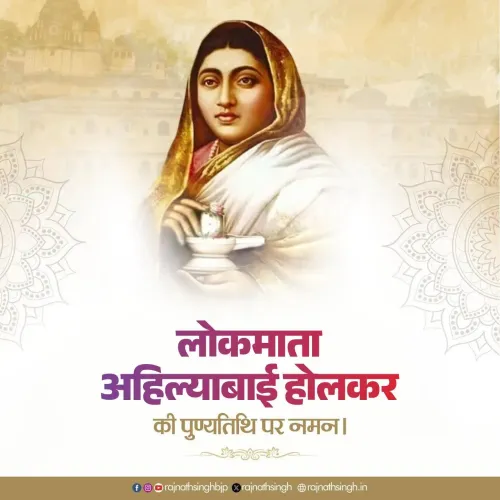
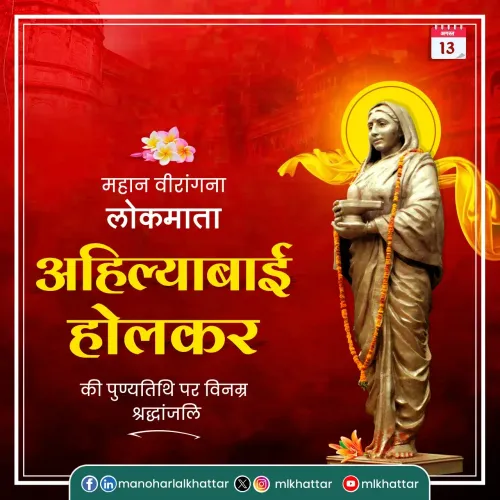
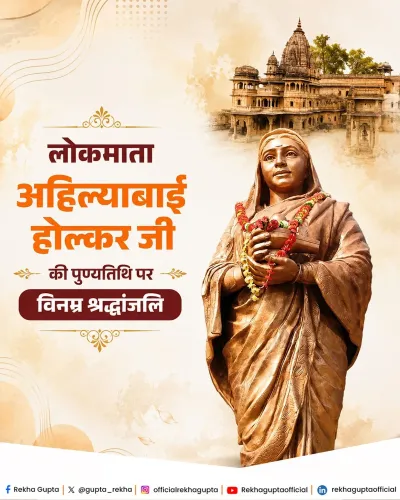
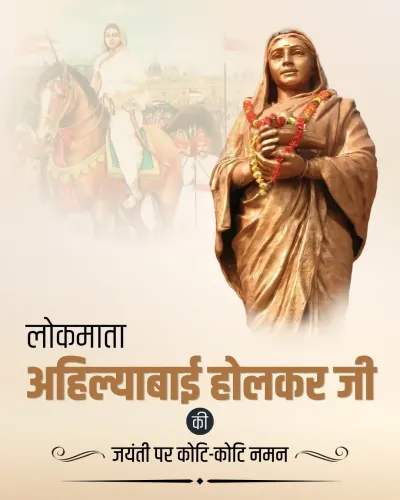
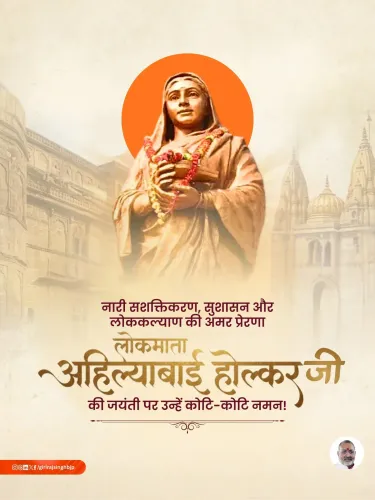
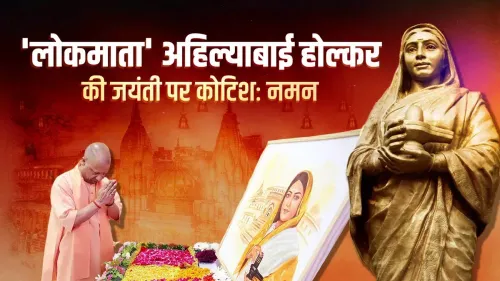
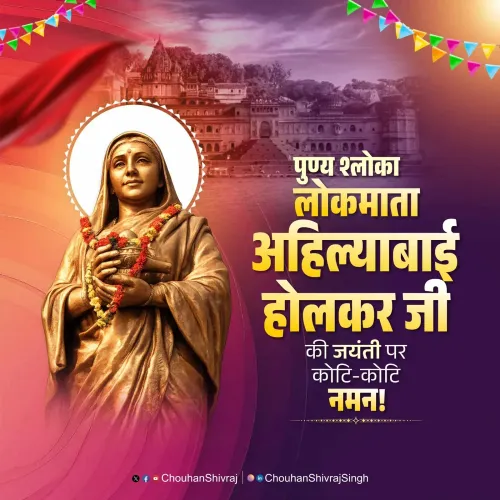
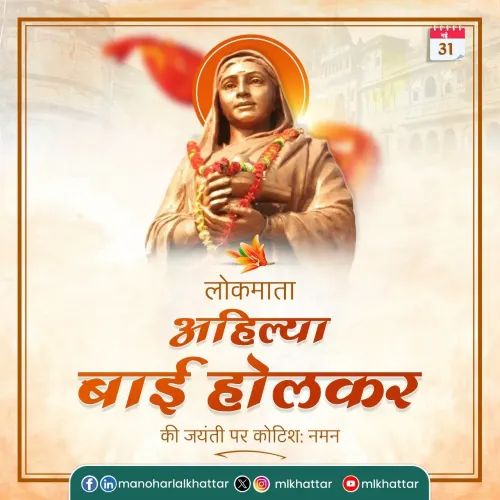
Shivraj pays tribute to Ahilyabai Holkar on her death anniversary
Synopsis
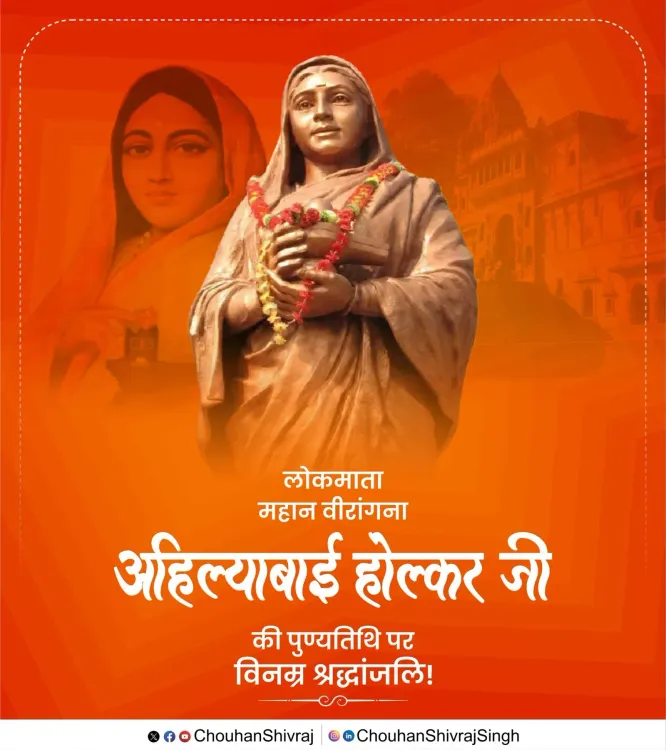
Union Agriculture Minister Shivraj Singh Chouhan paid reverent tribute to 18th-century Holkar queen Devi Ahilyabai Holkar on her death anniversary, calling her the 'Lokmata' and connecting her welfare-driven governance legacy to the government's Ek Bharat-Shreshtha Bharat integration initiative.
Key Takeaways
Union Agriculture Minister Shivraj Singh Chouhan paid tribute to Devi Ahilyabai Holkar on her death anniversary on August 13, 2026 .
Chouhan described her as 'Lokmata' and a symbol of Sanatan consciousness and women's power.
He linked her governance legacy directly to the Ek Bharat-Shreshtha Bharat scheme, launched in 2015 to promote national integration.
Ahilyabai Holkar ruled the Holkar dynasty from Indore and is credited with temple restoration and public works across the subcontinent.
BJP leaders have regularly invoked pre-colonial rulers like Ahilyabai to connect cultural revival with contemporary nation-building narratives.
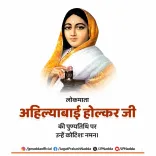
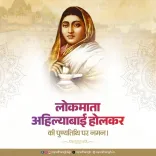
On the death anniversary of Devi Ahilyabai Holkar, Union Agriculture Minister Shivraj Singh Chouhan on Thursday, August 13, 2026 offered his reverence to the 18th-century Holkar queen, calling her a timeless symbol of Sanatan consciousness and an embodiment of women's power.
In his post, Chouhan described Ahilyabai as 'Lokmata' — 'mother of the people' — and said she 'led society on the path of dharma, justice and compassion by internalising Sanatan values in her life and governance.' He further drew a direct line from her legacy to the present, writing that the foundation of ideal governance she laid 'is today giving new direction to the journey of building Ek Bharat-Shreshtha Bharat.'
The queen who built a nation's sacred geography
Ahilyabai Holkar, who ruled the Holkar dynasty from Indore in the latter half of the 18th century, is remembered as one of India's most consequential pre-colonial rulers. She commissioned or restored temples across the subcontinent — including the Kashi Vishwanath temple in Varanasi — and invested in roads, rest-houses, and public infrastructure at a scale rare for her era. Her administration is widely cited as a model of welfare-oriented, dharma-guided rule.
Her legacy has carried particular resonance in Madhya Pradesh, where Chouhan served four terms as Chief Minister. Commemorations in Indore and across the state have grown in visibility over successive years, with her life held up as a precedent for women's leadership in public life.
Ahilyabai's echo in 'Ek Bharat-Shreshtha Bharat'
Chouhan's invocation of the Ek Bharat-Shreshtha Bharat scheme — launched by the Government of India in 2015 to promote national integration through cultural and people-to-people exchanges between states — is deliberate. BJP leaders have consistently used commemorations of pre-colonial rulers associated with temple-building and traditional governance to connect historical precedent with contemporary nation-building themes. Ahilyabai, who transcended regional boundaries through her works across the subcontinent, fits naturally into that framework.
For Chouhan, the tribute is also personal terrain. As a former Chief Minister of the state she once ruled and as a self-described param Shivbhakt — 'devoted Shiva devotee' — his reverence for Ahilyabai, herself a renowned devotee of Lord Shiva, carries layers of cultural and political identity that resonate deeply with his core constituency.
Ahilyabai Holkar's works, as Chouhan put it, 'will always be remembered and remain a source of inspiration' — a legacy that, three centuries on, still shapes the language of Indian governance and cultural revival.
Point of View
Cultural revival, women's empowerment — in the legacy of pre-colonial rulers who governed by dharmic principles. By explicitly tying Ahilyabai Holkar to Ek Bharat-Shreshtha Bharat, he frames a central government scheme as the natural heir to a centuries-old tradition, giving it historical legitimacy. For Chouhan personally, the tribute reinforces his identity as a Shiva devotee and Madhya Pradesh's long-standing cultural custodian, a persona he has cultivated across four terms as Chief Minister. The move is low-risk politically but high-yield symbolically — it costs nothing and consolidates his standing among constituencies that value both Hindu cultural pride and women's historical leadership.
NationPress
13 Aug 2026
Frequently Asked Questions
Who was Devi Ahilyabai Holkar?
Devi Ahilyabai Holkar was an 18th-century ruler of the Holkar dynasty based in Indore, renowned for her welfare-oriented administration, temple construction across India including the Kashi Vishwanath temple, and governance guided by principles of dharma and compassion.
Why did Shivraj Singh Chouhan pay tribute to Ahilyabai Holkar?
August 13 marks the death anniversary of Devi Ahilyabai Holkar, and Union Agriculture Minister Shivraj Singh Chouhan posted a tribute on X honouring her as 'Lokmata' and a symbol of Sanatan values and women's power.
What is Ek Bharat Shreshtha Bharat?
Ek Bharat Shreshtha Bharat is a Government of India programme launched in 2015 to promote national integration through cultural, educational, and people-to-people exchanges between states.
What is the connection between Ahilyabai Holkar and Madhya Pradesh?
Ahilyabai Holkar ruled the Holkar dynasty from Indore in Madhya Pradesh, making her a central cultural and historical figure in the state, where commemorations of her legacy are held regularly.
What does 'Lokmata' mean?
'Lokmata' is a Hindi honorific meaning 'mother of the people,' used to describe leaders who are seen as selfless, nurturing, and devoted to public welfare — a title commonly associated with Ahilyabai Holkar.