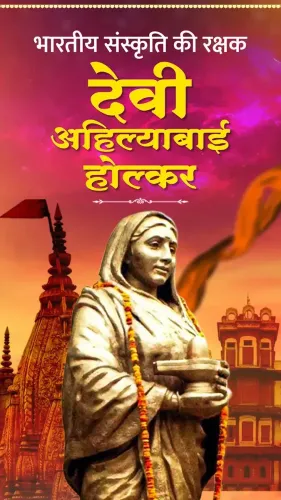
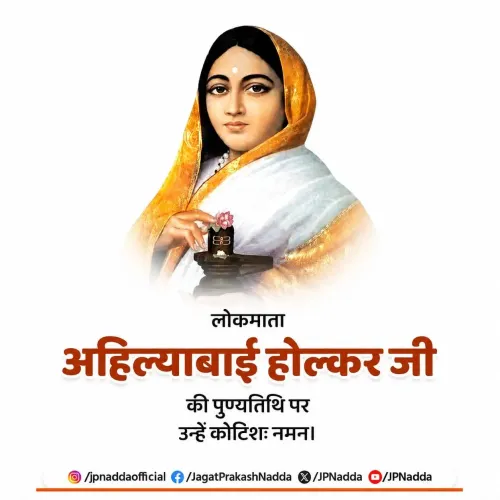
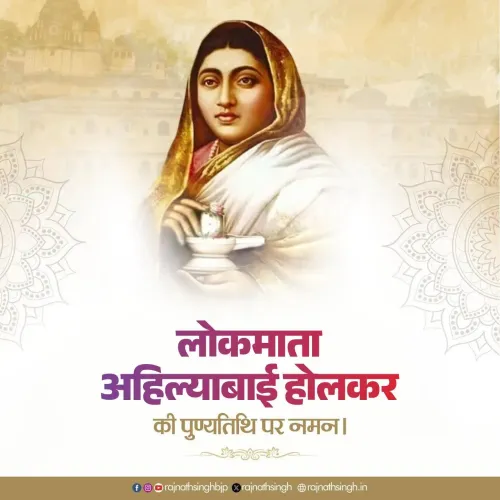
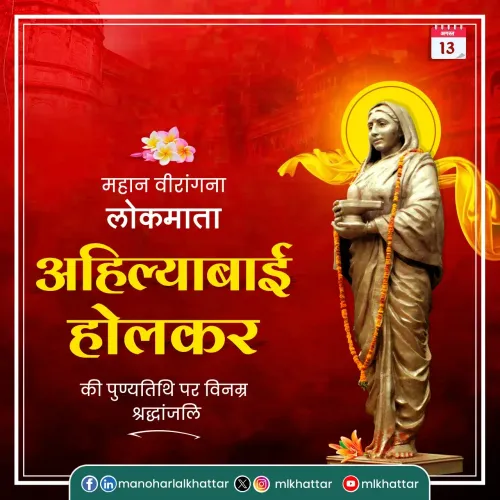
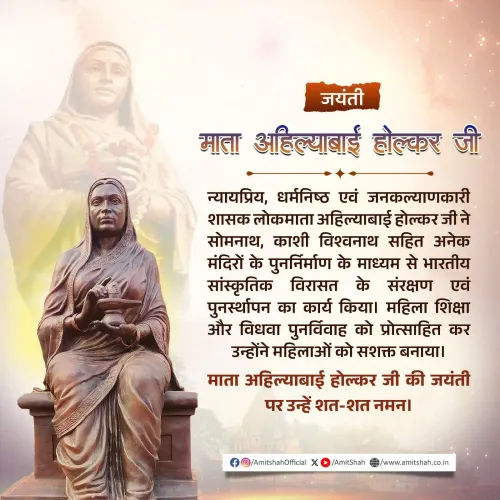
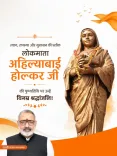
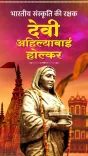
Amit Shah pays tribute to Ahilyabai Holkar on her death anniversary
Synopsis
Union Home Minister Amit Shah marked the death anniversary of 18th-century Malwa queen Ahilyabai Holkar with a bilingual Hindi-Marathi tribute, honouring her temple restoration work, advocacy for women's education, widow remarriage, and her enduring model of just governance.
Key Takeaways
Union Home Minister Amit Shah paid tribute to Ahilyabai Holkar on her death anniversary on 13 August 2026 .
Shah posted in both Hindi and Marathi , acknowledging Holkar's significance across multiple states and communities.
Ahilyabai ruled the Malwa kingdom from 1767 to 1795 and is credited with restoring temples at Kashi, Dwarka, Puri, Somnath, and Mathura, among others.
She promoted women's education and widow remarriage — reforms considered progressive well ahead of her era.
Shah described her life as an 'inspiring example of dedication to dharma, culture, public service, and national interest.' Her title Lokmata ('Mother of the People') reflects her practice of personally hearing public grievances and dispensing justice.
Three centuries after she ruled, Ahilyabai Holkar still commands reverence at the highest levels of Indian governance. On her death anniversary, Union Home Minister Amit Shah offered homage to the 18th-century queen of Malwa, honouring her legacy of temple restoration, social reform, and just administration.
Posting in both Hindi and Marathi — a deliberate gesture of linguistic inclusivity — Shah wrote: 'Lokmata Ahilyabai Holkar ji ki punyatithi par unka smaran kar unhe naman karta hoon' ('On the death anniversary of Lokmata Ahilyabai Holkar, I bow to her in remembrance'). The bilingual tribute underscored her significance to communities across Maharashtra and Madhya Pradesh, the two states most closely linked to her legacy.
The queen who rebuilt India's sacred geography
Ahilyabai Holkar, who ruled the Malwa kingdom from 1767 to 1795, is credited with one of the most sweeping programmes of temple reconstruction in Indian history. From the Kashi Vishwanath temple in Varanasi to shrines across Dwarka, Puri, Mathura, and Somnath, she channelled state resources into restoring sites that had fallen into ruin. She also built roads, rest houses, and ghats along pilgrimage routes — infrastructure that served ordinary travellers as much as devout pilgrims. Shah's tribute specifically highlighted this dimension: her 'unparalleled contribution to the preservation and restoration of cultural heritage, from the renovation and reconstruction of temples to the development of pilgrimage sites.'Reform that preceded its era
What made Ahilyabai's reign remarkable beyond architecture was her social vision. She actively promoted women's education and widow remarriage — positions that were deeply progressive for 18th-century India. Shah noted that she 'empowered women by encouraging female education and widow remarriage' and 'established an ideal of public welfare, justice, and good governance.' Her administration was marked by direct public hearings, where she personally adjudicated disputes — a practice that earned her the title Lokmata, or 'Mother of the People.'Why this tribute carries political resonance
Indian political leaders across the spectrum routinely mark the death anniversaries of pre-colonial rulers and reformers, but Ahilyabai Holkar occupies a particularly charged place in contemporary cultural politics. Her legacy bridges Hindu religious patronage and progressive social reform — a combination that makes her a figure both the ruling dispensation and regional identity movements invoke with genuine frequency. Shah's choice to post in Marathi alongside Hindi signals an outreach to Maharashtra, where Holkar is a figure of deep local pride. Her life, as Shah put it, 'is an inspiring example of dedication to dharma, culture, public service, and national interest' — a framing that places her squarely within the broader cultural-nationalist narrative the government has consistently championed.Point of View
Particularly significant given Maharashtra's electoral weight and the deep regional reverence for Ahilyabai Holkar. The BJP has consistently positioned pre-colonial Hindu rulers and reformers as touchstones of civilisational continuity, and Holkar fits that frame precisely: she is simultaneously a symbol of religious patronage and social progressivism, making her difficult to contest. Invoking her on the death anniversary reinforces the government's broader cultural-nationalist narrative while also appealing to women voters through her legacy of empowerment. These annual commemorations are not incidental — they are a sustained effort to shape which historical figures anchor India's public memory.
NationPress
13 Aug 2026
Frequently Asked Questions
Who was Ahilyabai Holkar?
Ahilyabai Holkar was an 18th-century queen who ruled the Malwa kingdom from 1767 to 1795. She is celebrated for restoring and building temples across India, constructing roads and ghats along pilgrimage routes, and championing social reforms including women's education and widow remarriage.
Why is Ahilyabai Holkar called Lokmata?
She earned the title Lokmata, meaning 'Mother of the People', for her direct and accessible style of governance — she personally held public hearings to resolve disputes and was known for her deep commitment to public welfare and justice.
Which temples did Ahilyabai Holkar restore?
Ahilyabai Holkar funded the restoration and reconstruction of major Hindu temples including the Kashi Vishwanath temple in Varanasi, and shrines at Dwarka, Puri, Mathura, and Somnath, among many others across India.
Why did Amit Shah post in Marathi and Hindi?
Shah's bilingual tribute acknowledged Ahilyabai Holkar's deep connection to both Madhya Pradesh and Maharashtra. Posting in Marathi was a gesture of cultural respect toward Maharashtra, where Holkar is a figure of strong regional pride.
When is Ahilyabai Holkar's death anniversary?
Ahilyabai Holkar's death anniversary falls in mid-August. Union Home Minister Amit Shah marked the occasion on 13 August 2026 with a public tribute on social media.