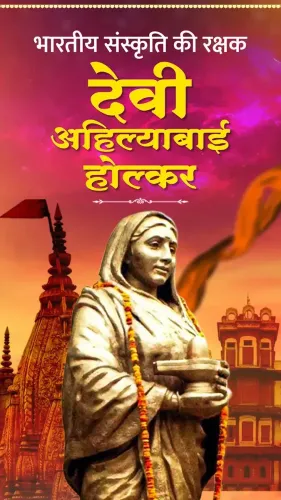
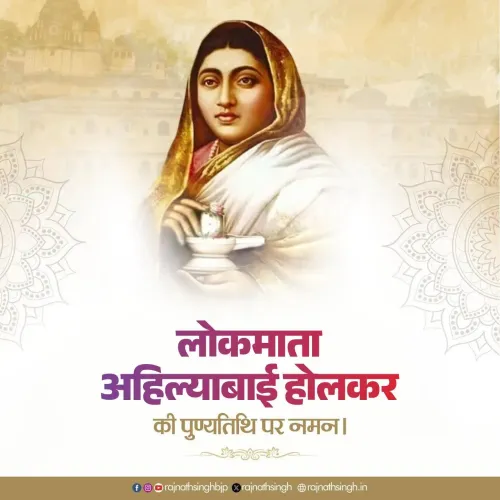
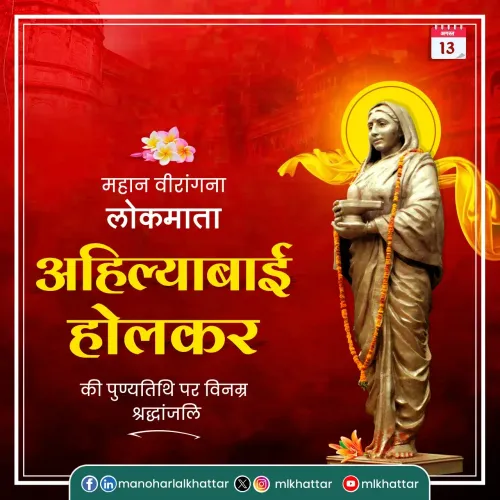
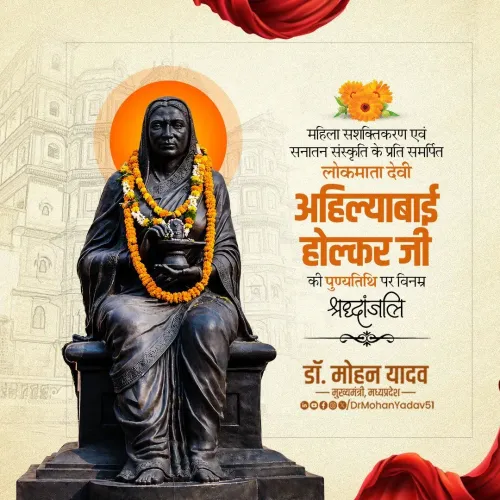
Nadda pays tribute to Ahilyabai Holkar on her death anniversary
Synopsis
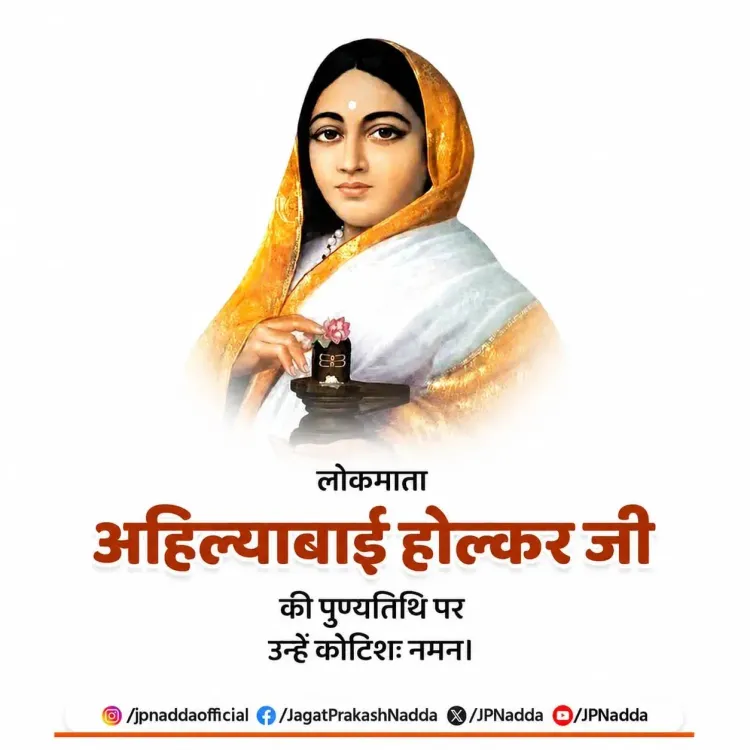
On her death anniversary, Union Health Minister and BJP national president J. P. Nadda paid tribute to Lokmata Ahilyabai Holkar, the 18th-century Malwa ruler celebrated for just governance, temple restoration across India, and her enduring legacy as a symbol of women's leadership.
Key Takeaways
Nadda , Union Health Minister and BJP national president, paid tribute to Lokmata Ahilyabai Holkar on her death anniversary, 13 August 2026 .
Ahilyabai Holkar ruled the Malwa kingdom from 1767 to 1795 , a reign of nearly 28 years defined by administrative justice and public works.
She is historically credited with restoring or funding temples at Kashi Vishwanath, Somnath, Dwarka, Puri, and Rameshwaram , among others.
Nadda described her as a 'far-sighted, justice-loving, welfare-oriented ruler' who set ideals in governance, public service, and women's empowerment.
Annual tributes to Ahilyabai have become a cross-party fixture in Indian political culture, with particular emphasis from BJP leaders on her dharmic governance.
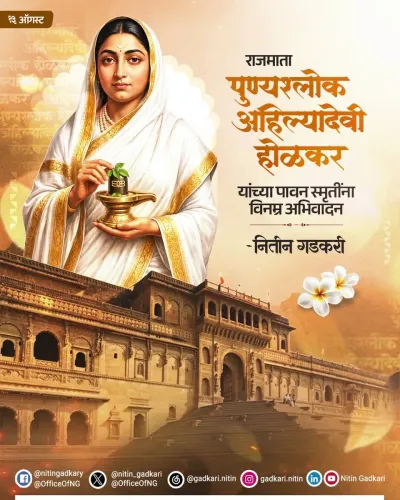
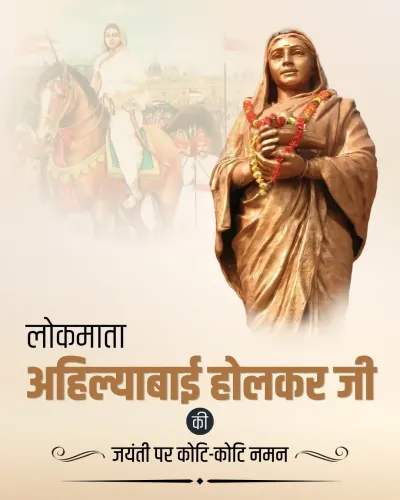
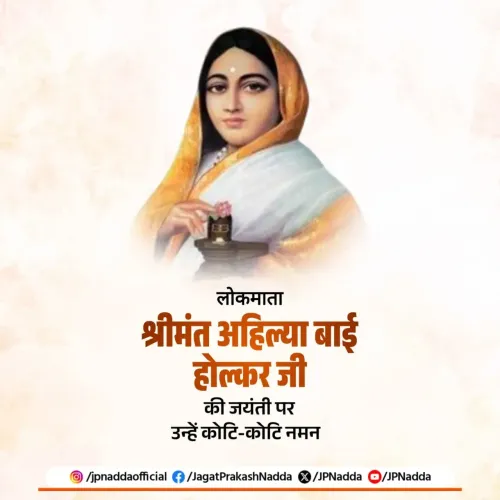
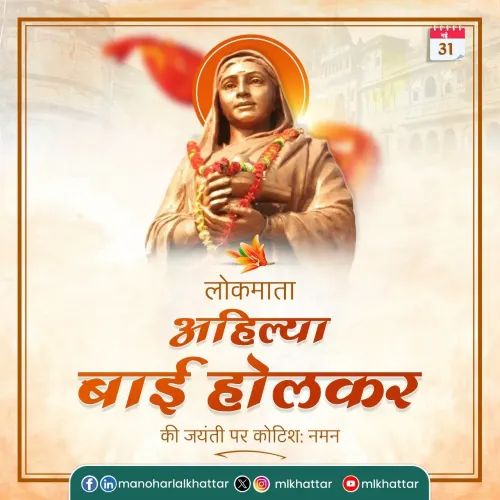
She ruled without a throne of conquest, yet built temples, roads, and courts of justice that outlasted empires. On the death anniversary of Lokmata Ahilyabai Holkar on 13 August 2026, Union Health Minister and BJP national president J. P. Nadda offered a heartfelt tribute to the 18th-century Malwa queen, honouring her as a visionary ruler whose legacy of public service and women's empowerment remains a living inspiration.
In his post, Nadda wrote — 'महान वीरांगना एवं परम शिवभक्त, लोकमाता अहिल्याबाई होल्कर जी की पुण्यतिथि पर उन्हें कोटिशः नमन करता हूं' ('I bow to the great warrior-woman and devout Shiva-bhakt, Lokmata Ahilyabai Holkar, on her death anniversary with a million salutations'). He described her as a 'far-sighted, justice-loving and welfare-oriented ruler' who set unmatched ideals in good governance, public service, and women's empowerment.
A queen who governed by conscience
Ahilyabai Holkar ruled the Malwa Sultanate from 1767 until her death in 1795, a reign of nearly three decades marked by administrative acumen and deep personal austerity. She managed state affairs, dispensed justice directly to citizens, and commissioned an extraordinary number of public works — wells, rest-houses, and roads — across the subcontinent. Her name is inseparable from the restoration of some of India's most sacred temple sites, including the Kashi Vishwanath temple in Varanasi, which she rebuilt after it was destroyed.
Temples, tirthas, and the Sanatan thread
Nadda's tribute specifically highlighted her dedication to Sanatan Sanskriti (the eternal Hindu cultural tradition) and the revival of pilgrimage sites. This dimension of Ahilyabai's legacy — her patronage of temples across regions that were not even within her own kingdom — is historically documented and widely celebrated. She is credited with funding the construction or restoration of shrines at Dwarka, Somnath, Puri, Rameshwaram, and dozens of other sacred sites, making her one of the most prolific royal patrons of Hindu religious heritage in Indian history.
Why political India marks 13 August every year
Annual tributes to Ahilyabai Holkar have become a fixture across party lines, though leaders from the BJP in particular have emphasised her as a symbol of dharmic governance and women's leadership rooted in Indian tradition. Nadda framed her ideals as a continuing call to action — 'her ideals, dedication, and sacred resolve to serve humanity will always inspire us all.' In a political season where the narrative around women's empowerment and cultural heritage is sharply contested, invoking Ahilyabai carries weight that extends well beyond ceremonial remembrance.
Lokmata Ahilyabai Holkar governed for nearly 28 years without personal aggrandisement, and the world she built in stone and justice still stands. That, her admirers argue, is the only scorecard that matters.
Point of View
Devotional, and politically resonant. Ahilyabai Holkar is particularly potent in this frame: she governed a large territory, restored pan-India temples, and did so with conspicuous personal austerity, making her difficult to caricature. Invoking her on her death anniversary reinforces the party's broader narrative that strong, values-driven women's leadership is indigenous to Indian civilisation — a framing that carries electoral and cultural weight well beyond a single social-media post.
NationPress
13 Aug 2026
Frequently Asked Questions
Who was Ahilyabai Holkar and why is she remembered?
Ahilyabai Holkar was the ruler of the Malwa kingdom from 1767 to 1795. She is remembered for her just administration, extensive public works, patronage of temples across India including the Kashi Vishwanath temple, and her personal simplicity — earning her the title 'Lokmata' (Mother of the People).
When is Ahilyabai Holkar's death anniversary?
Ahilyabai Holkar's death anniversary falls on 13 August each year. She died in 1795 after ruling for nearly 28 years.
What did J. P. Nadda say about Ahilyabai Holkar?
Nadda described her as a 'far-sighted, justice-loving and welfare-oriented ruler' who set unmatched ideals in good governance, public service, and women's empowerment, and said her dedication to Sanatan culture and pilgrimage revival remains an inspiration.
Which temples did Ahilyabai Holkar restore or build?
Ahilyabai Holkar funded the restoration or construction of temples at several major pilgrimage sites including Kashi Vishwanath in Varanasi, Somnath, Dwarka, Puri, and Rameshwaram — sites spread across regions far beyond her own kingdom.
Why do Indian politicians regularly pay tribute to Ahilyabai Holkar?
Ahilyabai Holkar is seen across party lines as a symbol of just, welfare-oriented governance and women's leadership rooted in Indian tradition. BJP leaders in particular emphasise her role as a patron of Hindu cultural heritage and dharmic administration.