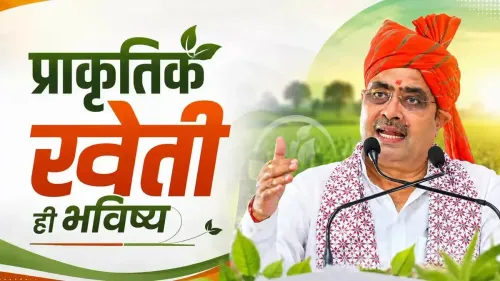
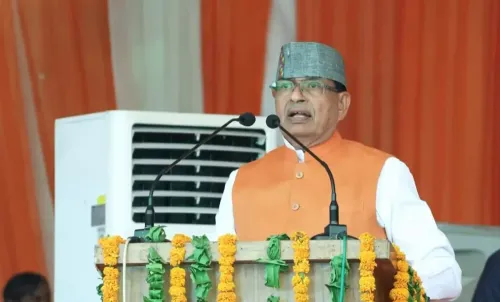
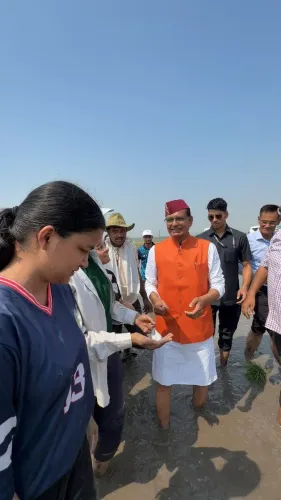
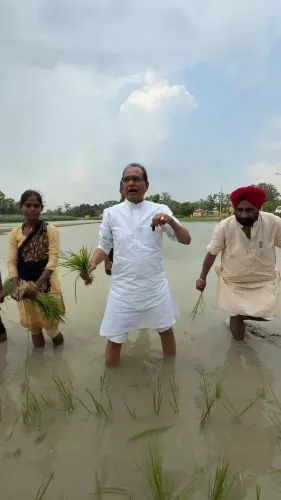
Shivraj Singh Chouhan Reviews Dhaincha Green Manure Use in Ayodhya
Synopsis
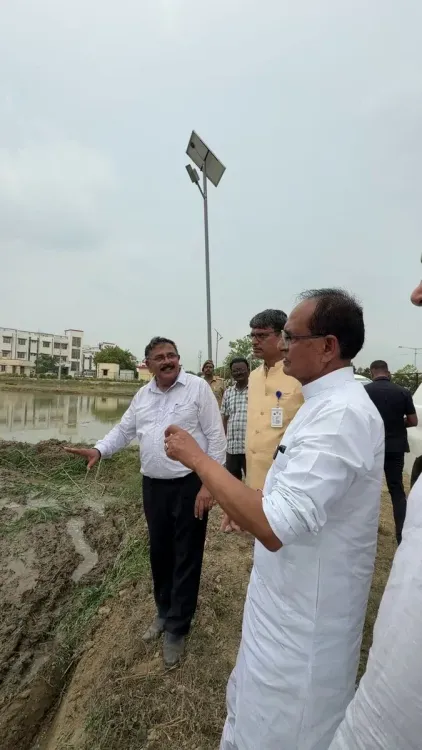
Union Agriculture Minister Shivraj Singh Chouhan visited Ayodhya on 25 June 2026 to observe Dhaincha green manure use in fields. He highlighted its role in boosting soil fertility and cutting chemical fertilizer dependence, in line with central schemes promoting sustainable and organic farming practices.
Key Takeaways
Shivraj Singh Chouhan visited Ayodhya, Uttar Pradesh , on 25 June 2026 to observe Dhaincha (Sesbania) green manure use in farm fields.
Dhaincha is a leguminous crop that fixes atmospheric nitrogen, improves soil organic matter, and reduces the need for chemical fertilizers.
The visit aligns with central schemes including the Soil Health Card scheme, Paramparagat Krishi Vikas Yojana , and the National Mission for Sustainable Agriculture .
India's annual chemical fertilizer subsidy bill runs into tens of thousands of crore rupees, making reduced dependence both an environmental and a fiscal priority.
The kharif season timing of the visit is intended to influence farmer planting decisions before the main sowing window closes.
State-level follow-up on Dhaincha seed distribution and any budget-level targets will indicate whether this is part of a scaled policy push.
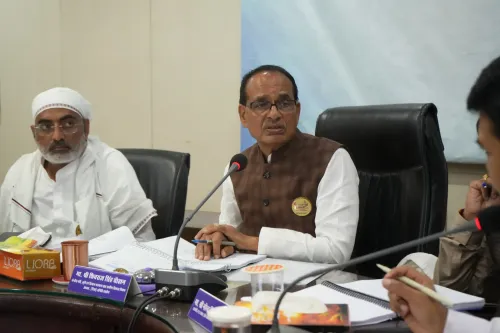
Union Agriculture Minister Shivraj Singh Chouhan visited Ayodhya, Uttar Pradesh, on Thursday, 25 June 2026, to observe the use of Dhaincha (Sesbania) as a green manure crop, underscoring the Centre's push to reduce chemical fertilizer dependence among Indian farmers.
Posting on X, the Minister described Dhaincha as 'an excellent green manure (harit khaad) that nourishes the soil naturally, enhances soil fertility, and reduces dependence on chemical fertilizers.' The field visit, accompanied by a video, highlighted the crop's role in sustainable nutrient management during the kharif sowing season.
Context
Dhaincha (Sesbania bispinosa) is a fast-growing leguminous crop traditionally ploughed back into the soil before the main kharif crop is transplanted. It fixes atmospheric nitrogen, adds organic matter, and suppresses weeds — all without any purchased input. Uttar Pradesh, with its large rice-wheat belt, is among the states where agricultural extension services have long promoted the practice, particularly in districts with heavy chemical fertilizer use.
Ayodhya district sits within this belt and has extensive smallholder farming communities that are primary targets for sustainable agriculture outreach programmes run by the state and central governments.
Policy Backdrop
The visit aligns with at least three central schemes. The Soil Health Card scheme, launched in 2015, tests farm soils and recommends balanced nutrient application, explicitly encouraging organic options such as green manuring. The Paramparagat Krishi Vikas Yojana, also started in 2015, promotes organic and natural farming practices including green manure crops. The National Mission for Sustainable Agriculture, initiated in 2010, mainstreams climate-resilient soil-health practices across states.
Underlying all three is a fiscal pressure: India's chemical fertilizer subsidy bill runs into tens of thousands of crore rupees annually, and reducing farmer dependence on urea and DAP is both an environmental and a budgetary priority for the Ministry of Agriculture and Farmers Welfare.
Stakeholders and Impact
Smallholder farmers stand to benefit most directly. Dhaincha seed is low-cost, the crop matures in 45–60 days, and it can substitute a significant portion of the nitrogen that would otherwise come from purchased urea. Agricultural extension workers and Krishi Vigyan Kendras in Uttar Pradesh have been tasked with demonstrating such integrated nutrient management techniques at the field level.
For the government, wider adoption would ease pressure on the fertilizer subsidy budget while simultaneously improving soil organic carbon levels — a metric increasingly tied to India's climate commitments. The timing of the minister's visit, at the onset of kharif season, is intended to influence farmer choices before the main planting window closes.
What's Next
Observers will watch whether the Uttar Pradesh government follows up with targeted Dhaincha seed distribution or incentive programmes in Ayodhya and neighbouring districts. Any mention of expanded green manure targets in the next Union agriculture budget or in parliamentary committee deliberations would signal that this field visit is part of a broader policy push rather than a standalone demonstration. The kharif season results from districts where the practice is actively promoted will be a key data point for policymakers assessing the scalability of green manuring across India's rice-growing states.
Point of View
A city with outsized symbolic and political visibility, amplifies the messaging beyond a routine extension event. This fits a broader pattern in which the Ministry of Agriculture uses minister-led field visits as a soft-launch mechanism for practices it wants states to adopt without additional central expenditure. The real test will be whether Uttar Pradesh translates the optics into seed supply chains and extension follow-through before the planting window closes.
NationPress
24 Sept 2026
Frequently Asked Questions
What is Dhaincha and why is it used as green manure?
Dhaincha ( Sesbania bispinosa ) is a fast-growing leguminous plant that fixes atmospheric nitrogen and adds organic matter when ploughed back into the soil, naturally enriching it without chemical inputs. It typically matures in 45–60 days and is sown before the main kharif crop such as paddy.
Why did Shivraj Singh Chouhan visit Ayodhya in June 2026?
Union Agriculture Minister Shivraj Singh Chouhan visited Ayodhya on 25 June 2026 to observe and promote the use of Dhaincha as a green manure crop, as part of the government's drive to reduce chemical fertilizer dependence among farmers ahead of the kharif sowing season.
Which government schemes support green manuring in India?
The Soil Health Card scheme, Paramparagat Krishi Vikas Yojana, and the National Mission for Sustainable Agriculture all explicitly promote green manuring and organic nutrient management as alternatives to chemical fertilizers.
How does green manuring help reduce India's fertilizer subsidy burden?
When farmers use green manure crops like Dhaincha to supply nitrogen naturally, they purchase less urea and DAP, directly reducing demand on India's chemical fertilizer subsidy — which runs into tens of thousands of crore rupees annually.
Will Uttar Pradesh expand Dhaincha cultivation after the minister's visit?
No official announcement of expanded seed distribution or incentive programmes has been made as yet. Observers are watching for state-level follow-up measures and any mention of green manure targets in the next Union agriculture budget.