CM Dhami Joins Farm Work, Backs Less Chemical Use
Synopsis
Uttarakhand Chief Minister Pushkar Singh Dhami participated in field work on 16 June 2026, publicly advocating for reduced chemical fertiliser use, soil fertility preservation, and self-reliant farming — aligning state messaging with national sustainable agriculture goals.
Key Takeaways
CM Pushkar Singh Dhami participated in agricultural field work on 16 June 2026 to deliver a public message on farming practices.
He advocated for using minimum chemical fertilisers to protect soil fertility and promote self-reliant farming.
Uttarakhand's mountain ecology makes it especially vulnerable to soil degradation from chemical overuse.
The messaging aligns with the national Soil Health Card Scheme (2015) and Atmanirbhar Bharat Abhiyan (2020) .
State-level follow-through — including budget provisions for natural farming clusters — remains the key indicator to watch.
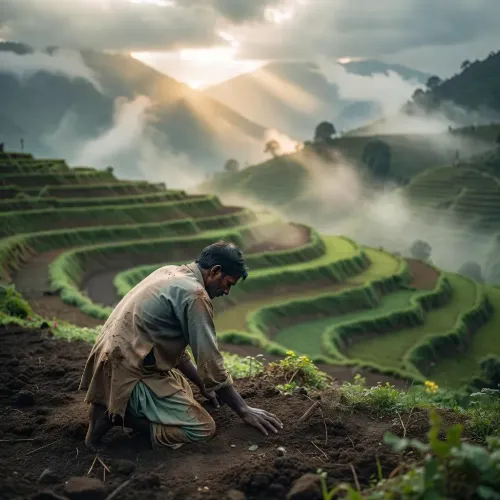
Uttarakhand Chief Minister Pushkar Singh Dhami on Tuesday, 16 June 2026, participated in agricultural work at a farm field, using the occasion to advocate for minimal chemical fertiliser use, preservation of soil fertility, and the promotion of self-reliant farming practices.
Context
Dhami shared the activity on X, stating — in translation — that he participated in farm work 'to give the message of using as little chemical fertiliser as possible, saving soil fertility, and promoting self-reliant farming.' The post, accompanied by two images, reflects a hands-on style of public communication that state leaders have increasingly adopted to signal alignment with grassroots concerns.
The original Hindi post reads: 'इससे पूर्व अपने खेत में कृषि कार्यों में सहभागिता कर कम से कम रासायनिक खाद का उपयोग करने, मिट्टी की उर्वरता बचाने और आत्मनिर्भर खेती को बढ़ावा देने का संदेश दिया।' ('Prior to this, by participating in agricultural activities in my own field, I gave the message of using minimum chemical fertilisers, saving soil fertility, and promoting self-reliant farming.')
Policy Backdrop
The messaging sits within a well-established national policy trajectory. The Soil Health Card Scheme, launched in 2015, was designed to encourage balanced fertiliser use and maintain soil quality across Indian farmland. Five years later, the Atmanirbhar Bharat Abhiyan — announced in May 2020 — extended the self-reliance framework to agriculture, pushing for reduced dependence on external and chemical inputs.
Uttarakhand, a Himalayan state with a fragile mountain ecology, has particular reason to align with these goals. The state's terrain makes it vulnerable to soil degradation from over-application of chemical fertilisers, and it has existing traditions of organic and natural farming that policy frameworks have sought to formalise and scale.
India's broader shift toward sustainable agriculture has gained urgency amid climate resilience concerns, with Himalayan states serving as both frontline examples of ecological risk and potential models for low-input farming systems.
Stakeholders and Impact
The primary audience for Dhami's message is Uttarakhand's farming community, which includes smallholders and mountain cultivators who often rely on chemical inputs due to limited access to organic alternatives or technical knowledge about soil management. Symbolic participation by the Chief Minister in field work is a form of public outreach aimed at normalising and encouraging a shift in practice.
Organic cultivators and farmer producer organisations in the state stand to benefit if the messaging translates into policy support — such as subsidised access to bio-fertilisers, organic certification assistance, or natural farming clusters. The broader signal also reaches agricultural extension workers and local governance bodies who shape on-ground implementation.
What's Next
Observers will watch for whether this public demonstration is followed by concrete state budget provisions or programme announcements targeting natural and organic farming in Uttarakhand. The state government's agriculture policy calendar — including any new cluster-based organic farming initiatives — will indicate how far the messaging translates into institutional action. With national schemes already providing a framework, the question is the pace and scale of state-level rollout.
Point of View
Visual act that resonates with Uttarakhand's rural base. The move mirrors a pattern seen across BJP-governed states where chief ministers perform symbolic alignment with central schemes such as Atmanirbhar Bharat to reinforce both local credibility and party messaging. For Uttarakhand specifically, sustainable agriculture is not merely optics: the state's ecological fragility gives the issue genuine policy weight. The real test will be whether this public gesture is backed by targeted state spending and institutional reform in the agriculture department.
NationPress
15 Sept 2026
Frequently Asked Questions
What did Uttarakhand CM Dhami say about chemical fertilisers?
CM Pushkar Singh Dhami stated that farmers should use as little chemical fertiliser as possible to preserve soil fertility and promote self-reliant farming, delivering this message by personally participating in agricultural work at a farm field on 16 June 2026.
What is Atmanirbhar farming in India?
Atmanirbhar farming refers to self-reliant agricultural practices promoted under the Atmanirbhar Bharat Abhiyan, launched in May 2020, which encourages reduced dependence on chemical inputs and external resources in favour of local, sustainable methods.
Why is soil fertility important in Uttarakhand?
Uttarakhand's Himalayan terrain is ecologically fragile, making it particularly susceptible to soil degradation caused by excessive use of chemical fertilisers. Preserving soil fertility is essential for the long-term viability of mountain farming communities.
What is the Soil Health Card Scheme?
The Soil Health Card Scheme was launched in 2015 to provide Indian farmers with information on the nutrient status of their soil and recommendations for balanced fertiliser use, with the goal of maintaining and improving soil fertility.
Is Uttarakhand promoting organic farming?
Uttarakhand has been aligning with national sustainable agriculture goals and has existing organic farming traditions. State leadership, including CM Dhami, has publicly supported reduced chemical input farming, though specific new programme announcements as of June 2026 are yet to be confirmed.