Shivraj Reviews ICAR Report on Totapuri Mango Crisis
Synopsis
Union Agriculture Minister Shivraj Singh Chouhan reviewed an ICAR expert committee report on the Totapuri mango price crisis in New Delhi on 22 July 2026. An action plan covering pulp-content norms, FPO-led processing, orchard rejuvenation, and export promotion was discussed, with Centre, states, ICAR, and APEDA to work in coordination.
Key Takeaways
Union Agriculture Minister Shivraj Singh Chouhan reviewed the ICAR expert committee report on the Totapuri mango price crisis in New Delhi on 22 July 2026 .
The ICAR committee conducted field visits to orchards, mandis , and processing units and consulted farmers, FPOs, industry, and local administration before submitting recommendations.
Key action points discussed include raising mandatory real mango pulp content in mango-based beverages, time-bound procurement, and orchard rejuvenation.
FPO-led processing, value addition, and export promotion are central pillars of the proposed plan for strengthening the Totapuri mango value chain.
The central government, state governments, ICAR, and APEDA will jointly implement the action plan alongside farmer producer organisations.
The intervention builds on existing frameworks including the Mission for Integrated Development of Horticulture (MIDH) and the 10,000 FPOs scheme .
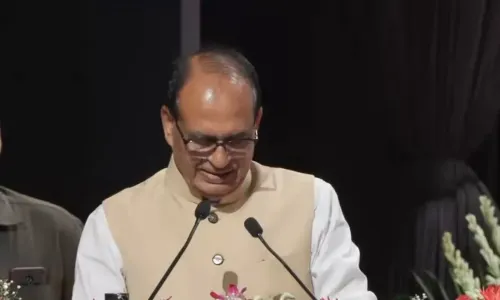
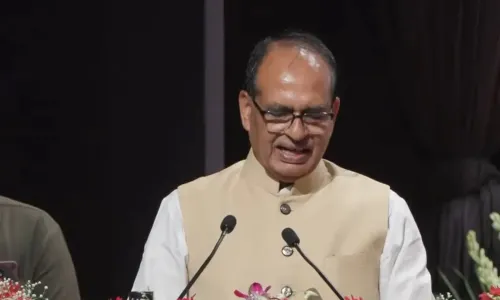
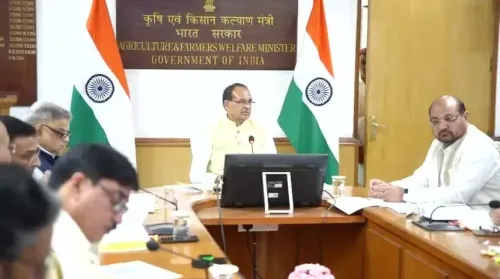
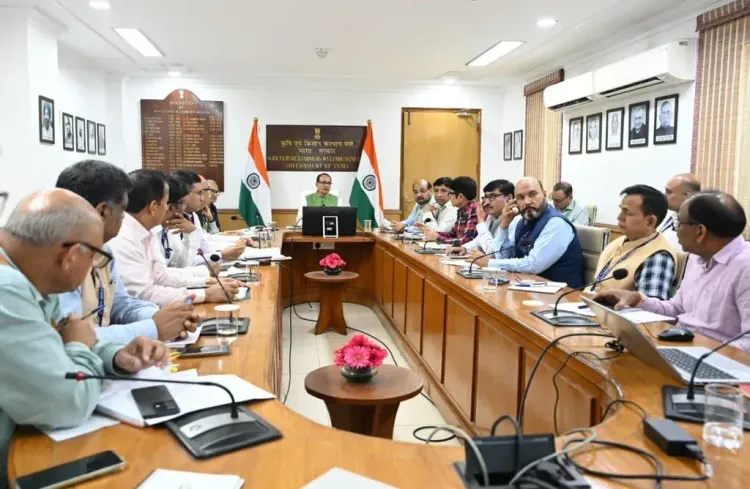
Union Agriculture Minister Shivraj Singh Chouhan on Wednesday, 22 July 2026, chaired a detailed review meeting in New Delhi to examine the report of an expert committee constituted by the Indian Council of Agricultural Research (ICAR) on the price crisis affecting Totapuri mango farmers across India.
Context
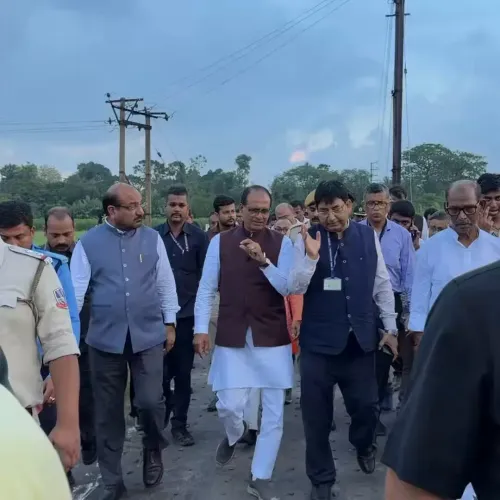
The minister had earlier met Totapuri mango-growing farmers who shared their distress over falling prices. Chouhan recounted that upon hearing their concerns, he directed ICAR to form a specialised committee to conduct a ground-level study. The committee subsequently visited orchards, wholesale markets (mandis), and processing units, and held consultations with farmers, Farmer Producer Organisations (FPOs), industry representatives, and local administration before submitting its recommendations.
In the post, Chouhan stated: 'Kisan kalyaan hamari sarvochch prathamikta hai' ('Farmer welfare is our highest priority'), signalling that the review is being treated as a policy priority at the ministerial level rather than a routine administrative exercise.
Policy Backdrop
The intervention fits within a broader framework of horticulture support that has evolved since 2014, when the Mission for Integrated Development of Horticulture (MIDH) was launched to strengthen value chains for crops including mango. A 2020 scheme approved the formation of 10,000 FPOs across the country, precisely to improve aggregation, processing capacity, and bargaining power for small growers.
APEDA, the statutory export promotion body for processed agricultural products, is expected to play a central role in expanding overseas markets for Totapuri mango and its derivatives. Successive administrations have used ICAR expert committees as a policy tool to address price volatility in perishable horticulture, linking research findings directly to processing and export interventions.
Key Decisions Discussed
Based on the ICAR committee's recommendations, the meeting discussed an action plan covering several fronts. These include increasing the mandatory proportion of real mango pulp in mango-based beverages, establishing a time-bound procurement mechanism, undertaking orchard rejuvenation, promoting FPO-led processing units, enhancing value addition, and boosting exports of Totapuri mango and its products.
The minister indicated that the central government, state governments, ICAR, APEDA, and farmer producer organisations will work in coordination to strengthen the entire Totapuri mango value chain — from farm to market to export. The emphasis on raising the pulp content norm in beverages is significant because it directly creates a larger and more consistent industrial demand for raw mango from farmers.
Stakeholders and Impact
Totapuri mango is cultivated extensively in Andhra Pradesh, Karnataka, and Telangana, and is one of India's most commercially important mango varieties used in pulp and beverage processing. A fall in farm-gate prices directly affects thousands of small and marginal growers who depend on the crop for seasonal income.
FPOs are positioned in the proposed plan as the primary vehicle for aggregating produce, operating processing units, and negotiating with buyers — a model that aims to reduce dependence on intermediaries and improve farmer realisations. If pulp-content norms for beverages are revised upward, processors will require larger and more stable volumes of Totapuri pulp, potentially providing a floor for farm prices.
What's Next
Policy watchers will track whether the action plan translates into notified regulatory changes on pulp-content norms and whether state governments in Totapuri-growing regions announce purchase calendars ahead of the 2027 mango season. A possible inclusion of Totapuri mango in expanded export clusters under APEDA's promotion programmes would be another indicator of follow-through. The coordination mechanism between the Centre, states, ICAR, and APEDA that the minister outlined will be the key institutional test of whether this review leads to durable price stability for growers.
Point of View
If notified, would compel the processed food industry to absorb larger volumes of domestic mango pulp and could provide a meaningful price floor for Totapuri growers. The emphasis on FPO-led processing also reflects the government's broader strategy of using collective farmer institutions to capture value-addition margins that currently accrue to private intermediaries. The real test will be whether the coordination framework between the Centre, states, ICAR, and APEDA produces binding timelines before the 2027 harvest season.
NationPress
22 Jul 2026
Frequently Asked Questions
What is the Totapuri mango price crisis?
Totapuri mango farmers, primarily in Andhra Pradesh, Karnataka, and Telangana, have been facing falling farm-gate prices that do not cover their production costs. The crisis prompted Union Agriculture Minister Shivraj Singh Chouhan to direct ICAR to form an expert committee for a ground-level study.
What did the ICAR committee recommend for Totapuri mango farmers?
The ICAR expert committee, after visiting orchards, mandis, and processing units and consulting farmers, FPOs, and industry, submitted recommendations covering increased mango pulp content in beverages, time-bound procurement, orchard rejuvenation, FPO-led processing, value addition, and export promotion.
What is the role of APEDA in the Totapuri mango action plan?
APEDA, the statutory body for promoting exports of agricultural and processed food products, is expected to work alongside the central government, state governments, and ICAR to boost overseas demand for Totapuri mango and its processed derivatives as part of the coordinated action plan.
How will raising mango pulp content in beverages help farmers?
If mandatory real mango pulp content in mango-based beverages is increased, processors will need to source larger and more consistent volumes of Totapuri pulp from farmers, creating stronger industrial demand that can help stabilise or raise farm-gate prices.
What government schemes support mango farmers in India?
The Mission for Integrated Development of Horticulture (MIDH), launched in 2014, supports holistic development of mango and other horticulture value chains. The 2020 scheme for formation of 10,000 FPOs also aims to strengthen farmer collectives involved in mango aggregation and processing.