Shivraj Singh Chouhan champions agrivoltaics for farmer income
Synopsis
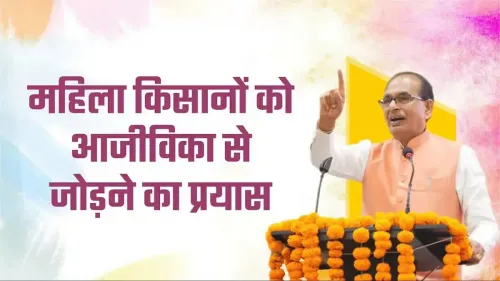
Union Agriculture Minister Shivraj Singh Chouhan championed agrivoltaics on October 21, 2026, declaring that Indian farmers will become energy-givers alongside food-givers — aligning the model with PM-KUSUM and India's 500 GW renewable target by 2030.
Key Takeaways
Shivraj Singh Chouhan publicly endorsed agrivoltaics on October 21, 2026 , calling it an 'extraordinary model' for Indian agriculture.
Agrivoltaics allows simultaneous crop production and solar energy generation on the same land, creating a dual income stream for farmers.
The PM-KUSUM scheme, launched in 2019 , already provides the policy foundation for solar integration in agriculture.
India targets 500 GW of non-fossil fuel energy capacity by 2030 , making agrivoltaics across farmland arithmetically significant to that goal.
Scaling the model requires coordinated guidelines between the Ministries of Agriculture and New and Renewable Energy.
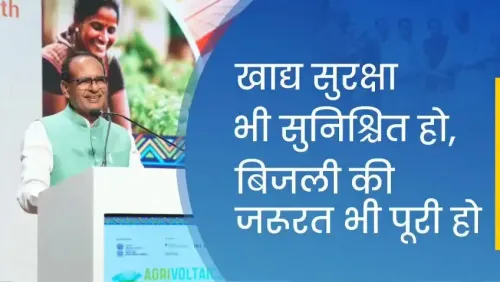
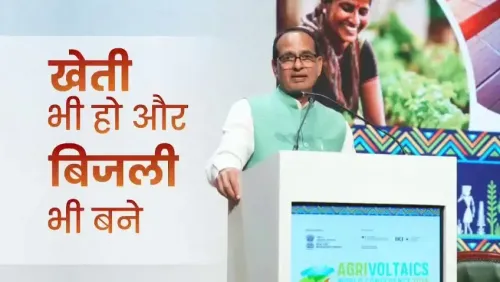
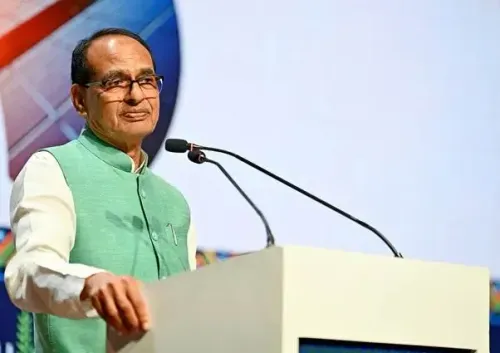
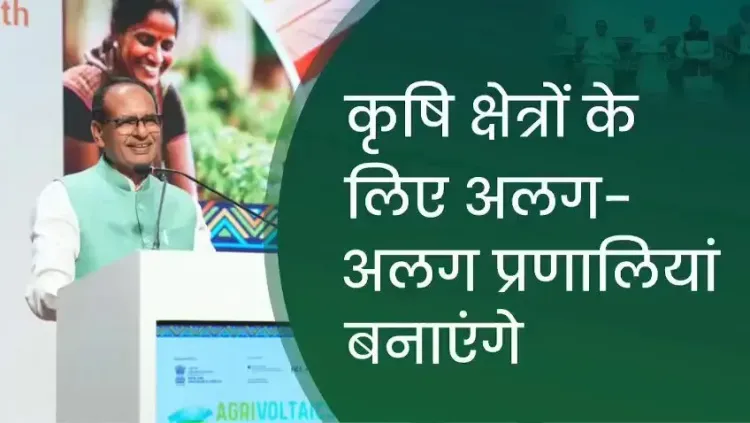
India's farmers could soon be powering the nation's grid as much as feeding its population — and Union Agriculture Minister Shivraj Singh Chouhan wants the world to know it. On Wednesday, October 21, 2026, the minister took to X to call agrivoltaics 'an extraordinary model,' declaring that India's annadata (food-giver) will also become an urjadata (energy-giver), contributing to prosperity both at home and globally.
In his post, Chouhan wrote: 'एग्रीवोल्टाइक्स हमारा एक अद्भुत मॉडल है। हमारा अन्नदाता खेती के साथ ऊर्जादाता भी बनेगा और देश-दुनिया की समृद्धि में योगदान देगा।' — 'Agrivoltaics is an extraordinary model for us. Our food-giver will also become an energy-giver alongside farming, and will contribute to the prosperity of the country and the world.'
What agrivoltaics actually does for a farmer's field
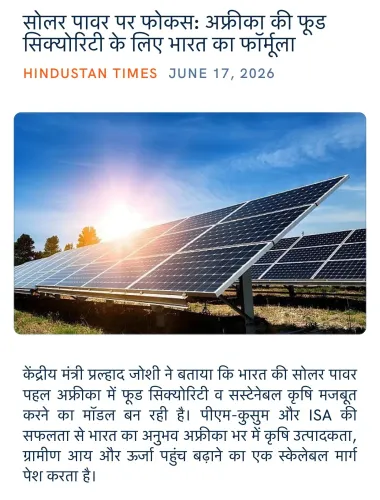
Agrivoltaics — the co-deployment of solar panels and crops on the same parcel of land — flips the traditional land-use trade-off on its head. Instead of choosing between food and energy, a farmer harvests both: crops grow beneath or between elevated solar arrays, while the panels generate electricity that can be fed back to the grid or used on-farm. The shade from panels can, in certain climates, even reduce crop water stress — a practical bonus in rain-scarce districts.
The economics are equally pointed. A farmer who generates surplus solar power and sells it earns a second income stream without giving up a single row of cultivation. For smallholders already squeezed by input costs and volatile commodity prices, that additional revenue line is not a minor amenity — it is structural resilience.
PM-KUSUM: the policy foundation already in place
Chouhan's enthusiasm lands on ground that policy has already prepared. The PM-KUSUM scheme — Pradhan Mantri Kisan Urja Suraksha evam Utthaan Mahabhiyan — was launched in 2019 with the explicit aim of solarising agricultural pumps and enabling land-based renewable installations for farmers. It offered a framework for farmers to lease their barren or underused land for solar projects and receive lease income, a precursor logic that agrivoltaics now takes further by integrating the crop and the panel rather than separating them.
India has committed to reaching 500 GW of non-fossil fuel energy capacity by 2030. With roughly 140 million farming households across the country, routing a meaningful share of that solar build-out through agricultural land is not just romantically appealing — it is arithmetically significant. Agrivoltaics becomes, in that framing, both a climate strategy and a rural income policy simultaneously.
Two ministries, one landholding
The model sits at the intersection of two separate administrative worlds: the Ministry of Agriculture and Farmers Welfare — which Chouhan heads — and the Ministry of New and Renewable Energy. Effective scale-up will require joint guidelines, compatible subsidy structures, and a grid-connectivity framework that rural feeders can actually handle. Pilot projects and inter-ministerial guidelines will be the real test of whether the minister's vision translates from a post into a programme.
For now, Chouhan has planted the flag — and the solar panel — firmly in the same field. Whether India's vast smallholder landscape can absorb the technology at scale is the next, harder chapter.
Point of View
' the government attempts to convert a capital-intensive infrastructure story into a grassroots identity proposition. The real policy stress-test, however, lies in inter-ministerial coordination: agrivoltaics straddles Agriculture and Renewable Energy ministries whose incentive structures have historically operated on separate tracks. If pilot guidelines and grid-connectivity rules follow the rhetoric, agrivoltaics could become a meaningful plank of both India's 2030 climate commitments and its rural income diversification agenda — but the gap between ministerial enthusiasm and ground-level rollout remains the defining variable.
NationPress
21 Oct 2026
Frequently Asked Questions
What is agrivoltaics and how does it benefit Indian farmers?
Agrivoltaics is the practice of growing crops and generating solar energy on the same piece of land simultaneously. For Indian farmers, it creates a second income stream from electricity sales without sacrificing agricultural output, and in some conditions the panel shade can reduce water stress on crops.
What did Shivraj Singh Chouhan say about agrivoltaics?
On October 21, 2026, Union Agriculture Minister Shivraj Singh Chouhan posted on X calling agrivoltaics 'an extraordinary model,' and said Indian farmers — traditionally the country's food-givers — will also become energy-givers, contributing to national and global prosperity.
What is PM-KUSUM and is it related to agrivoltaics?
PM-KUSUM (Pradhan Mantri Kisan Urja Suraksha evam Utthaan Mahabhiyan) was launched in 2019 to solarise agricultural pumps and support land-based renewable energy installations for farmers. It is the existing policy foundation on which agrivoltaics expansion in India is being built.
How does agrivoltaics connect to India's 500 GW renewable energy target?
India has targeted 500 GW of non-fossil fuel energy capacity by 2030. With over 140 million farming households, routing a portion of solar build-out through agricultural land via agrivoltaics could contribute significantly to that target while simultaneously generating farmer income.
What are the challenges in scaling agrivoltaics in India?
Scaling agrivoltaics requires coordinated policies between the Ministry of Agriculture and Farmers Welfare and the Ministry of New and Renewable Energy, compatible subsidy structures, and rural grid-connectivity upgrades capable of absorbing distributed solar generation from farmland.