Shivraj Singh Chouhan Hails ICAR-CRIJAF for Farm Mechanisation Push
Synopsis
Union Agriculture Minister Shivraj Singh Chouhan congratulated ICAR-CRIJAF on 14 July 2026 for developing new agricultural implements, spotlighting the Union government's push to mechanise fibre crop farming in eastern India and ease drudgery for jute cultivators.
Key Takeaways
Union Agriculture Minister Shivraj Singh Chouhan publicly praised ICAR-CRIJAF on 14 July 2026 for its mechanisation work.
ICAR-CRIJAF (Central Research Institute for Jute and Allied Fibres) is based in Barrackpore, West Bengal and operates under ICAR .
The institute has developed new agricultural implements aimed at reducing manual labour in fibre crop farming.
Jute cultivation is concentrated in West Bengal, Assam, and Bihar , where mechanisation gaps remain significant.
The Sub-Mission on Agricultural Mechanization (SMAM) , launched in 2014-15 , is the primary government scheme for scaling up farm equipment adoption through custom hiring centres.
State-level uptake of CRIJAF prototypes and their inclusion in future budget allocations will be the key indicators to watch.
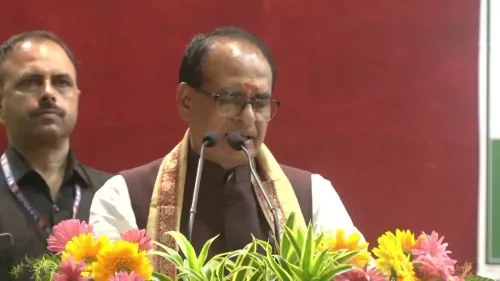
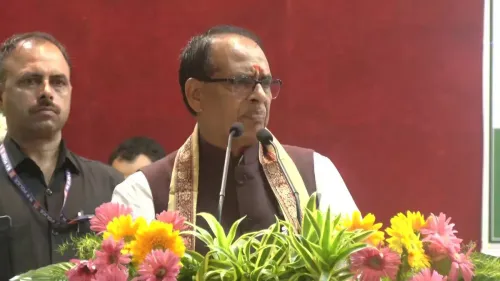
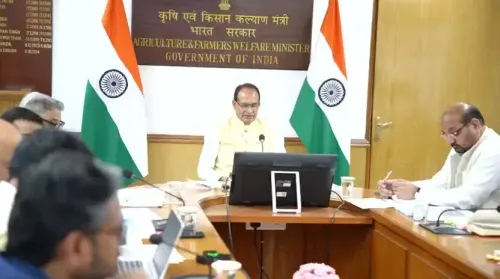
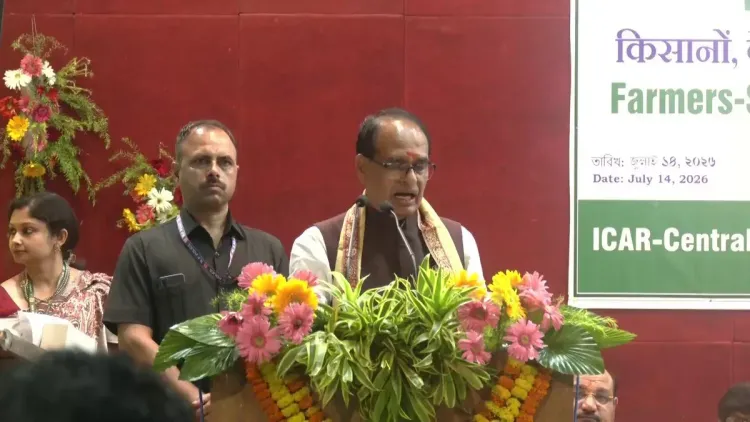
Union Agriculture Minister Shivraj Singh Chouhan on Tuesday, 14 July 2026 publicly commended ICAR-CRIJAF — the Central Research Institute for Jute and Allied Fibres — for its progress in agricultural mechanisation, praising the institute's work in developing new farm equipment tailored to fibre crops.
Posting on X, the Minister said in Hindi: 'मैं ICAR-CRIJAF को बधाई देता हूँ। मैकेनाइजेशन की दिशा में वे अच्छा काम कर रहे हैं। उन्होंने नए कृषि उपकरण विकसित करने का काम किया है।' ('I congratulate ICAR-CRIJAF. They are doing good work in the direction of mechanisation. They have worked on developing new agricultural implements.')
Context
ICAR-CRIJAF, headquartered at Barrackpore, West Bengal, operates under the Indian Council of Agricultural Research (ICAR) — the apex autonomous body coordinating agricultural research, education, and extension across India. The institute focuses on jute and allied fibre crop research, serving farming communities concentrated in West Bengal, Assam, and Bihar.
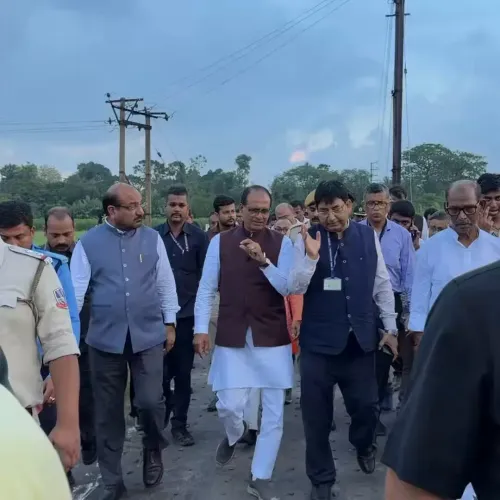
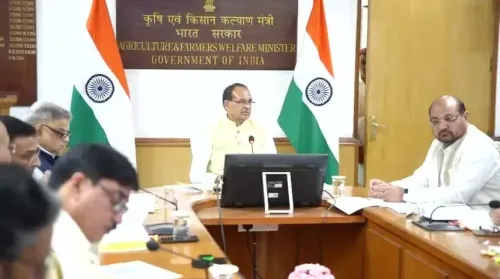
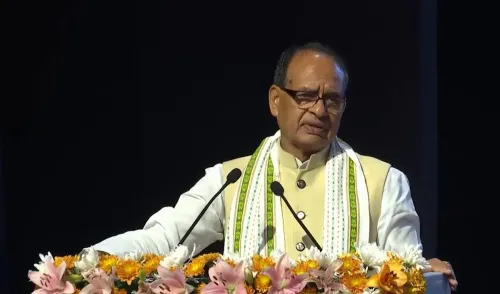
Chouhan's post was accompanied by a video, suggesting a visit or formal interaction with the institute's researchers, though the exact occasion was not detailed in the post. The Minister's public recognition signals the Union government's attention to a commodity sector that directly affects millions of smallholder farmers in eastern India.
Policy Backdrop
The commendation fits squarely within the Union government's sustained push for crop-specific mechanisation. The Sub-Mission on Agricultural Mechanization (SMAM), launched in 2014-15, has been the primary policy vehicle to promote custom hiring centres and wider farm equipment adoption across states.
Fibre crops such as jute have historically lagged behind cereals in mechanisation, with harvesting and retting remaining largely manual — contributing to high labour costs and physical drudgery for farmers. Equipment developed by CRIJAF within ICAR's commodity research network is designed to address precisely these region-specific gaps, complementing national missions on productivity and sustainability.
Successive governments have treated agricultural engineering as a core pillar of rural transformation, and the current administration has reinforced that stance through both budgetary allocations and institutional recognition of research achievements.
Stakeholders and Impact
Jute cultivators in eastern India stand to benefit most directly from advances in farm mechanisation at CRIJAF. Reduced dependence on manual labour can lower input costs and improve competitiveness for a crop that remains central to the livelihoods of farmers across West Bengal, Assam, and Bihar.
Custom hiring centres enabled under SMAM serve as the distribution channel through which equipment prototypes developed by institutes like CRIJAF eventually reach small and marginal farmers who cannot afford to purchase machinery outright. The Minister's public endorsement may also encourage state governments to prioritise CRIJAF-developed tools in their own mechanisation schemes.
What's Next
Attention will now turn to whether CRIJAF's newly developed implements are scaled up through SMAM-linked custom hiring centres at the state level, and whether dedicated allocations for jute mechanisation feature in the next agricultural budget cycle or in a revised Jute Corporation of India procurement policy.
The broader pattern suggests that the Union government views agricultural engineering not merely as a productivity tool but as a component of climate-resilient farming — a framing likely to shape how future research mandates are assigned to commodity-specific ICAR institutes like CRIJAF.
Point of View
The Minister reinforces the BJP-led government's framing of agricultural research institutions as active partners in rural transformation, not just advisory bodies. The timing also carries political weight: eastern India, where jute farming is concentrated, has been a focus of BJP's outreach strategy. Institutional recognition of this kind can accelerate state-level adoption of CRIJAF tools through SMAM channels, making the tweet functionally more than a congratulatory gesture.
NationPress
14 Jul 2026
Frequently Asked Questions
What is ICAR-CRIJAF and what does it do?
ICAR-CRIJAF, the Central Research Institute for Jute and Allied Fibres, is an institute under the Indian Council of Agricultural Research (ICAR) located in Barrackpore, West Bengal. It conducts research on jute and allied fibre crops, including the development of region-specific agricultural equipment.
Why did Shivraj Singh Chouhan praise ICAR-CRIJAF?
Union Agriculture Minister Shivraj Singh Chouhan praised ICAR-CRIJAF on 14 July 2026 for its work in agricultural mechanisation, specifically for developing new farm implements aimed at reducing manual labour in fibre crop cultivation.
What is the Sub-Mission on Agricultural Mechanization (SMAM)?
SMAM is a Union government scheme launched in 2014-15 to promote the adoption of farm machinery across India, primarily through the establishment of custom hiring centres that allow small and marginal farmers to access equipment without purchasing it outright.
Which states benefit most from jute mechanisation research?
West Bengal, Assam, and Bihar are the states where jute cultivation is most concentrated, making them the primary beneficiaries of mechanisation advances developed by ICAR-CRIJAF.
What should one watch for after this announcement?
Key indicators include the state-level uptake of CRIJAF-developed farm implements through SMAM custom hiring centres and any dedicated allocation for jute mechanisation in upcoming agricultural budget announcements or Jute Corporation of India procurement policy revisions.