Shivraj Singh Chouhan outlines BJP's dual-track poverty plan
Synopsis
Union Agriculture Minister Shivraj Singh Chouhan articulated India's two-track anti-poverty approach: connecting the poor to employment while using PMGKAY free grain support to free household income for children's education and other needs.
Key Takeaways
Shivraj Singh Chouhan outlined a dual-track poverty strategy on 14 August 2026 combining employment linkages with food security support.
The Pradhan Mantri Garib Kalyan Anna Yojana (PMGKAY) provides 5 kg of free grain per person per month to eligible poor households, launched originally in March 2020 .
Chouhan argued that savings from subsidised food directly free up household income for children's education and other expenses.
The statement frames food subsidy not as charity but as an economic multiplier that amplifies the impact of employment schemes.
Watchers will track whether new convergence guidelines formally link PMGKAY beneficiaries to skilling and livelihood programmes.
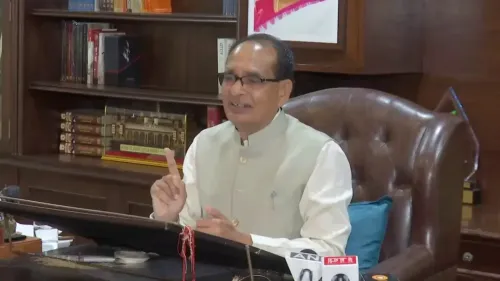
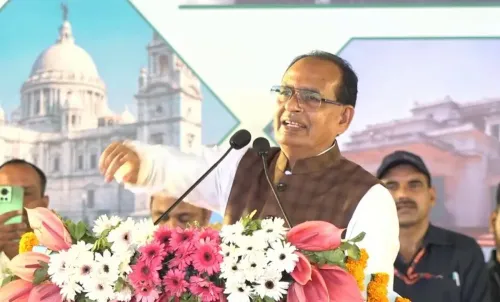
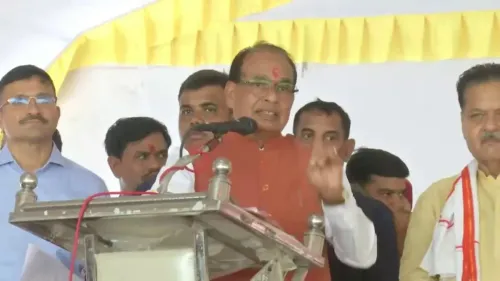
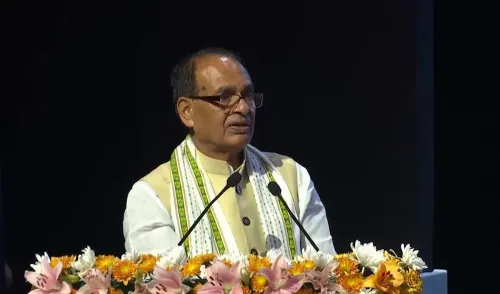
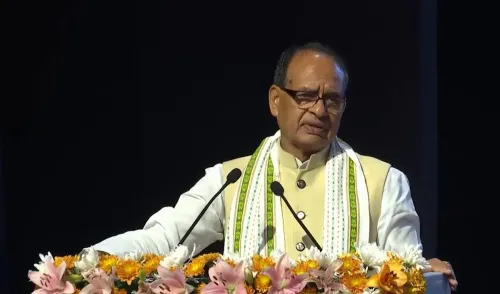
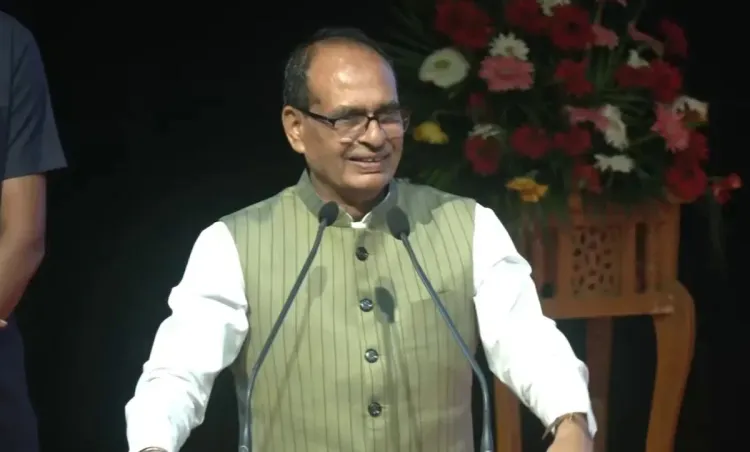
Food on every plate, and money freed up for a child's education — Union Agriculture Minister Shivraj Singh Chouhan distilled the government's anti-poverty philosophy into a single, sharp formulation on Friday, 14 August 2026, laying out a two-pronged strategy that pairs livelihood creation with direct food support.
In a Hindi-language post on X, Chouhan spelled out the logic: 'एक तरफ काम-धंधा और रोज़गार से जोड़कर गरीबी दूर करेंगे' — 'On one side, we will eliminate poverty by connecting people to work and employment.' The other side, he said, would be anchored by schemes like the Pradhan Mantri Garib Kalyan Anna Yojana (PMGKAY), ensuring no family goes hungry. The release of household income previously spent on food, he argued, could then flow toward children's schooling and other needs.
The two tracks: jobs and grain
The framing is deliberate. Rather than treating employment and food security as competing priorities, Chouhan presented them as reinforcing levers — one builds income, the other protects the floor. PMGKAY, first launched in March 2020 as a COVID-19 emergency measure, provides 5 kg of free grain per person per month to eligible poor households over and above their National Food Security Act entitlements. What began as crisis relief has since become a cornerstone of India's welfare architecture.
The savings logic: freeing money for children's futures
The most pointed element of Chouhan's message was economic: when a family does not have to spend on grain, that money does not vanish — it shifts. He named the destination explicitly: children's education. It is a cause-and-effect argument that reframes food subsidy not as charity but as an investment multiplier, one that successive governments have deployed rhetorically since the early 2000s when rural employment guarantees and targeted distribution were first paired at scale.
As a former four-term Chief Minister of Madhya Pradesh who oversaw large-scale welfare delivery at the state level, Chouhan brings practitioner credibility to the argument. The question watchers will now track is whether the policy rhetoric is followed by fresh convergence guidelines — formal rules linking PMGKAY beneficiaries to employment and skilling schemes — or whether parliamentary decisions extend PMGKAY beyond its current notified period.
A safety net that also doubles as a springboard. That is the bet Chouhan is publicly placing.
Point of View
The BJP is attempting to shift the narrative from dependency to upward mobility ahead of what remains a politically sensitive welfare debate. The dual-track logic mirrors the NDA's broader 'labharthi' strategy of pairing direct benefit transfers with aspirational messaging. Whether the rhetoric translates into formal policy convergence — or remains campaign positioning — will define its actual impact on poor households.
NationPress
14 Aug 2026
Frequently Asked Questions
What is the Pradhan Mantri Garib Kalyan Anna Yojana?
PMGKAY is a central government scheme that provides 5 kg of free food grain per person per month to eligible poor households. It was first launched in March 2020 as COVID-19 relief, supplementing entitlements under the National Food Security Act.
What did Shivraj Singh Chouhan say about poverty reduction?
Chouhan said the government will fight poverty on two fronts: linking the poor to work and employment opportunities, and providing food security through schemes like PMGKAY so that money saved on food can be spent on children's education and other needs.
How does PMGKAY help poor families beyond food?
By covering grain costs, PMGKAY frees up household income that would otherwise be spent on food. Chouhan's argument is that this released income can then be directed toward children's schooling, healthcare, or other productive expenses.
Is PMGKAY still active in 2026?
The research notes that any post-2023 extensions of PMGKAY fall outside fully verifiable data. Chouhan's statement implies the scheme remains operational, but formal confirmation of its current notified period should be checked against official government sources.
What is Shivraj Singh Chouhan's current role?
Shivraj Singh Chouhan is the Union Minister of Agriculture and Farmers Welfare and Rural Development . He is a senior BJP leader and served four terms as Chief Minister of Madhya Pradesh before joining the Union Cabinet.