Shivraj Singh Chouhan Plants Paddy in Ayodhya, Backs Green Manure
Synopsis
Union Agriculture Minister Shivraj Singh Chouhan joined farmers in Ayodhya on 25 June 2026 to demonstrate dhaincha green manuring before paddy transplantation, invoking the Khet Bachao Abhiyan to revive traditional, soil-preserving farming practices and reduce dependence on chemical inputs.
Key Takeaways
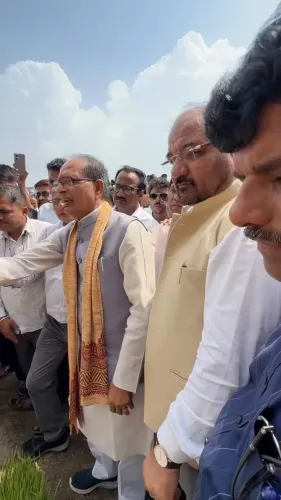
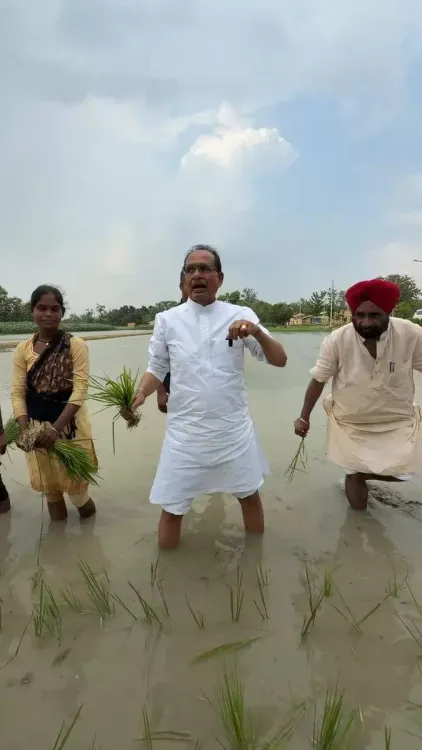
Shivraj Singh Chouhan participated in paddy transplantation with farmers in Ayodhya on 25 June 2026 .
Dhaincha ( Sesbania bispinosa ) was grown in the field and ploughed back into the soil before transplantation to improve fertility and soil texture.
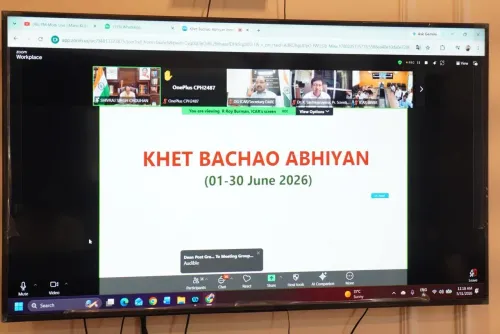
The minister linked the exercise to the Khet Bachao Abhiyan , a campaign to preserve soil fertility through green manure and organic methods.
Traditional green manuring with dhaincha and cow-dung fixes nitrogen naturally, reducing dependence on synthetic urea.
The demonstration builds on existing schemes including the Paramparagat Krishi Vikas Yojana (2015) and the Soil Health Card Scheme (2015).
State-level replication and Budget allocations will determine the campaign's national scale.
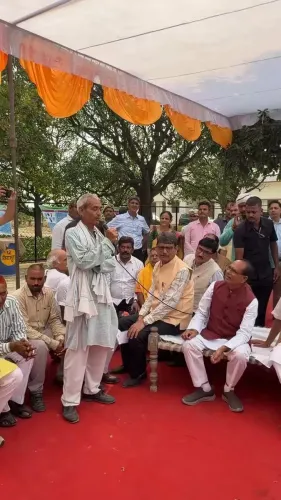
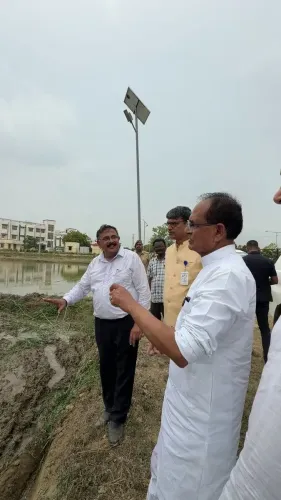
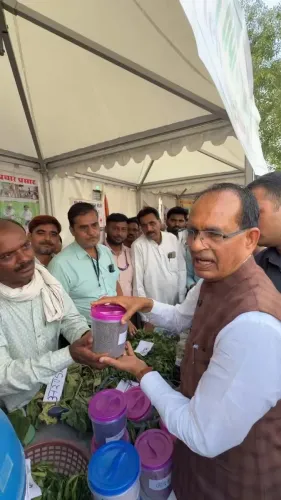
Union Agriculture Minister Shivraj Singh Chouhan joined farmers in Ayodhya, Uttar Pradesh, on Thursday, 25 June 2026, to participate in paddy transplantation and demonstrate a traditional green manuring technique using dhaincha (Sesbania bispinosa), underscoring the government's push to revive soil-friendly farming practices.
Context
Posting on X, the minister described the field exercise in detail: 'Ropaai se pehle khet mein dhaincha lagakar use mitti mein mila diya gaya' — 'Before transplantation, dhaincha was grown in the field and then ploughed back into the soil, making it more crumbly, fertile, and rich in nutrients.' He called it an 'inspiring experiment' and noted that both dhaincha and cow-dung manure have long held a special place in traditional Indian farming but have fallen out of use over time.
The minister linked the demonstration directly to the Khet Bachao Abhiyan (Save the Fields Campaign), stating that adopting green manure, organic methods, and balanced farming is essential to preserving soil fertility for future generations.
Policy Backdrop
The emphasis on green manuring sits within a broader policy lineage. The Paramparagat Krishi Vikas Yojana, launched in 2015, was designed to promote organic and traditional farming by clustering farmers and certifying their produce. The Soil Health Card Scheme, also introduced in 2015, aimed to assess soil nutrient levels and guide farmers toward balanced fertiliser use, reducing over-dependence on chemical inputs.
Dhaincha is a fast-growing leguminous crop that fixes atmospheric nitrogen in the soil, cutting the need for synthetic urea. Its revival as a green manure crop aligns with India's stated goal of reducing the chemical fertiliser subsidy burden while simultaneously arresting soil degradation — a problem affecting millions of hectares of agricultural land across the country.
Stakeholders and Impact
Small and marginal farmers, who make up the majority of India's agricultural workforce, stand to benefit most directly from low-cost green manuring techniques. Dhaincha seeds are inexpensive and the crop matures quickly, making it accessible even to cultivators with limited resources.
Organic cultivators and state agriculture departments in Uttar Pradesh and other paddy-growing states are the immediate audience for such demonstrations. Ayodhya, located in the eastern Uttar Pradesh belt where paddy cultivation is widespread, provides a symbolically and agriculturally significant setting for the outreach.
What's Next
The Khet Bachao Abhiyan's reach will depend on whether state governments replicate similar field demonstrations and integrate green manuring advisories into their extension services. Analysts will watch for any mention of the campaign in upcoming Union Budget allocations or fresh Ministry of Agriculture guidelines on organic inputs.
With soil health emerging as a long-term food security concern, the minister's Ayodhya visit signals that the Centre intends to keep traditional ecological knowledge at the centre of its sustainable agriculture messaging ahead of the next cropping cycle.
Point of View
The minister echoes a long-standing BJP communication strategy of visible, on-the-ground farmer solidarity. The Khet Bachao Abhiyan, if backed by Budget outlays and state extension machinery, could become a meaningful vehicle for reducing India's fertiliser import bill; without that institutional follow-through, it risks remaining a symbolic gesture. The choice of Ayodhya — a city of immense cultural resonance — amplifies the messaging well beyond the agriculture beat.
NationPress
25 Jun 2026
Frequently Asked Questions
What is the Khet Bachao Abhiyan?
Khet Bachao Abhiyan, or 'Save the Fields Campaign,' is an initiative promoted by Union Agriculture Minister Shivraj Singh Chouhan to preserve soil fertility through green manuring, organic inputs, and balanced farming practices, reducing reliance on chemical fertilisers.
What is dhaincha and why is it used in farming?
Dhaincha ( Sesbania bispinosa ) is a fast-growing leguminous crop that fixes atmospheric nitrogen in the soil when ploughed back before the main crop is planted, naturally enriching the soil and reducing the need for synthetic urea.
Why did Shivraj Singh Chouhan go to Ayodhya for paddy transplantation?
Chouhan visited Ayodhya on 25 June 2026 to participate in paddy transplantation alongside local farmers and demonstrate green manuring with dhaincha, using the occasion to promote the Khet Bachao Abhiyan and traditional soil-conservation methods.
What is the Paramparagat Krishi Vikas Yojana?
The Paramparagat Krishi Vikas Yojana, launched in 2015, is a central government scheme that promotes organic and traditional farming by grouping farmers into clusters, supporting organic certification, and encouraging reduced chemical input use.
How does green manuring help Indian farmers?
Green manuring with crops like dhaincha improves soil structure, boosts nitrogen content, and enhances water retention — all at low cost. It reduces farmers' expenditure on chemical fertilisers and helps sustain long-term soil productivity.