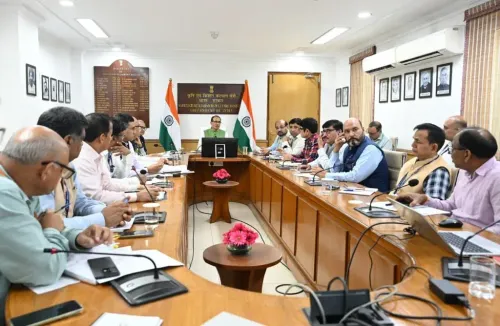
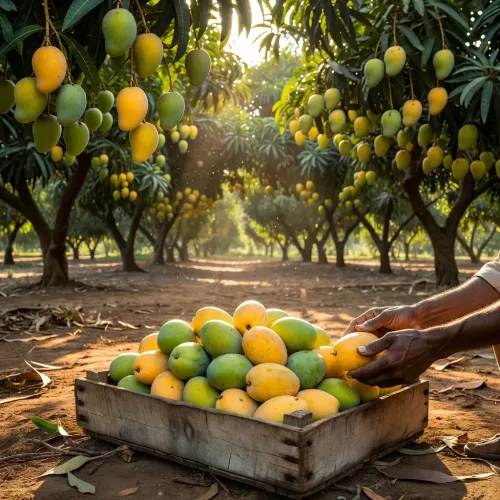
Shivraj Singh Chouhan Reviews Nagpur's Citrus Research Push
Synopsis
Union Agriculture Minister Shivraj Singh Chouhan toured citrus research work in Nagpur on 26 September 2026, observing experiments on new varieties, disease prevention, and export-quality production across oranges, lemons, mosambi, and kinnow.
Key Takeaways
Union Agriculture Minister Shivraj Singh Chouhan visited Nagpur on 26 September 2026 to review ongoing citrus research.
Research observed covers four crops: santra (orange), nimbu (lemon), mausami (sweet lime), and kinnow .
Focus areas include new variety development, yield improvement, disease prevention, and export-quality fruit .
Nagpur serves as India's primary hub for citrus R&D and extension work.
India's National Horticulture Mission , launched in 2005 , underpins the long-running push for citrus productivity and quality.
The visit may signal forthcoming new variety notifications or export-facilitation measures from the agriculture ministry.
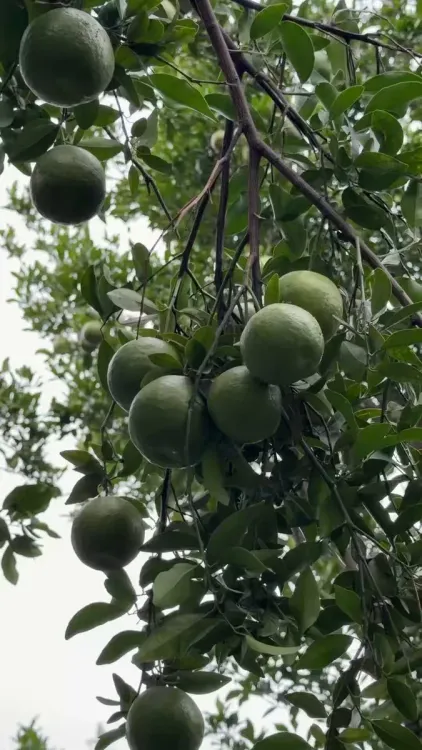
Nagpur's famous citrus belt is quietly staging a scientific makeover — and Union Agriculture Minister Shivraj Singh Chouhan came to see it firsthand on Saturday, 26 September 2026. The minister toured research work on crops including oranges, lemons, mosambi, and kinnow, observing experiments aimed at new varieties, higher yields, disease resistance, and export-ready fruit quality.
Posting on X, Chouhan wrote: 'Nagpur mein santra, nimbu, mausami aur kinu jaisi faslon par ho rahe naye prayogon ko dekha' — 'I witnessed the new experiments being conducted on crops such as oranges, lemons, mosambi, and kinnow in Nagpur. Better work is being done here on new varieties, improved production, disease prevention, and export of good-quality fruit.'
Why Nagpur's Citrus Belt Commands National Attention
Nagpur is India's most recognised citrus hub, synonymous globally with its mandarin orange. The city and its surrounding Vidarbha region have for decades anchored India's citrus research and extension ecosystem, drawing scientists, growers, and policymakers alike. The concentration of R&D infrastructure here makes it a natural testing ground for variety development and disease-management protocols.
India's horticulture policy framework has been building toward exactly this kind of work since the National Horticulture Mission was launched in 2005, with a mandate to improve production, productivity, and quality across citrus and other horticultural crops. Successive governments have reinforced the push, tying it increasingly to export ambitions and quality standardisation.
Four Crops, One Common Ambition: Export-Ready Quality
The minister's mention of four distinct crops — santra (orange), nimbu (lemon), mausami (sweet lime), and kinnow (a mandarin hybrid) — signals that Nagpur's researchers are not working on a single commodity but building a broad citrus portfolio. Each crop carries different market dynamics and disease challenges; developing new varieties and disease-prevention protocols across all four simultaneously reflects an industrialised approach to horticulture R&D.
The export angle is telling. Indian citrus has historically struggled to meet the phytosanitary and quality benchmarks demanded by high-value international markets. Work on post-harvest quality and variety selection is directly aimed at closing that gap — turning domestic abundance into competitive export supply.
What the Minister's Field Visit Signals
Ministerial field visits to research stations carry practical weight: they typically precede funding decisions, new variety notifications, or export-facilitation announcements. Chouhan, who also holds the Rural Development portfolio, has consistently used on-ground inspections to spotlight work before converting visibility into policy action. The agriculture sector should watch for any new citrus variety notifications or export-linked quality standards from the ministry in the weeks ahead.
For citrus growers and fruit exporters alike, the signal from Nagpur is clear: the centre's attention is on the orchard, and it is asking whether Indian citrus is ready for the world's shelves.
Point of View
The ministry signals an intent to build a diversified citrus export portfolio rather than relying on Nagpur oranges alone. The export-quality emphasis reflects a broader government push to move Indian horticulture up the value chain, reducing dependence on bulk low-value sales. Watch for the agriculture ministry's next round of variety notifications and quality-standard circulars as the likely downstream output of this inspection.
NationPress
26 Sept 2026
Frequently Asked Questions
Why is Nagpur famous for citrus farming in India?
Nagpur is India's most recognised citrus production hub, known particularly for its mandarin oranges. The city's agro-climatic conditions and long-established R&D infrastructure make it the country's primary centre for citrus variety development, disease research, and extension work.
What did Shivraj Singh Chouhan do in Nagpur on 26 September 2026?
Union Agriculture Minister Shivraj Singh Chouhan visited Nagpur to observe new research experiments on citrus crops including oranges, lemons, mosambi, and kinnow, focusing on new varieties, better production, disease prevention, and export-quality fruit.
What is the National Horticulture Mission?
The National Horticulture Mission was launched in 2005 to promote the production, productivity, and quality of horticultural crops across India, including citrus fruits. It provides the policy and funding framework for the kind of R&D work being conducted in Nagpur.
What is kinnow and how is it different from a regular orange?
Kinnow is a high-yield mandarin hybrid widely grown in northern and western India. It differs from the Nagpur mandarin in its growing regions and slightly different flavour profile, but both are major targets of India's citrus export and variety-development programmes.
What could follow Chouhan's visit to Nagpur's citrus research centres?
Ministerial field visits to agricultural research stations in India frequently precede funding decisions, new crop variety notifications, or export-facilitation announcements. Observers should watch for fresh citrus variety releases or quality-standard updates from the Union Agriculture Ministry .