CM Siddaramaiah inaugurates Mandal Report 36th anniversary event
Synopsis
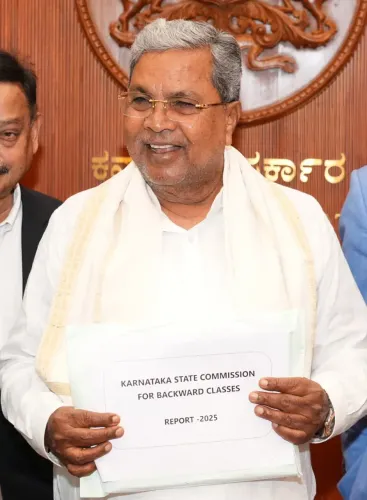
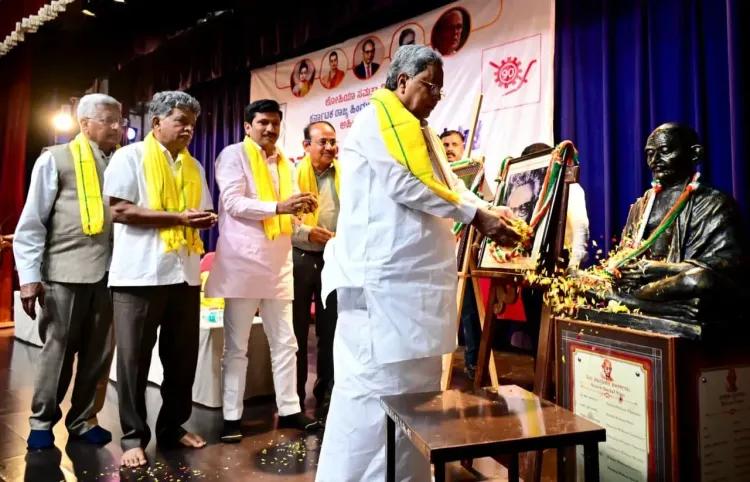
Karnataka CM Siddaramaiah inaugurated the Social Justice Day and 36th Anniversary of Mandal Report Implementation event in Bengaluru on August 7, 2026, organised by Lohia Samata Vidyalaya and the Karnataka State Backward Classes Federation, recalling India's social justice history before senior advocates and OBC leaders.
Key Takeaways
CM Siddaramaiah inaugurated the 'Social Justice Day and 36th Anniversary of Mandal Report Implementation' event on August 7, 2026 .
The event was organised by Lohia Samata Vidyalaya under the Karnataka State Backward Classes Federation.
The Mandal Commission recommended 27% OBC reservations in 1980; the V.P.
Singh government implemented them in August 1990 .
Senior advocate Prof.
Ravivarma Kumar , federation president Ramachandrappa , and former MP Narayana Swamy attended the ceremony.
Siddaramaiah recalled India's social justice history in his address, reinforcing the Karnataka Congress government's OBC welfare positioning.
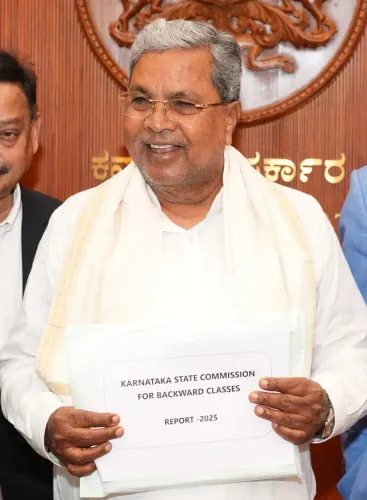
Thirty-six years after the Mandal Commission report reshaped India's affirmative action landscape, Karnataka Chief Minister Siddaramaiah stood before an audience of backward class leaders and jurists on Friday, August 7, 2026, to inaugurate the 'Social Justice Day and 36th Anniversary of Mandal Report Implementation' — a ceremony that places the state's most prominent Congress leader squarely at the centre of the OBC rights conversation.
What the Bengaluru gathering brought together
The event was organised by Lohia Samata Vidyalaya under the auspices of the Karnataka State Backward Classes Federation. The institution draws its identity from the socialist philosophy of Ram Manohar Lohia, whose lifelong campaign for caste equality made him a foundational figure for OBC politics in India.
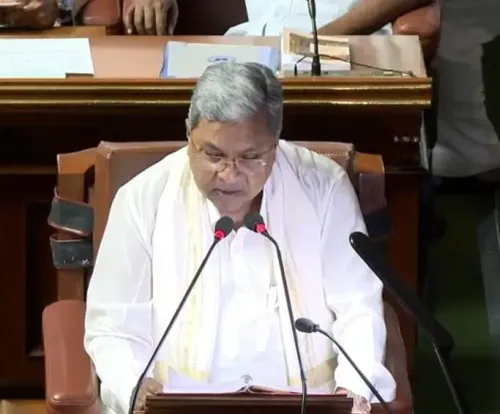
Sharing the stage with the Chief Minister were Prof. Ravivarma Kumar, senior advocate and Dharmadarshi (trustee) of Lohia Samata Vidyalaya; Ramachandrappa, president of the Karnataka State Backward Classes Federation; and former parliamentarian Narayana Swamy, along with other dignitaries. Siddaramaiah recalled the history of social justice in the country during his address.
The Mandal moment this anniversary marks
The Mandal Commission, constituted in 1979, submitted its report in December 1980 recommending 27% reservations for Other Backward Classes in central government jobs and educational institutions. For nearly a decade the report gathered dust — until the V.P. Singh government implemented those reservations in August 1990, triggering nationwide protests and permanently altering India's political arithmetic.
That August 1990 decision is the clock this anniversary runs on. Thirty-six years of OBC reservations in central institutions is the milestone being marked — and the politics of who shows up to mark it are rarely accidental.
Why Siddaramaiah's presence signals more than ceremony
Karnataka's Congress government has consistently positioned itself as a champion of backward class welfare, and Siddaramaiah — himself from the Kuruba community, listed among Karnataka's OBCs — carries personal credibility on this terrain. State leaders from parties with strong backward class support routinely participate in Mandal commemorations to reinforce that commitment, but the timing also intersects with live debates: Karnataka has been navigating its own OBC sub-categorisation questions, and any Supreme Court movement on related reservation matters will land directly on the state government's desk.
The gathering of a senior advocate, a federation president, and a former MP alongside the Chief Minister signals that this was more than a flag-hoisting — it was a political stocktaking of where the Mandal promise stands three and a half decades on.
The fight for OBC rights did not end in 1990. If anything, the next chapter — sub-categorisation, creamy layer revision, state-level quota expansions — is still being written, and Karnataka's Chief Minister just made clear which side of the pen he intends to hold.
Point of View
Now 36 years old in implementation, is entering a contested second phase where courts and state legislatures will decide how reservations are distributed within the OBC category itself. By aligning with Lohia Samata Vidyalaya's socialist legacy and the Karnataka State Backward Classes Federation, the Chief Minister signals continuity with the foundational logic of affirmative action while positioning Congress as its most reliable custodian in the state. The gathering of legal, legislative, and civil society voices in one room suggests the party is building a coalition narrative around OBC rights, not just marking a calendar date.
NationPress
22 Sept 2026
Frequently Asked Questions
What is the Mandal Commission and why is its 36th anniversary being celebrated in 2026?
The Mandal Commission was set up in 1979 and submitted its report in December 1980, recommending 27% reservations for Other Backward Classes in central government jobs and education. The V.P. Singh government implemented these reservations in August 1990, and 2026 marks the 36th year of that implementation — the milestone being commemorated at this event.
What is Lohia Samata Vidyalaya?
Lohia Samata Vidyalaya is an institution inspired by the socialist philosophy of Ram Manohar Lohia, who championed caste equality and OBC rights. It organised the Social Justice Day event under the auspices of the Karnataka State Backward Classes Federation.
Who is Prof. Ravivarma Kumar?
Prof. Ravivarma Kumar is a senior advocate who serves as Dharmadarshi (trustee) of Lohia Samata Vidyalaya. He was among the dignitaries present at the event alongside CM Siddaramaiah.
What did CM Siddaramaiah say at the Social Justice Day event?
Siddaramaiah recalled the history of social justice in India during his address at the event. The exact content of his speech has not been independently detailed beyond what was shared in his post.
What is the Karnataka State Backward Classes Federation?
The Karnataka State Backward Classes Federation is a state-level body that advocates for OBC rights and organises events around the Mandal report's implementation and social justice themes.