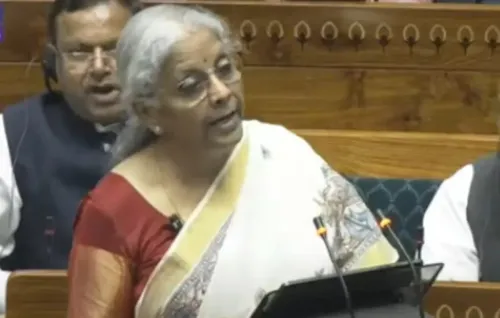
Sitharaman: 2,100+ medical colleges, 1.3 lakh MBBS seats added in 12 years

Synopsis
Finance Minister Nirmala Sitharaman, speaking at the NDTV Profit Business Leadership Awards 2026, said India now has over 2,100 medical colleges and has added more than 1.30 lakh MBBS and 85,800 postgraduate seats in 12 years, framing the expansion as central to the Viksit Bharat vision.
Key Takeaways
More than 2,100 medical colleges are now operational across India, according to Finance Minister Nirmala Sitharaman .
Over 1.30 lakh MBBS seats have been added in the past 12 years .
85,800 postgraduate medical seats have also been added in the same period, aimed at addressing specialist shortages.
The government's stated goal is to enable students to pursue medical education closer to their hometowns.
The National Medical Commission , set up in 2020, replaced the Medical Council of India and has streamlined approvals for new colleges.
The expansion aligns with the Pradhan Mantri Swasthya Suraksha Yojana , which funds new AIIMS institutions and college upgrades.
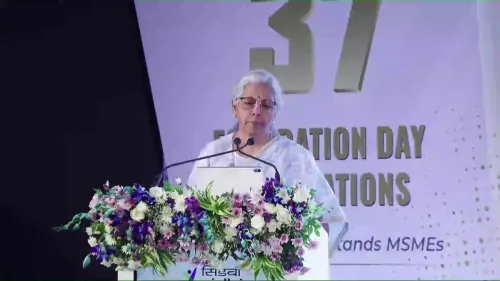
Union Finance Minister Nirmala Sitharaman on Sunday, 26 July 2026 highlighted the government's expansion of medical education infrastructure, citing the addition of over 1.30 lakh MBBS seats and 85,800 postgraduate medical seats in the past 12 years, while addressing the NDTV Profit Business Leadership Awards 2026.
Context
Speaking at the awards event, Sitharaman underscored the government's intent to make medical education accessible closer to students' home regions. She noted that more than 2,100 medical colleges are now operational across India, a figure the government attributes to sustained regulatory and budgetary interventions over the past decade-plus. 'We are ensuring that our students aspiring to be doctors are able to get admission in a medical college, especially near their hometowns,' she said.
The remarks come amid continued public debate over the availability and distribution of medical seats, particularly in smaller cities and states that have historically been underserved by high-quality health-education infrastructure.
Policy Backdrop
The expansion of medical education capacity has been a declared policy priority since 2014, pursued through successive phases of the Pradhan Mantri Swasthya Suraksha Yojana (PMSSY), which funds the establishment of new AIIMS-type institutions and upgrades to existing government medical colleges. The National Medical Commission (NMC), established in 2020 under the National Medical Commission Act, 2019, replaced the erstwhile Medical Council of India as the statutory regulator, with a mandate to modernise curricula, improve admission transparency, and enable faster approvals for new colleges.
The dissolution of the Medical Council of India in 2020 followed years of criticism over opaque seat-allocation practices and uneven geographic distribution of colleges. The NMC's streamlined framework is credited by the government with accelerating the pace of new college approvals and seat additions.
Stakeholders and Impact
The primary beneficiaries of this expansion are aspirants appearing in the National Eligibility cum Entrance Test (NEET), particularly those from Tier-2 and Tier-3 cities and rural districts who previously had to relocate to metropolitan centres for medical education. A larger seat matrix also eases competitive pressure in a system where lakhs of students compete for limited undergraduate and postgraduate berths each year.
For the health system more broadly, the addition of 85,800 postgraduate seats is significant: specialist shortages at district hospitals have long been a structural weakness in public healthcare delivery. A larger pipeline of trained specialists is expected to gradually address gaps at the secondary and tertiary care levels, especially in aspirational districts.
State governments, which operate the majority of government medical colleges, are co-stakeholders in this expansion. Central funding through PMSSY and tied grants has enabled several states to add new colleges and upgrade existing facilities that would otherwise have been financially out of reach.
What's Next
Attention will now turn to the next Union Budget and any fresh directives from the National Medical Commission on the seat matrix and admission counselling calendar. Sitharaman's remarks signal that medical education expansion will remain a talking point as the government frames its development narrative. 'Our students want a developed India and we will build it along with them,' she said, tying the education push to the broader Viksit Bharat vision. Whether the pace of seat addition translates into proportionate improvement in healthcare access on the ground will be the metric that analysts and civil society groups will watch most closely in the months ahead.
Point of View
A narrative that serves a dual purpose: defending health-sector spending ahead of budget deliberations and countering opposition criticism over NEET-related controversies. The emphasis on hometown accessibility is a deliberate political signal to students and parents in non-metro constituencies who form a significant voter bloc. Tying the data to the 'Viksit Bharat' slogan also anchors a sectoral achievement within the government's overarching 2047 development framework. The proof of impact, however, will lie in whether seat additions translate into equitable doctor distribution rather than concentration in already-served urban areas.
NationPress
26 Jul 2026
Frequently Asked Questions
How many MBBS seats have been added in India in the last 12 years?
According to Finance Minister Nirmala Sitharaman, more than 1.30 lakh MBBS seats have been added across India over the past 12 years.
How many medical colleges are there in India in 2026?
Sitharaman stated that more than 2,100 medical colleges are now operating across India as of 2026.
How many postgraduate medical seats have been added in India?
Over 85,800 postgraduate medical seats have been added in India over the past 12 years, according to the Finance Minister.
What is the National Medical Commission and what does it do?
The National Medical Commission is a statutory body established in 2020 to replace the Medical Council of India. It regulates medical education standards, approves new colleges, and oversees admission processes including the seat matrix.
What is Pradhan Mantri Swasthya Suraksha Yojana?
Pradhan Mantri Swasthya Suraksha Yojana (PMSSY) is a central government scheme launched in 2003 and significantly expanded after 2014 to fund new AIIMS-type institutions and upgrade existing government medical colleges across India.