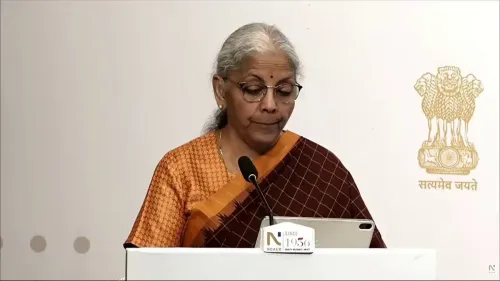
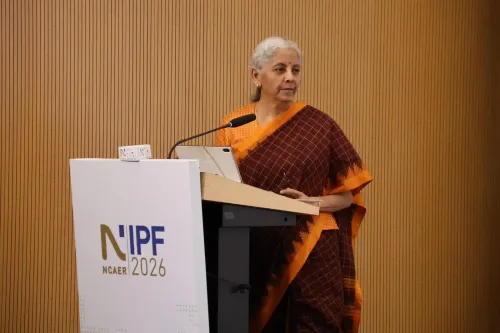
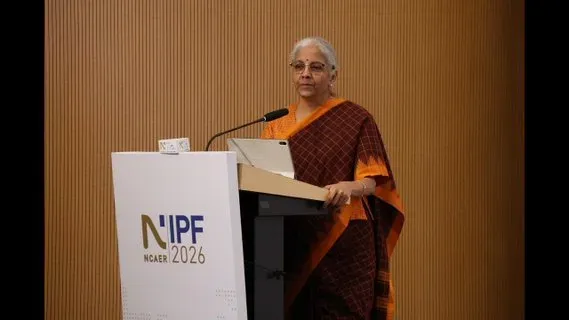
Sitharaman addresses CD Deshmukh Lecture 2026 at NCAER
Synopsis
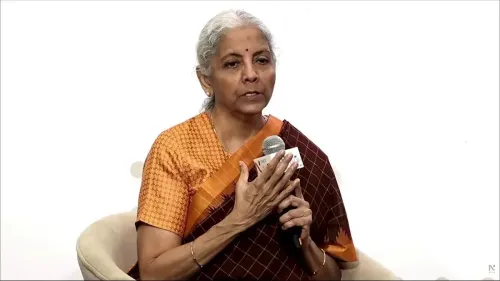
Union Finance Minister Nirmala Sitharaman addressed the CD Deshmukh Lecture 2026 at NCAER in New Delhi on 6 August, delivering a full address and participating in an open Q&A session with economists and policy researchers.
Key Takeaways
Nirmala Sitharaman delivered the CD Deshmukh Lecture 2026 at NCAER, New Delhi on 6 August 2026 .
The event included a full address followed by an open question-and-answer session with economists and researchers.
The lecture series is named after C.D.
Deshmukh , India's first Indian RBI Governor and a former Union Finance Minister.
NCAER , founded in 1956 , is an independent think tank that regularly hosts senior policymakers for economic dialogue.
The full address was shared publicly, amplified by official handles of PIB India , the Finance Ministry , and the Ministry of Information and Broadcasting .
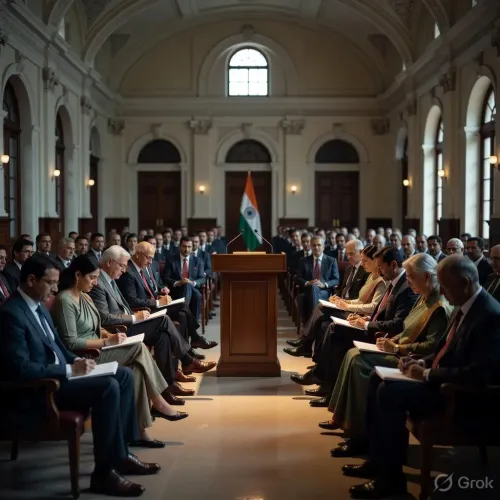
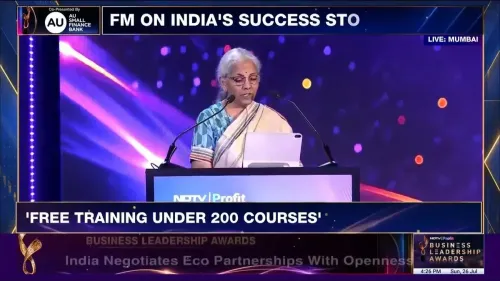
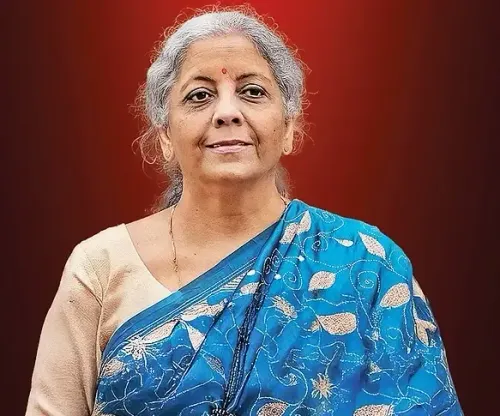
Before an audience of economists and policy researchers in New Delhi, Union Finance Minister Nirmala Sitharaman delivered the full address and took questions at the CD Deshmukh Lecture 2026, organised by the National Council of Applied Economic Research (NCAER) on 6 August 2026.
A lecture series rooted in India's financial history
The CD Deshmukh Lecture is named after Chintaman Dwarkanath Deshmukh — the first Indian Governor of the Reserve Bank of India, serving from 1943 to 1949, and later Union Finance Minister from 1950 to 1956. NCAER, established in 1956, has long served as a bridge between independent economic research and government policymaking, making it a natural home for this annual series.
The lecture carries symbolic weight: it places a sitting Finance Minister in direct conversation with the legacy of one of India's most consequential economic architects — and in front of an audience empowered to push back.
Finance Minister at the podium — and under questioning
What distinguishes the CD Deshmukh Lecture from a standard ministerial address is the open question-and-answer session that follows. Sitharaman engaged with that format in full, fielding queries from economists and researchers after her address. The Ministry's official handles — PIB India, Ministry of Information and Broadcasting, and Finance Ministry India — were tagged in the post, signalling that the address carries official weight beyond a routine public appearance.
Indian Finance Ministers have periodically used NCAER's platform to outline fiscal priorities and macroeconomic thinking outside the formal Budget cycle. A live Q&A with independent researchers offers a rare, relatively unscripted window into the Ministry's current posture.
Why the Q&A matters more than the speech
Policy analysts and market watchers routinely parse these interactions for signals that do not appear in Budget documents or official press releases. Any remarks on fiscal consolidation, growth projections, tax policy, or capital expenditure targets made during the session could feed into subsequent economic commentary and even inform RBI communications. The full recording, shared publicly via YouTube, ensures the exchange reaches well beyond the room.
Point of View
Independent economic scrutiny outside the Budget session. Sitharaman's participation continues a pattern of the Finance Ministry using NCAER's platform to signal policy thinking between Budget cycles. The open Q&A format, amplified through official government channels, suggests the Ministry is comfortable with the optics of public intellectual engagement. Analysts will comb the recording for any forward guidance on fiscal targets or growth assumptions that diverges from official Budget-day language.
NationPress
6 Aug 2026
Frequently Asked Questions
What is the CD Deshmukh Lecture organised by NCAER?
The CD Deshmukh Lecture is an annual event organised by the National Council of Applied Economic Research (NCAER) that features addresses by senior Indian policymakers on economic and developmental issues. It is named after C.D. Deshmukh, India's first Indian RBI Governor and a former Union Finance Minister.
Who is C.D. Deshmukh and why is the lecture named after him?
Chintaman Dwarkanath Deshmukh was the first Indian Governor of the Reserve Bank of India (1943-1949) and served as Union Finance Minister from 1950 to 1956. The NCAER lecture series honours his legacy as one of independent India's foundational economic architects.
What did Nirmala Sitharaman say at the CD Deshmukh Lecture 2026?
The specific content of her address has not been independently verified. The full address and Q&A session were shared publicly via YouTube by the Finance Ministry's official channels on 6 August 2026.
What is NCAER and what role does it play in Indian policymaking?
NCAER, the National Council of Applied Economic Research, is an independent think tank established in 1956. It conducts applied economic research and policy analysis, and regularly serves as a forum for dialogue between government officials and independent researchers.
Where can I watch Nirmala Sitharaman's CD Deshmukh Lecture 2026 full speech?
The Finance Ministry's official social media post shared a YouTube link to the full address and Q&A session from the CD Deshmukh Lecture 2026 on 6 August 2026.