Sitharaman Highlights Artisan Livelihoods in Tamil Nadu Craft Visit
Synopsis
Finance Minister Nirmala Sitharaman, writing in Tamil daily Dinamalar on 19 July 2026, described conversations with artisans at a Tamil Nadu tailoring studio who said stable craft employment enabled them to build homes, educate their children, and save for the future — underscoring the sector's livelihood impact.
Key Takeaways
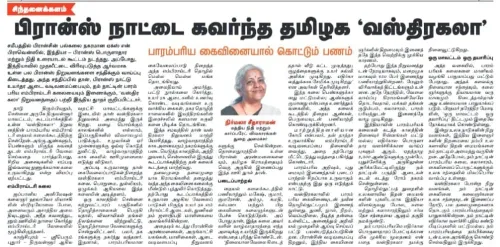
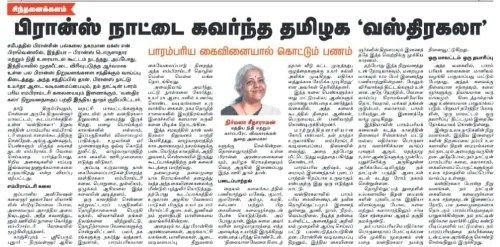
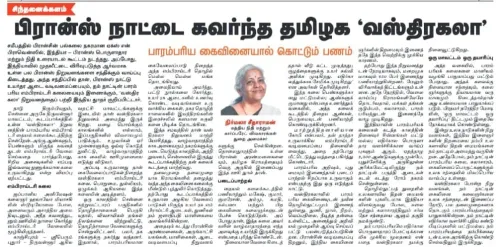
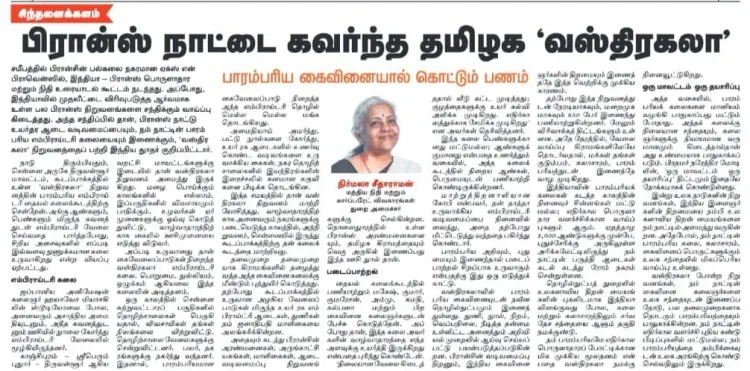
Nirmala Sitharaman published an article in Tamil daily Dinamalar on 19 July 2026 about her visit to a tailoring and craft studio in Tamil Nadu .
Artisans named Mahesh, Kumar, Kumaresan, Ammu, Sumathi, and Kalpana told her that stable craft employment allowed them to build homes, fund higher education for children, and save for the future.
The minister noted that a significant number of male artisans were working at the studio, challenging the perception that textile crafts are exclusively women's work.
The PLI scheme for textiles , launched in 2021 , forms part of the broader policy framework supporting artisans in traditional manufacturing segments.
Tamil Nadu is a leading state in India's textile sector, with craft industries serving both domestic welfare and international export goals.
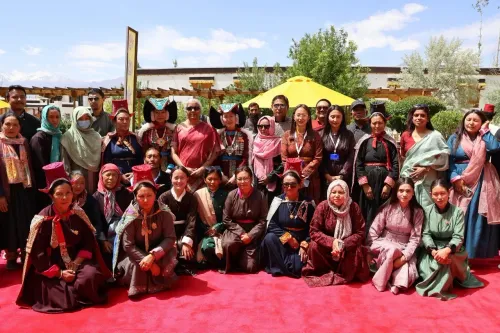
Union Finance Minister Nirmala Sitharaman on Sunday, 19 July 2026, shared her account of a visit to a tailoring and craft studio in Tamil Nadu, describing conversations with artisans whose lives have been transformed by steady employment in traditional textile crafts. Writing in a Tamil-language daily, she recounted how skilled workers — both men and women — credited their craft-based income with enabling home construction, higher education for their children, and long-term savings.
Context
In an article published in the 19 July 2026 edition of Dinamalar, a widely read Tamil-language daily, Sitharaman described her interaction with artisans named Mahesh, Kumar, Kumaresan, Ammu, Sumathi, Kalpana, and others working at a tailoring craft studio. She quoted them as saying: 'Nilaiyaana velai kidaitthadaal veedu katta mudindhadhu; kuzhanthaigalukku uyar kalvi alikka mudikindradhu. Edhirkaalaththukkaga semikka mudikindradhu' — 'Because we found stable work, we were able to build a home; we can now provide higher education to our children and save for the future.'
The minister noted that the craft studio challenged the common perception that tailoring and textile arts are exclusively women's work. She observed that a significant number of men were employed there with evident pride.
Policy Backdrop
India's handloom and textile sector has long been positioned as a vehicle for rural employment and export earnings. Tamil Nadu is among the country's leading states in textile manufacturing, with a deep-rooted tradition of weaving and garment craftsmanship that feeds both domestic and international markets.
The Production Linked Incentive (PLI) scheme for textiles, announced in 2021, was designed to expand manufacturing capacity and provide structured support to artisans in traditional segments. Successive Union Budgets under Sitharaman have emphasised employment generation in labour-intensive sectors, with handlooms and handicrafts featuring as priority areas for both welfare and export promotion.
Stakeholders and Impact
The artisans' testimonies cited by Sitharaman point to three concrete livelihood outcomes: housing security, access to higher education, and the ability to save — markers that policy planners typically associate with graduation out of economic vulnerability. The inclusion of male artisans as prominent participants in the studio also signals a shift in the demographic profile of craft-sector employment.
For Tamil Nadu's rural and semi-urban households, craft-based income has historically supplemented agricultural earnings. The minister's public account of these interactions brings renewed political attention to artisan welfare at a time when textile export promotion measures remain under active review.
What's Next
Observers will watch whether Sitharaman's on-ground engagement with craft workers translates into specific artisan-support provisions in the next Union Budget. Textile export promotion measures and the expansion of the PLI scheme's reach to smaller craft clusters are among the policy levers that could follow from such ministerial attention. The international visibility of Tamil Nadu's traditional textiles — including recent interest from markets such as France — adds an export dimension to the domestic livelihood story.
Point of View
In a Tamil daily, also signals a conscious outreach to a state where the BJP has historically struggled electorally, using the language of economic dignity rather than ideology. The emphasis on male artisan participation subtly pushes back against the narrative that craft welfare is a niche women's issue, potentially broadening the political constituency for textile-sector support. Analysts will watch whether this ground-level engagement feeds into concrete Budget provisions or remains a soft-power moment ahead of the next electoral cycle.
NationPress
19 Jul 2026
Frequently Asked Questions
Why did Nirmala Sitharaman visit a craft studio in Tamil Nadu?
Sitharaman visited a tailoring and craft studio in Tamil Nadu and wrote about the experience in Tamil daily Dinamalar on 19 July 2026, highlighting how stable craft employment has improved the livelihoods of artisans working there.
What did Tamil Nadu artisans tell Nirmala Sitharaman?
Artisans told her that steady employment in the craft sector enabled them to build homes, provide higher education to their children, and save money for the future — tangible improvements they directly attributed to their craft-based income.
What is the PLI scheme for textiles?
The Production Linked Incentive scheme for textiles was announced in 2021 to expand manufacturing capacity and provide structured support to artisans and manufacturers in traditional textile segments across India.
What is Tamil Nadu's role in India's textile industry?
Tamil Nadu is one of India's leading states in textile manufacturing, with a deep tradition of weaving and garment craftsmanship that contributes significantly to national craft production and export earnings.
Is tailoring and textile craft work only for women in India?
Sitharaman specifically noted in her Dinamalar article that a significant number of male artisans were working with pride at the Tamil Nadu craft studio she visited, challenging the common perception that textile crafts are exclusively women's work.