Sitharaman in Madurai: India has 2,100 GCCs, UPI hits 20bn monthly

Synopsis
Union Finance Minister Nirmala Sitharaman, speaking in Madurai on 18 July 2026, said India has over 2,100 GCCs expanding beyond metros and UPI is processing more than 20 billion transactions monthly, framing digital infrastructure as the great equaliser for ambitious Indians.
Key Takeaways
Union Finance Minister Nirmala Sitharaman made the remarks at an event in Madurai, Tamil Nadu on 18 July 2026 .
India now has over 2,100 Global Capability Centres (GCCs) , with growth accelerating beyond traditional metro cities.
UPI is processing more than 20 billion transactions every month , according to Sitharaman.
India's Digital Public Infrastructure (DPI) has been described as 'an international benchmark,' backed by formal G20 endorsement in 2023 .
Sitharaman said geography matters less than 'the imagination to use available technology,' signalling a policy push for non-metro talent inclusion.
Further GCC incentives and UPI export agreements are expected to feature in upcoming budget and bilateral discussions.
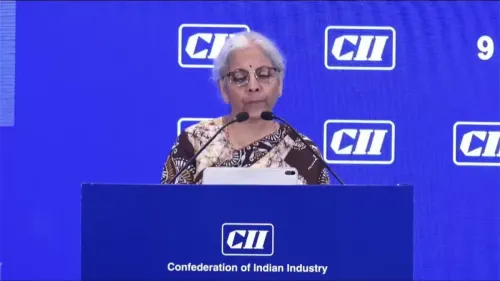
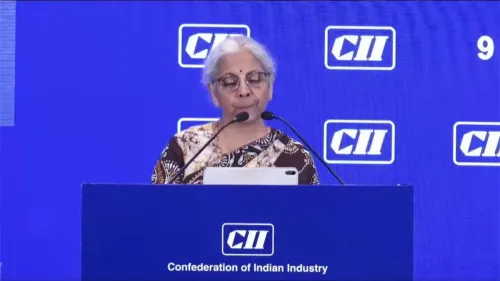
Union Finance Minister Nirmala Sitharaman on Saturday, 18 July 2026, speaking at an event in Madurai, Tamil Nadu, highlighted India's expanding digital economy, pointing to more than 2,100 Global Capability Centres (GCCs) now operating beyond metro cities and UPI processing over 20 billion transactions every month.
Context
Addressing an audience in Madurai — itself a symbol of non-metro ambition — Sitharaman underscored that India's digital public infrastructure has become 'an international benchmark.' She noted that geography still matters, but 'the imagination to use available technology matters far more,' signalling a shift in how policymakers frame opportunity for Indians outside major urban centres.
The choice of Madurai as the venue was pointed: the city sits in the heartland of Tamil Nadu, a state that has emerged as a significant destination for technology investment beyond the traditional hubs of Bengaluru, Hyderabad, and Pune.
Policy Backdrop
India's Unified Payments Interface (UPI), operated by the National Payments Corporation of India (NPCI), was launched in 2016 and has since become the backbone of the country's real-time digital payments ecosystem. Successive Union Budgets — notably 2023-24 and 2024-25 — have carried explicit provisions to incentivise GCC expansion into tier-2 and tier-3 cities, treating decentralisation of high-value employment as a strategic economic goal.
India's broader Digital Public Infrastructure (DPI) stack — encompassing Aadhaar, UPI, DigiLocker, and allied platforms — received formal multilateral endorsement during India's G20 presidency in 2023, positioning the country as a supplier of replicable digital governance models to the developing world.
GCCs are captive offshore centres of multinational corporations delivering IT, research and development, engineering, and analytics services. Their expansion beyond metros represents both a jobs-decentralisation push and a signal of deepening global confidence in India's talent pool outside the top six cities.
Stakeholders and Impact
The remarks carry direct relevance for technology professionals, GCC employees, and first-generation entrepreneurs in smaller Indian cities who have historically faced structural disadvantages in accessing high-quality employment. Sitharaman framed this as a dismantling of barriers: 'The barriers that once separated talent from opportunity are steadily diminishing.'
For multinational firms operating or planning GCCs in India, the Finance Minister's public emphasis on tier-2 and tier-3 expansion reinforces the government's policy direction and may be read as a precursor to further regulatory or fiscal incentives. State governments in southern and central India are already competing aggressively to attract GCC investments with land, infrastructure, and talent pipeline commitments.
What's Next
Observers will watch the next Union Budget for fresh GCC-related incentives, possible regulatory relaxations for captive centres in smaller cities, and additional bilateral or multilateral agreements for UPI and DPI exports. India has already signed interoperability agreements with several countries for UPI acceptance abroad, and the government has been actively marketing its DPI framework to partner nations.
With Sitharaman explicitly tying digital infrastructure to entrepreneurial opportunity for 'ambitious Indians,' the speech sets a political and policy marker ahead of what could be a significant budget cycle for the technology and fintech sectors.
Point of View
The Finance Ministry is simultaneously courting southern India's professional class and reinforcing the government's decentralisation narrative ahead of a budget cycle. The emphasis on GCC expansion beyond metros and UPI's transaction volumes serves a dual purpose — it validates past policy choices while building the case for fresh incentives. Framing digital infrastructure as a barrier-breaker for 'ambitious Indians' is consistent with the BJP's broader effort to associate economic mobility with the post-2014 policy architecture. The speech also subtly positions India's DPI stack as a sovereign export asset, aligning domestic messaging with the government's ongoing diplomatic push to sell the UPI-Aadhaar model to developing nations.
NationPress
18 Jul 2026
Frequently Asked Questions
How many Global Capability Centres does India have in 2026?
According to Finance Minister Nirmala Sitharaman's speech in Madurai on 18 July 2026, India has over 2,100 Global Capability Centres (GCCs), with many now operating beyond traditional metro cities.
How many UPI transactions happen every month in India?
Sitharaman stated that UPI is processing more than 20 billion transactions every month, reflecting the scale of India's real-time digital payments ecosystem.
What is India's Digital Public Infrastructure (DPI)?
India's Digital Public Infrastructure is a stack of platforms including Aadhaar, UPI, and DigiLocker that enables digital identity, payments, and document verification. It received formal international recognition during India's G20 presidency in 2023.
Why did Nirmala Sitharaman speak in Madurai about GCCs?
Sitharaman chose Madurai — a major non-metro city in Tamil Nadu — to highlight that GCC growth and digital opportunity are no longer confined to cities like Bengaluru or Hyderabad, reinforcing the government's push for economic decentralisation.
What are Global Capability Centres (GCCs) in India?
GCCs are captive offshore centres set up by multinational corporations in India to deliver IT, R&D, engineering, and analytics services. They are a major source of high-value employment and have been expanding into smaller Indian cities in recent years.