Sitharaman: India's GCC appeal grows, cites Air Liquide Pune
Synopsis
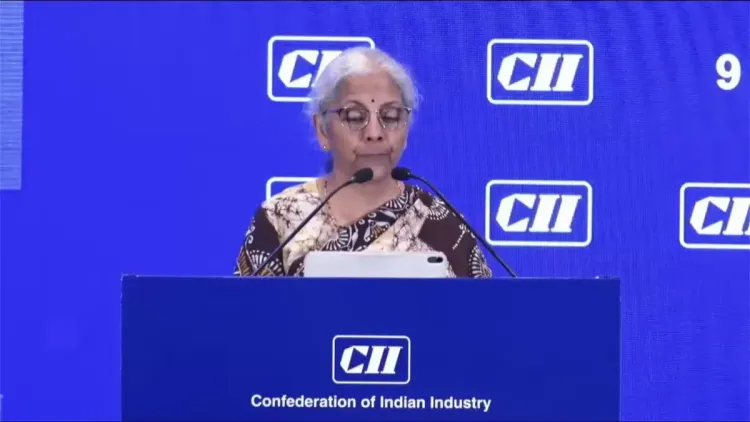
Finance Minister Nirmala Sitharaman, speaking at the CII National GCC Business Summit 2026, said investors she met in France and globally are expanding Global Capability Centres in India. She cited Air Liquide's Pune GCC and called on industry to sustain the policy feedback dialogue to keep India a top long-term investment destination.
Key Takeaways
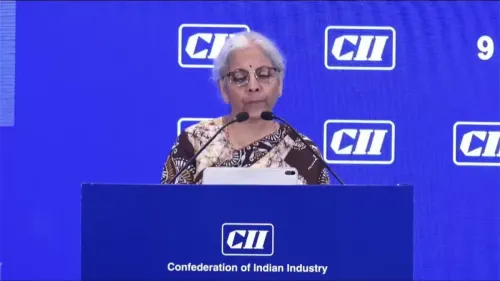
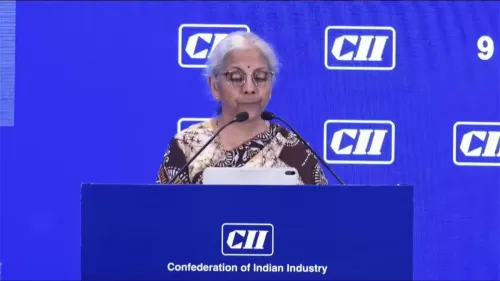
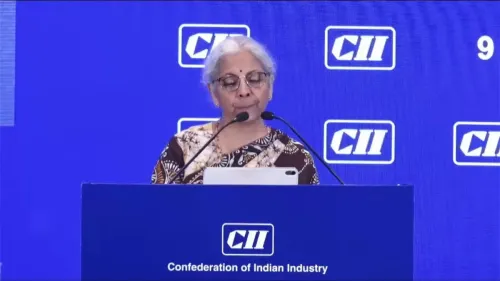
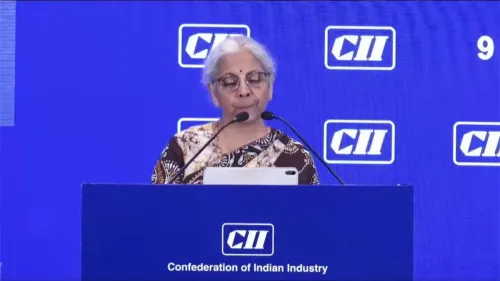
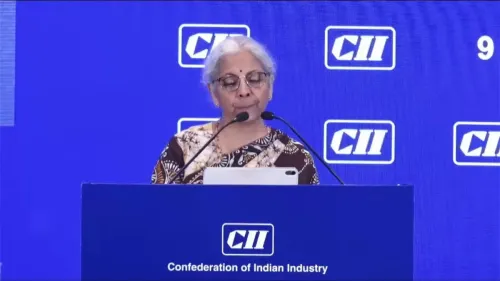
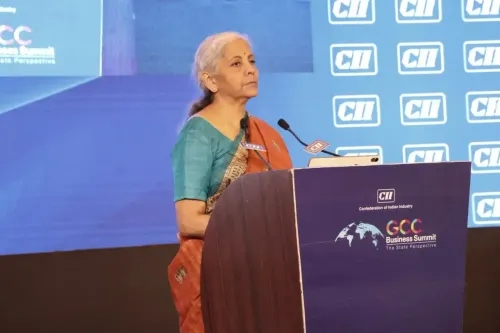
Nirmala Sitharaman addressed the CII National GCC Business Summit 2026 on 9 July 2026 , highlighting India's growing appeal as a GCC destination.
The minister cited Air Liquide's GCC in Pune as a concrete example of French corporate investment in India's capability centre ecosystem.
She noted that global investors she met, including during a recent trip to France , are either already operating GCCs in India or actively exploring one.
Sitharaman described industry summits as a feedback mechanism to identify emerging challenges and refine policy for long-term FDI.
India's GCC strength rests on its talent base, innovation capabilities and policy environment , according to the minister.
Future Union Budget provisions and state-level policies in Maharashtra, Karnataka and Telangana are expected to reflect GCC-focused priorities.
Union Finance Minister Nirmala Sitharaman on Thursday, 9 July 2026 addressed the CII National GCC Business Summit 2026, saying that global investors she has met — including during a recent visit to France — are either already running Global Capability Centres in India or are actively exploring setting one up.
Context
Speaking at the summit, the minister noted that Air Liquide, the French multinational industrial gases company, has established a GCC in Pune — citing it as a concrete example of the trend she observes in her investor interactions. She said these experiences 'reinforce the confidence that our talent base, innovation capabilities and policy environment continue to make India an attractive long-term partner.'
The minister called on industry participants to remain active partners in the dialogue, describing the feedback loop between government and investors as a mechanism to 'identify emerging challenges and refine policy so that India remains an attractive destination for long-term investments.'
Policy Backdrop
Global Capability Centres are units set up by multinational firms in India for functions such as research and development, information technology, analytics and back-office operations. India's GCC ecosystem expanded significantly following services-sector FDI liberalisation in the 2000s, and received further institutional push with the launch of the Make in India initiative in 2014.
Pune has emerged as a significant GCC hub alongside Bengaluru and Hyderabad, attracting engineering and technology centres from European and American multinationals. The Confederation of Indian Industry (CII), which organised the summit, has played a consistent role in facilitating structured dialogue between the government and global investors on investment climate issues.
France is a strategic partner of India with a growing corporate footprint across technology, manufacturing and services. The minister's reference to recent interactions in France signals continued high-level bilateral engagement on investment facilitation.
Stakeholders and Impact
The primary beneficiaries of GCC expansion are Indian technology and engineering talent, who gain high-quality employment with global firms without relocating abroad. State governments — particularly in Maharashtra, Karnataka and Telangana — compete actively to host GCCs through land, infrastructure and single-window clearance incentives.
For multinational corporations, India's combination of a large English-speaking graduate workforce, competitive costs and improving regulatory predictability makes GCC expansion a lower-risk route to accessing innovation capacity. The minister's remarks signal that the Centre views investor feedback gathered at such summits as actionable intelligence for policy refinement, not merely ceremonial engagement.
What's Next
Observers will watch whether the next Union Budget includes specific fiscal incentives or single-window clearance provisions targeted at GCC investors, given the minister's explicit acknowledgement of the feedback-to-policy pipeline. State-level policy updates in Maharashtra, Karnataka and Telangana on GCC facilitation are also likely to follow the momentum generated by the summit. India's ability to sustain its GCC attractiveness will depend on how swiftly identified challenges — regulatory, infrastructure or talent-related — are translated into concrete policy action.
Point of View
Especially as firms diversify away from single-country dependencies. By naming a specific French company — Air Liquide in Pune — she grounds what could be abstract investment rhetoric in a verifiable, bilateral context. The explicit framing of industry feedback as a policy-refinement tool signals that the government is aware of friction points in the GCC ecosystem and is managing expectations ahead of the next Budget cycle. This positions the Finance Ministry as responsive rather than merely promotional, a distinction that matters to long-horizon institutional investors.
NationPress
9 Jul 2026
Frequently Asked Questions
What is a Global Capability Centre (GCC) in India?
A Global Capability Centre is an offshore unit set up by a multinational company in India to handle functions such as IT, R&D, analytics and back-office operations. India hosts hundreds of GCCs owing to its large English-speaking technical workforce and competitive operating costs.
What did Nirmala Sitharaman say at the CII GCC Summit 2026?
She said that investors she met globally, including recently in France, are either already running GCCs in India or exploring setting one up. She cited Air Liquide's GCC in Pune as an example and urged industry to keep providing feedback to help the government refine policy.
Which company's GCC in Pune did Sitharaman mention?
She specifically mentioned Air Liquide , a French multinational industrial gases company, which has established a Global Capability Centre in Pune.
Why is Pune significant for GCCs in India?
Pune has emerged as a major GCC hub alongside Bengaluru and Hyderabad, attracting engineering and technology centres from European and American multinationals due to its large talent pool and infrastructure.
How does the government use industry feedback on GCCs?
According to the minister, feedback from investors at summits like the CII GCC Summit helps the government identify emerging challenges and refine policies to keep India competitive as a long-term investment destination.