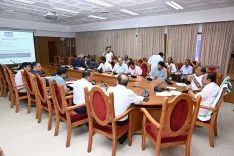
Sitharaman Marks Partition Horrors Remembrance Day
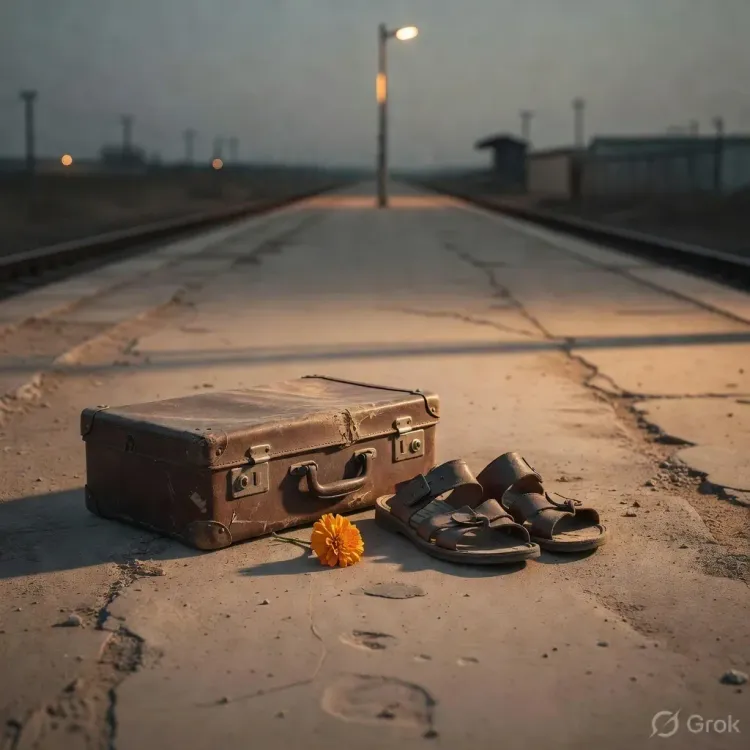
Synopsis
On Partition Horrors Remembrance Day, Finance Minister Nirmala Sitharaman paid solemn tribute to the millions displaced and killed in the 1947 Partition of India, marking the annual observance declared by the Government of India in 2021.
Key Takeaways
Nirmala Sitharaman posted a solemn tribute on 14 August 2026 for Partition Horrors Remembrance Day .
The Partition of 1947 displaced an estimated 10–20 million people and caused deaths in the hundreds of thousands.
Partition Horrors Remembrance Day was declared by the Ministry of Home Affairs in August 2021 following an announcement by PM Narendra Modi .
The observance falls on 14 August — the eve of Independence Day — linking grief and national celebration on the same calendar date.
Annual remembrance has become a whole-of-government practice since 2021, with senior ministers consistently marking the day.
Seventy-nine years after one of history's most wrenching human displacements, Union Finance Minister Nirmala Sitharaman joined the nation in solemn remembrance on 14 August 2026, paying tribute to the millions whose lives were shattered by the Partition of 1947.
In her post, the Finance Minister wrote: 'On Partition Horrors Remembrance Day, we remember the countless people whose lives were deeply affected by the Partition of 1947. Families were separated, homes were left behind and many lives were lost during a difficult chapter in our history. Today, we pay our respects to those who suffered and remember their stories with solemnity.'
A day born from the weight of 1947
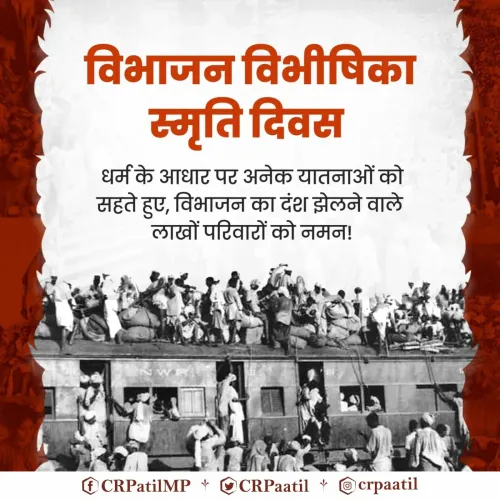
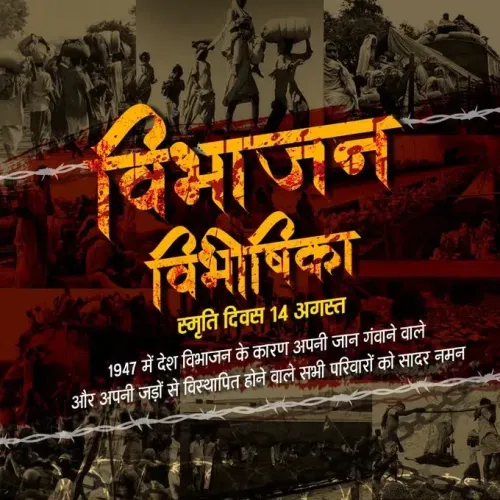
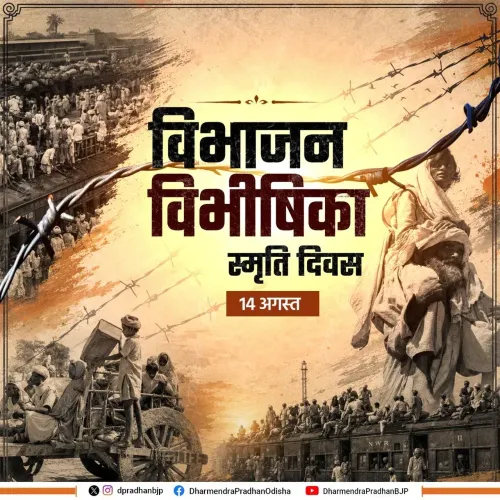
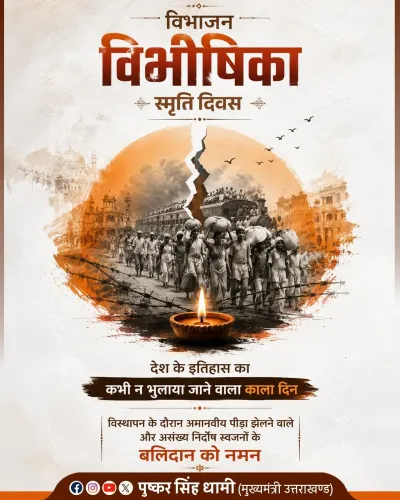
The Partition of British India on 14–15 August 1947 triggered one of the largest forced migrations in recorded history — an estimated 10 to 20 million people displaced, and deaths in the hundreds of thousands amid communal violence that convulsed the subcontinent. Entire families were cleaved across the new borders of India and Pakistan, leaving behind homes, livelihoods, and graves of ancestors.
The formal act of remembrance is relatively recent. In August 2021, the Ministry of Home Affairs issued a notification declaring 14 August as Partition Horrors Remembrance Day, following an announcement by Prime Minister Narendra Modi. The date — the eve of Independence Day — was chosen deliberately, placing grief and gratitude side by side on the national calendar.
State-led memory and the long arc of commemoration
Since 2021, the central government has institutionalised this annual observance through official statements, exhibitions, and educational references — part of a broader state effort to inscribe 20th-century trauma into public consciousness alongside days marking the Quit India Movement and the Jallianwala Bagh massacre. Senior ministers across portfolios have consistently issued messages on 14 August, signalling that the remembrance is treated as a whole-of-government commemoration rather than a partisan gesture.
Sitharaman's message this year follows that established pattern — restrained, respectful, and anchored in the human cost of partition rather than its political dimensions.
As long as survivors and their descendants carry these memories forward, the stories of 1947 remain unfinished — and India's formal act of remembrance ensures the nation does not look away.
Point of View
Consistent with those of fellow senior ministers, reflects a whole-of-government approach to the observance rather than an individual political statement. The choice of 14 August — the eve of Independence Day — frames Partition not as a footnote to freedom but as its dark, inseparable twin. Over time, the annual cadence of such messages, if accompanied by curriculum integration and archival outreach, could shape how younger generations understand the human geography of 1947.
NationPress
14 Aug 2026
Frequently Asked Questions
What is Partition Horrors Remembrance Day?
Partition Horrors Remembrance Day is an annual observance on 14 August declared by the Government of India in 2021 to commemorate the suffering caused by the division of British India in 1947, which displaced millions and resulted in widespread communal violence.
When was Partition Horrors Remembrance Day declared?
The Ministry of Home Affairs issued a notification in August 2021 declaring 14 August as Partition Horrors Remembrance Day, following an announcement by Prime Minister Narendra Modi .
How many people were affected by the 1947 Partition of India?
Historians estimate that the Partition of 1947 displaced between 10 and 20 million people and caused deaths in the hundreds of thousands amid large-scale communal violence across the subcontinent.
Why is Partition Horrors Remembrance Day observed on 14 August?
14 August — the eve of India's Independence Day — was chosen deliberately to place the memory of Partition's suffering alongside the celebration of freedom, acknowledging that independence and displacement occurred simultaneously.
What did Nirmala Sitharaman say on Partition Horrors Remembrance Day 2026?
Finance Minister Nirmala Sitharaman posted a message honouring 'the countless people whose lives were deeply affected by the Partition of 1947,' noting that families were separated, homes were left behind and many lives were lost, and calling on the nation to remember their stories 'with solemnity.'