Sitharaman pitches specialised State GCC ecosystems at CII Summit
Synopsis
At the CII National GCC Business Summit 2026, Finance Minister Nirmala Sitharaman urged Indian states to build specialised innovation ecosystems leveraging their own competitive strengths. She cited the September 2025 State GCC Summit in Visakhapatnam as proof that India's GCC expansion must move decisively beyond traditional metro hubs.
Key Takeaways
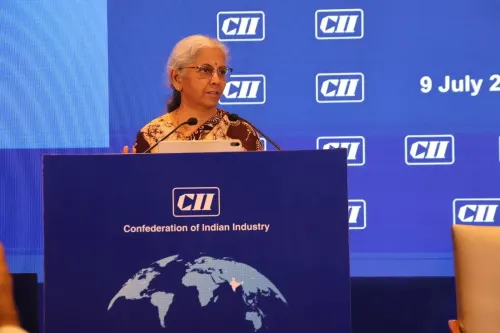
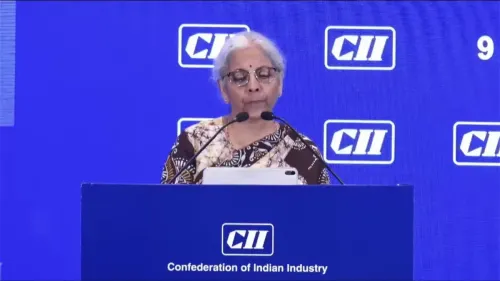
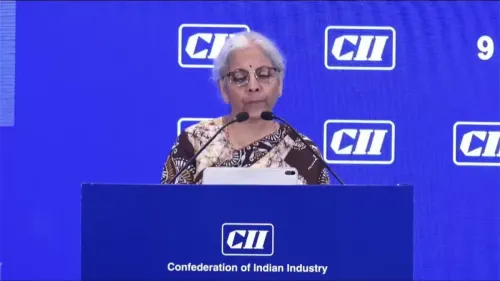
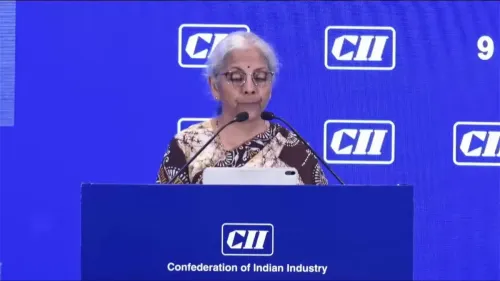
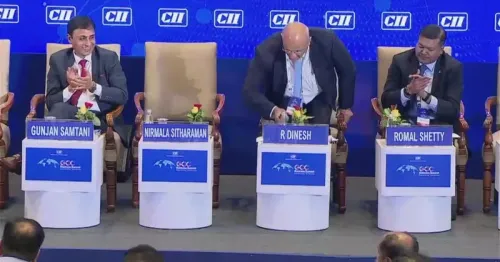
Finance Minister Nirmala Sitharaman addressed the CII National GCC Business Summit 2026 on 9 July 2026 .
She called on states to develop specialised GCC ecosystems aligned to their own competitive advantages rather than replicating each other.
Sitharaman cited her participation in the State GCC Summit in Visakhapatnam in September 2025 as a deliberate signal to expand GCCs beyond metros.
Visakhapatnam was described as a 'fast-growing Tier-2 City,' underscoring the government's intent to broaden the GCC geography.
Differentiated state strategies are being positioned as key to making India's innovation ecosystem 'more resilient, diversified and globally competitive.' State budget announcements for 2026-27 and further Tier-2 city summits will be the next indicators of policy follow-through.
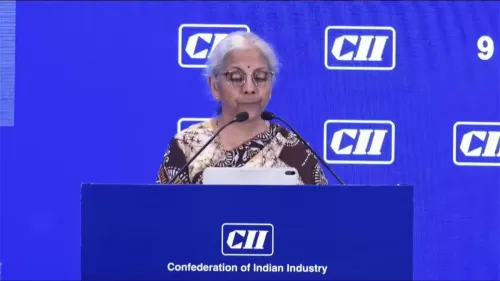
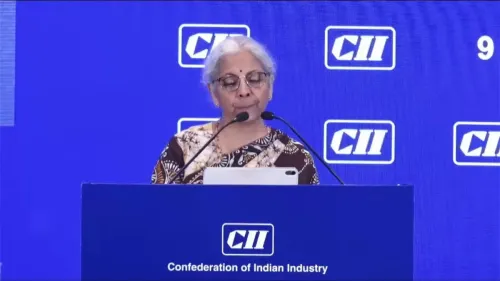
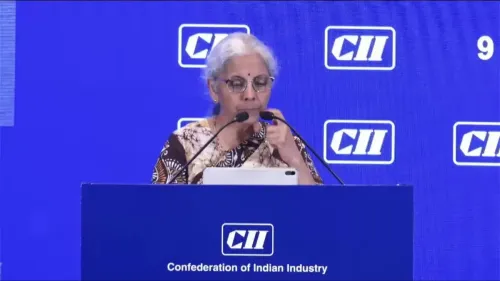
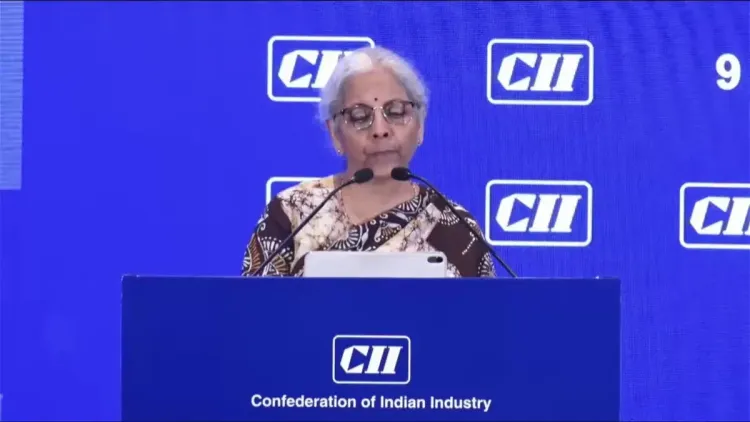
Union Finance Minister Nirmala Sitharaman on Thursday, 9 July 2026 called on Indian states to develop specialised innovation ecosystems aligned to their own competitive strengths, rather than replicating each other, while addressing the CII National GCC Business Summit 2026. She highlighted her participation in the State GCC Summit held in Visakhapatnam in September 2025 as evidence of a deliberate push to take India's Global Capability Centre story beyond its traditional metropolitan hubs.
Context
Speaking at the Confederation of Indian Industry (CII) National GCC Business Summit 2026, Sitharaman noted that state-level responses to the GCC push have been 'encouraging.' She emphasised that differentiated, state-specific strategies — rather than uniform blueprints — will make India's overall innovation ecosystem 'more resilient, diversified and globally competitive.'
Her choice to cite Visakhapatnam, a port city in Andhra Pradesh, as a summit venue was underscored as intentional: 'The next phase of our GCC story cannot remain confined to a handful of metropolitan centres,' she said.
Policy Backdrop
India's GCC decentralisation drive has its roots in successive central and state-level policy pushes since the mid-2010s. The Startup India initiative, launched in 2016, sought to seed innovation ecosystems at the state level, while the Atmanirbhar Bharat framework announced in 2020 reinforced the case for regionally diversified, self-reliant growth.
For years, Global Capability Centres — back-office and R&D arms of multinational corporations — were heavily concentrated in Bengaluru, Hyderabad, and the National Capital Region. Central and state governments have since introduced incentive packages to attract GCC investment to Tier-2 cities, aiming to spread economic activity and reduce geographic concentration risk in India's services sector.
The State GCC Summit series, of which the Visakhapatnam edition in September 2025 was a part, represents a structured effort to give individual states a platform to showcase their distinct sectoral strengths — whether in manufacturing-linked R&D, agri-tech, defence technology, or digital services.
Stakeholders and Impact
State governments stand to gain directly from a differentiated GCC strategy, as it allows them to compete on their own terms rather than bidding against larger, better-resourced metros. Multinational corporations, in turn, benefit from a wider talent pool and potentially lower operating costs in emerging cities.
Visakhapatnam itself has been positioned as a fast-growing Tier-2 city with port-linked logistics advantages and a growing technology workforce. Sitharaman's deliberate framing of its selection as a summit host signals that the central government views such cities as credible GCC destinations, not merely aspirational ones.
For smaller states and cities, the Finance Minister's remarks offer a policy signal: specialisation, not imitation, is the preferred path. This could influence how states frame their 2026-27 budget allocations for technology infrastructure and talent development.
What's Next
Attention will now turn to state budget announcements for 2026-27 and whether additional Tier-2 cities are selected to host follow-up GCC summits. The CII's continued engagement with state governments on GCC policy will be a key indicator of how far the decentralisation agenda advances beyond its current momentum. If states respond with concrete incentive frameworks tailored to their sectoral strengths, India's GCC map could look markedly different within the next few years.
Point of View
She is lending political weight to what has until now been a largely administrative decentralisation effort. The emphasis on 'differentiated strategies' also subtly steers states away from incentive wars and toward genuine sectoral specialisation, which could improve the quality — not just the quantity — of GCC investment. If state governments respond with targeted policy frameworks, this could mark a meaningful inflection point in how India competes globally for R&D and technology services investment.
NationPress
9 Jul 2026
Frequently Asked Questions
What did Nirmala Sitharaman say at the CII GCC Summit 2026?
At the CII National GCC Business Summit 2026 on 9 July 2026, Nirmala Sitharaman urged Indian states to develop specialised innovation ecosystems based on their own competitive strengths rather than copying each other, and highlighted the need to expand GCCs beyond metro cities.
What is a Global Capability Centre (GCC) in India?
A Global Capability Centre (GCC) is an offshore unit set up by a multinational corporation in India to handle R&D, technology, analytics, or back-office functions. India hosts hundreds of GCCs, historically concentrated in cities like Bengaluru, Hyderabad, and the NCR.
Why was the State GCC Summit held in Visakhapatnam?
The September 2025 State GCC Summit was held in Visakhapatnam to signal that India's GCC expansion should move beyond traditional metropolitan centres. Finance Minister Sitharaman described the city's selection as 'deliberate,' citing its status as a fast-growing Tier-2 city.
What is India's policy on GCC expansion to Tier-2 cities?
India has been actively promoting GCC investment in Tier-2 cities through central and state incentive frameworks, building on earlier initiatives like Startup India (2016) and the Atmanirbhar Bharat framework (2020) that emphasised regionally diversified economic growth.
What should Indian states do to attract GCCs according to Sitharaman?
According to Sitharaman, states should identify and build on their own competitive advantages — whether in manufacturing-linked R&D, agri-tech, or digital services — rather than replicating strategies used by larger metro-based states. Specialisation, she argued, will make India's overall GCC ecosystem more resilient and globally competitive.