Sitharaman Sets 5-Point Agenda for India's GCC Sector
Synopsis
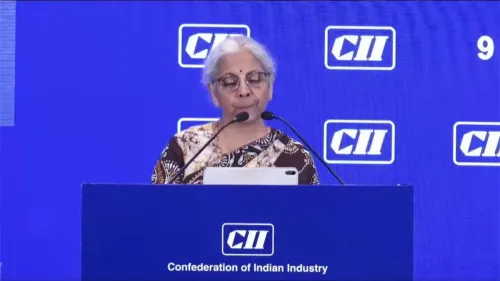
At the CII National GCC Business Summit 2026, Finance Minister Nirmala Sitharaman set a five-point agenda for India's Global Capability Centre sector, calling on multinationals to move up the value chain, engage knowledge institutions, expand into emerging cities, and deepen government partnerships.
Key Takeaways
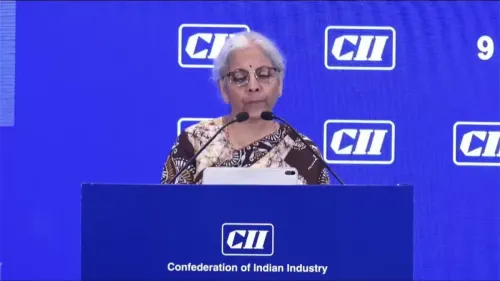
Finance Minister Nirmala Sitharaman addressed the CII National GCC Business Summit 2026 on 9 July 2026 .
She outlined five expectations for the GCC industry covering value-chain upgrades, academic engagement, geographic expansion, global advocacy, and government partnerships.
The remarks signal that policy support will track industry performance on moving beyond cost-arbitrage toward R&D and product development.
The call to expand into emerging cities reinforces a multi-year government push to diversify GCC presence beyond metro hubs.
Follow-up policy measures could appear in pre-budget consultations and state-level GCC incentive announcements.
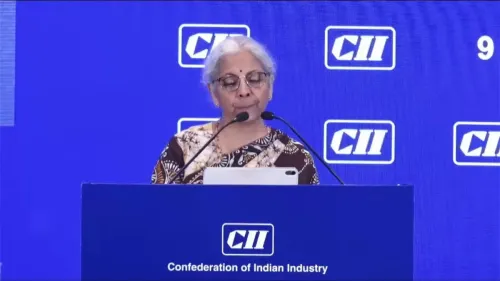
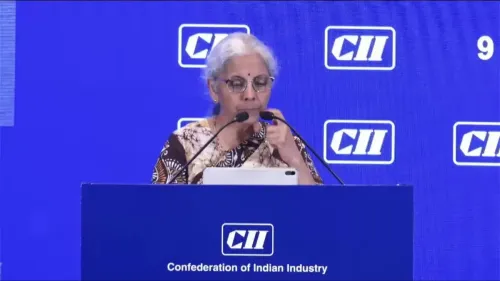
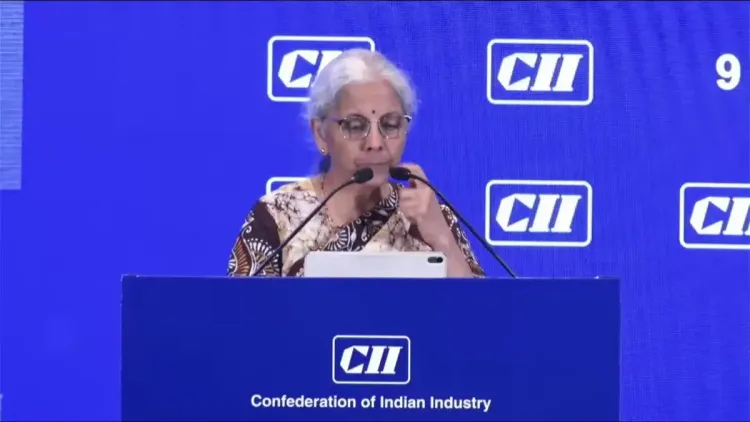
Union Finance Minister Nirmala Sitharaman on Thursday, 9 July 2026, outlined five expectations from the Global Capability Centre industry as India looks to advance beyond its established role as a cost-arbitrage destination, speaking at the CII National GCC Business Summit 2026 in New Delhi. Addressing industry leaders gathered by the Confederation of Indian Industry, she called on multinationals to move up the value chain, deepen ties with Indian knowledge institutions, expand into emerging cities, champion India's capabilities globally, and build stronger government partnerships.
Context
Sitharaman's remarks, shared from the official handle @nsitharamanoffc, laid out a five-point roadmap for the sector's next phase. She asked GCC operators to: (1) continue moving decisively up the value chain; (2) deepen engagement with India's knowledge institutions; (3) expand confidently into emerging cities; (4) become ambassadors for India's capabilities; and (5) strengthen partnerships with governments at all levels. The address was framed as a statement of government expectations, signalling that policy support would track industry performance against these benchmarks.
GCCs — captive offshore units set up by multinational corporations to handle functions ranging from IT and finance to R&D and analytics — have grown into a strategic pillar of India's services export economy. The sector has historically been concentrated in metros such as Bengaluru, Hyderabad, Pune, and Chennai, but government and industry have for several years pushed for geographic diversification.
Policy Backdrop
India's emergence as a GCC destination traces to the services-sector liberalisation of the early 1990s, when multinational firms began establishing captive centres to leverage the country's English-speaking engineering and management talent at competitive cost. Over three decades, successive governments have worked to shift that value proposition from cost savings alone toward higher-order capabilities — including product development, data science, and global innovation mandates.
Sitharaman's five-point framework fits squarely within this long-standing policy arc. The emphasis on 'knowledge institutions' signals continued interest in university-industry linkages that feed specialised talent pipelines. The call to expand into 'emerging cities' echoes infrastructure and skills initiatives that state governments have rolled out to attract investment beyond saturated tier-one hubs. The explicit ask to 'become an ambassador for India's capabilities' reflects a reputational dimension — the government wants GCCs to actively market India as an innovation partner, not merely a back-office location.
Stakeholders and Impact
Multinational corporations operating or planning GCCs in India are the primary audience for Sitharaman's expectations. For these firms, the Finance Minister's address carries weight because her ministry controls tax policy, foreign investment frameworks, and the broader regulatory environment that shapes operating costs. A signal from the finance ministry that value-chain upgrading is a government priority can influence internal decisions on mandate expansion and headcount mix.
Indian universities, IITs, IIMs, and research institutions stand to benefit if GCCs respond to the call for deeper academic engagement — through funded chairs, joint research, internship pipelines, or curriculum co-development. State governments in emerging cities such as Jaipur, Indore, Coimbatore, Lucknow, and Bhubaneswar are likely to read the minister's remarks as an endorsement of their own GCC attraction strategies and may follow up with targeted incentive announcements.
What's Next
The CII summit is expected to produce sector recommendations that could feed into pre-budget consultations ahead of the next Union Budget. Observers will watch for follow-up announcements on state-level GCC incentive schemes, any fiscal or regulatory measures that translate the minister's five-point expectations into policy instruments, and outcomes from subsequent industry-government forums on services exports. The framing of these expectations as a 'next phase' of India's GCC journey suggests the government views the sector as entering a qualitatively new chapter — one where the benchmark shifts from volume of centres to depth of capability.
Point of View
The Finance Ministry creates a reference point against which GCC industry behaviour can be measured in future budget cycles. The emphasis on knowledge institutions and emerging cities reflects a deliberate attempt to broaden the sector's political constituency beyond the southern and western metro clusters that have historically dominated the GCC map. The 'ambassador' framing is notable: it asks multinationals to become active participants in India's global economic diplomacy, not merely passive beneficiaries of its talent pool. Taken together, the five points suggest the government is preparing a more demanding, value-focused relationship with the GCC sector as it heads into the next phase of services export strategy.
NationPress
9 Jul 2026
Frequently Asked Questions
What did Nirmala Sitharaman say at the CII GCC Summit 2026?
Finance Minister Nirmala Sitharaman outlined five expectations for the GCC industry: moving up the value chain, deepening engagement with knowledge institutions, expanding into emerging cities, becoming ambassadors for India's capabilities, and strengthening government partnerships.
What is a Global Capability Centre (GCC) in India?
A Global Capability Centre is a captive offshore unit set up by a multinational corporation in India to handle functions such as IT, finance, analytics, R&D, and product development, leveraging India's skilled talent base.
Which cities is India promoting for new GCC expansion?
Beyond established hubs like Bengaluru, Hyderabad, and Pune, the government has encouraged GCC expansion into emerging cities such as Jaipur, Indore, Coimbatore, Lucknow, and Bhubaneswar.
What is the CII National GCC Business Summit?
The CII National GCC Business Summit is an annual industry event organised by the Confederation of Indian Industry that brings together multinational GCC operators, policymakers, and knowledge institutions to discuss India's services sector strategy.
How does the government plan to support GCC growth in India?
The government's approach includes infrastructure and skills initiatives for emerging cities, university-industry linkage programmes, and regulatory facilitation, with further measures potentially announced in upcoming Union Budgets.